Reported by
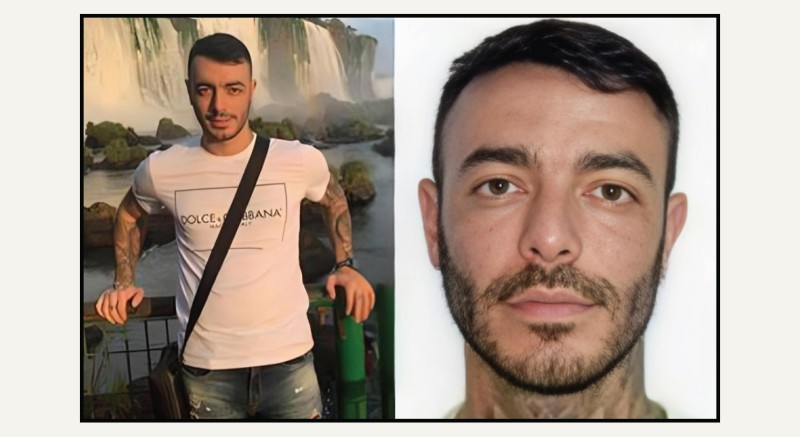
American prosecutors and the defense team for alleged South American druglord Sebastian Marset waived his right to a speedy trial today, while the U.S. government signaled that more charges are likely on the way.
Marset appeared for his arraignment hearing at the U.S. District Court for Eastern Virginia, where he was read the charges against him. He shook hands with his attorneys, up from Miami, and signed a waiver for a guaranteed quick trial.
A Uruguayan national with operations in Paraguay, the heavily tattooed Marset was arrested in the south of Bolivia in a surprise early morning raid on March 13. He was promptly extradited to the U.S., having his first formal hearing on March 20th.
Judge Rossie D. Alston Jr. told Marset, wearing a dark green prison jumpsuit and white sneakers, that he faced up to 20 years in a U.S. prison, followed by three years of supervised release, if convicted of conspiracy to commit money laundering. He may also be fined no less than $500,000.
Prosecutor Anthony T. Aminoff, who heads his district’s narcotics and money laundering unit, told the judge that the two parties wanted a status conference delayed until May 20. In a status conference, both sides report to the judge on progress as the case readies for trial.
Aminoff said the extra time was needed to continue negotiations because a superseding indictment “is likely.”
A superseding indictment augments the existing indictment and typically adds charges. The announcement is significant because it means Marset, 34, could be charged with drug trafficking or other penalties more serious than the current money laundering charges for moving money through US banks.
The current indictment refers repeatedly to drug trafficking activity, but does not charge him with trafficking itself.
Described as "a most-wanted fugitive throughout the Southern Cone of South America," Marset had a $2 million U.S. government bounty on him before his capture.
The U.S. State Department said a multinational law enforcement investigation had "linked a criminal network led by Marset to more than 16 tons of cocaine seized in Europe."
Marset faces charges in Paraguay for international drug trafficking, criminal association and money laundering. Uruguayan police have linked him to criminal enterprises there but have not yet presented formal changes.
In their indictment, federal prosecutors in Virginia allege he ran a narcotics organization that moved “thousands of kilograms of cocaine, including as many as 10 tons at a time, from South America typically to Europe.”
Bolivia, Paraguay, Uruguay, Brazil, Belgium, the Netherlands, Portugal were among the countries listed by the U.S. Attorney's Office as trafficking targets.
The high-profile Uruguayan’s arrest and extradition to the U.S. came after renewed regional anti-narcotics cooperation, just months after the Drug Enforcement Administration resumed operations in Bolivia following a 17-year absence. The operation came after Bolivia’s participation in a March 7 anti-narcotics summit convened by the administration of U.S. President Donald Trump.