Reported by
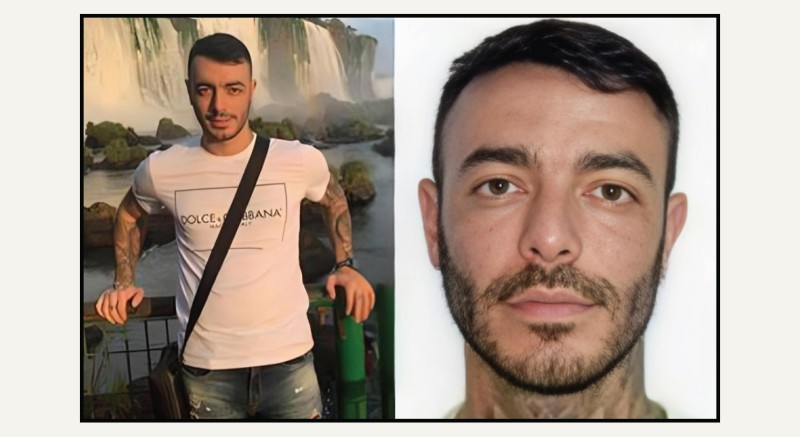
In his first public court appearance since his recent extradition from Bolivia, accused South American drug lord Sebastián Marset was ordered detained without bail by a federal judge in Virginia at a detention hearing on Friday.
Dressed in a dark green prison jumpsuit and black sneakers, the tattoo-covered Uruguayan national did not speak during the proceeding at the Albert V. Bryan United States Courthouse.
Magistrate judge William B. Porter denied bail to Marset, agreeing with the view of prosecutors that he represented a flight risk.
Marset, 34, was arrested in the early morning of March 13 in a residential neighborhood of Santa Cruz, Bolivia and extradited to the U.S. hours later.
Allegedly one of the most powerful drug barons in the Southern Cone of South America, the U.S. had announced a $2 million reward for information leading to his capture.
Prosecutors allege Marset laundered millions of dollars in global narcotics proceeds through the U.S. and European banking systems, along with fellow Uruguayan co-conspirator Federico Ezequiel Santoro Vassallo, who is now serving a 15 year sentence in the U.S. for money laundering conspiracy.
The U.S. Attorney’s Office for the Eastern District of Virginia alleges Marset led “a large-scale drug trafficking organization that distributed thousands of kilograms of cocaine, including as many as 10 tons at a time, from South America typically to Europe.”
“The Marset drug trafficking organization allegedly traffics cocaine in Bolivia, Paraguay, Uruguay, Brazil, Belgium, the Netherlands, Portugal, and elsewhere,” the U.S. Attorney’s Office said.
Marset’s prosecution in the U.S. state of Virginia is uncommon, as the majority of the country’s significant drug cases are tried in New York City or Miami.
According to court documents, at least one of the bank wire transfers made by his alleged co-conspirator Santoro was routed through a U.S. correspondent bank's server located in Richmond, Virginia. That gave the Justice Department a venue where Marset and Santoro could be charged and tried for money laundering.
Marset’s arrest and extradition to the U.S. appears to be the result of renewed regional anti-narcotics cooperation, coming just months after the DEA resumed operations in Bolivia following a 17-year absence. It also follows Bolivia’s participation in an anti-narcotics summit convened by President Donald Trump on March 7.
Marset’s next hearing is expected within the next two weeks.