Reported by
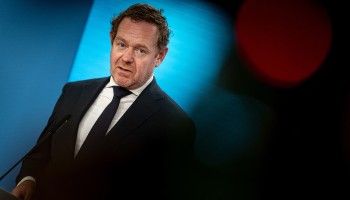
In a reaction to the American military’s attacks on boats suspected of smuggling narcotics, the Netherlands is halting joint anti-drug operations with the U.S. outside its own Caribbean territorial waters, the Dutch defense minister told reporters this week.
Dutch Minister of Defense Ruben Brekelmans’s comments came two days after the U.S. attacked Venezuela and captured its president, Nicolás Maduro, in an operation that has been widely criticized for violating sovereignty and international law.
Brekelmans said as long as the U.S. military attacks suspected traffickers in the Caribbean Sea, the Netherlands would limit its anti-drug operations to protecting its territorial waters around Aruba, Bonaire and Curaçao. All three islands are off the coast of Venezuela.
“When it comes to drug enforcement, we've been collaborating with the Americans for years, but we do it in a different way. So when we see drug smuggling taking place, we try to arrest and prosecute those involved, but not by shooting down ships,” Brekelmans said during a visit to Aruba on Monday.
Brekelmans said the Netherlands would be “continuing our drug enforcement efforts within our territorial waters,” but would cease operations in cooperation with the U.S. outside its boundaries.
“We'll stay in contact with them about this, of course, because drug enforcement is something we all want to be committed to and a problem that affects us all,” Brekelmans added.
The U.S. began building up its military presence in the Caribbean in September as part of Operation Southern Spear, conducting aggressive operations that included more than 20 lethal attacks on speedboats suspected of smuggling drugs and detaining ships carrying Venezuelan oil.
The military actions were widely seen as part of a pressure campaign against Venezuelan leader Nicolás Maduro, who the U.S. has accused of leading a drug cartel. The boat attacks preceded the capture of Maduro late last week, along with his wife, Cilia Flores, in what U.S. President Donald Trump described as a “large-scale” military operation.
Spain and five Latin American countries released a statement condemning the U.S. incursion into Venezuela and the arrest of its leader, saying the “actions contravene fundamental principles of international law.”
Operation Southern Spear has also been widely criticized. The U.K reportedly stopped sharing intelligence with the U.S. about suspected drug trafficking vessels in the Caribbean last year, because it did not want to play a role in military attacks it believed to be illegal.
Brekelmans said the U.S. remains “a key ally of the Netherlands and a very important partner here in the region,” but for Operation Southern Spear, “we are not making our amenities available.”
Kirsty Sutherland, a U.K.-based lawyer specializing in international humanitarian and public law, told OCCRP that U.S. operations in the Caribbean clearly contravene the provisions of the United Nations Convention on the Law of the Sea (UNCLOS), which it previously committed to observing.
While the U.S. has not ratified UNCLOS, the Netherlands is regarded as one of its strongest supporters.
“The rules on the use of force and interference with vessels and international waters are really strict,” Sutherland said. “The Netherlands considers itself bound by UNCLOS, as well as the panoply of all of its domestic and international laws."
“So I think resiling from supporting or actively assisting conduct that contravenes those obligations is completely justified,” she added.