Reported by
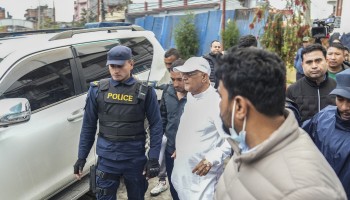
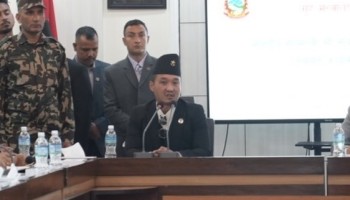
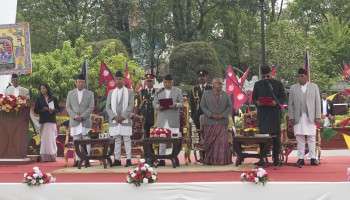
Balendra “Balen” Shah, a 35-year-old former rapper, structural engineer, and mayor of Kathmandu, is set to become Nepal’s next Prime Minister after his landslide victory in the country’s general election was announced Thursday.
Nepal’s Election Commission released its final report, showing Balen’s Rastriya Swotantra Party (RSP) won 182 of 275 seats in parliament, just two seats shy of a two-thirds supermajority.
Running head-to-head against former premier KP Sharma Oli in the constituency of Jhapa-5, Balen beat him by nearly 50,000 votes. Balen received 68,348 votes while Oli got 18,734.
The former prime minister’s Communist Party of Nepal (Unified Marxist–Leninist) won 25 seats in parliament. Meanwhile, Nepali Congress won 38 seats, Nepali Communist Party won 17 seats, Shram Sanstrikti Party won 7 seats, Rastriya Prajatantra Party won 5 seats, and an independent candidate won one seat.
The election follows the September 2025 dissolution of the House of Representatives, brought down by a widespread “Gen-Z” protest movement that was sparked by a government ban on social media and fueled by anger over corruption and governance failure.
While the September protests forced the resignation of KP Sharma Oli, who had been elected prime minister four times previously, more than 2,000 were injured and 77 killed, many of them shot by security forces. Amid the violence, crowds burned a number of buildings, including the Supreme Court and parliament itself.
Following the election, protest leaders say they are hopeful for the new government to address anti-corruption issues.
“We, who raised questions on the streets for good governance, voted for change,” Gen-Z leader Rakshya Bam told OCCRP. “Our generation has reclaimed democracy. The issue of anti-corruption is not only for Gen-Z, but for all Nepali people. To ignore this would be to insult the people.”
Like nearly every candidate in this month’s election, Balen vowed to stamp out graft. He declared his candidacy for prime minister and joined the RSP in January, declaring in his election manifesto: “I will stand at the forefront of Parliament against irregularity and corruption.”
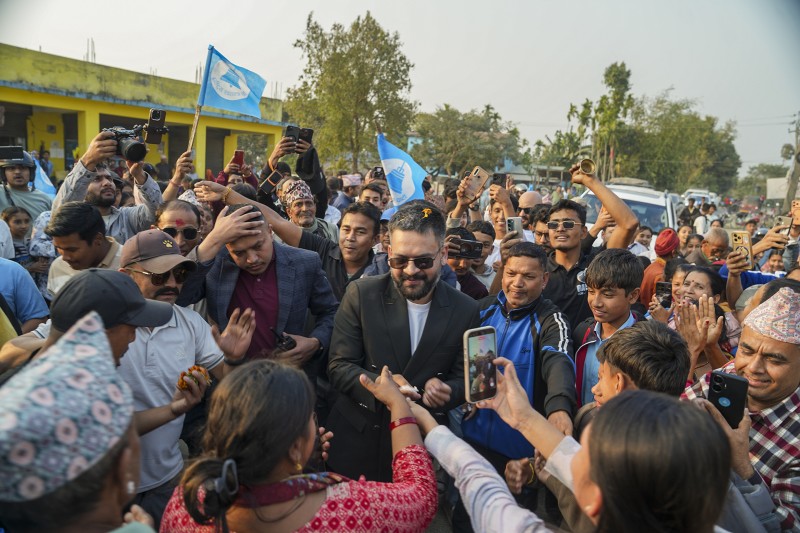
OCCRP followed Balen on his campaign in Jhapa-5, where he was surrounded by social media creators and he went door-to-door to meet voters.
The sunglasses wearing Balen, who has 3.7 million followers on Facebook, refused to give interviews to media during his campaign and even after his victory.
During his three-and-a-half-year tenure as the Mayor of Kathmandu, he also refused interviews with local media and faced criticism for the bulldozing of a squatter settlement in the city and for allegedly only listening to a small group of aides.
However he emerged as a popular national candidate when he expressed solidarity with the Gen-Z protests, writing in a September 7 Facebook post: "Tomorrow’s rally is clearly and spontaneously for Gen Z, they are under 28 years of age, for whom I still look old. I also want to understand their wishes, objectives, and thoughts. … I have full support. Dear Gen Z, tell me what kind of country do you want to see?”
In its own election manifesto, Balen’s party pledges to legally and transparently investigate the assets of individuals who have held significant public positions since 1990.
“Any wealth proven to be acquired illegally will be confiscated and nationalized through a clear working procedure,” the RSP manifesto reads.
RSP is a centrist party established in 2022 whose chairman, Rabi Lamichhane, also won a seat in the election. Lamichhane, however, currently has several ongoing cases against him in several courts on charges of cooperative fraud, money laundering, and organized crime.
A hearing on the writ petition challenging the withdrawal of the money laundering and organized crime case against Lamichhane is set to begin next week in Nepal’s Supreme Court.
Meanwhile, a high-level commission led by retired judge Gauri Bahadur Karki, formed to investigate the deadly crackdown during the September 8–9 protests, has provided its report to the government. The report’s findings have not yet been disclosed.
As Nepal’s new government takes office, those who took to the streets in protest last year said they will be closely monitoring whether it takes meaningful steps to rooting out entrenched corruption.
“We hope the government will work on good governance,” Abhishek Shrestha, who was shot in the leg during the Gen-Z protest, told OCCRP. “We will be working as outside watchdogs over it.”