Reported by
As the U.S. amassed its forces off the Venezuelan coast before invading on January 3, the Netherlands refused permission for the American military to use its base on the nearby Dutch island of Curaçao.
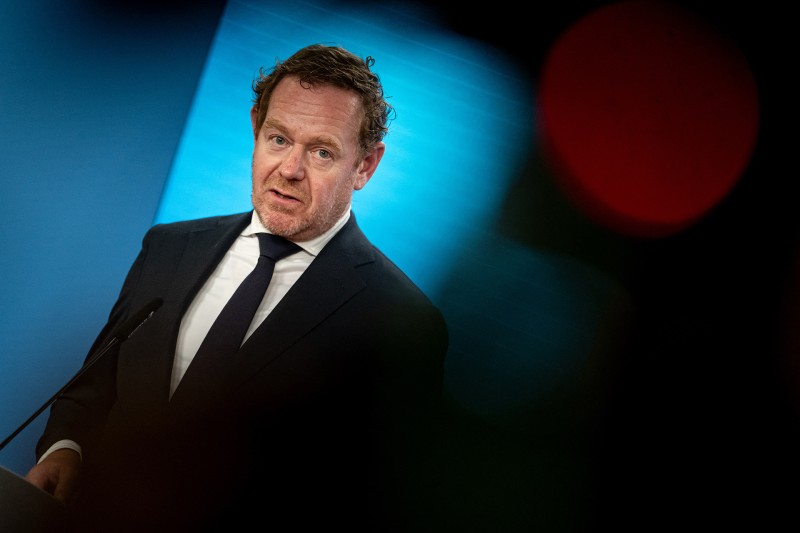
“We were very clear to the United States that we absolutely did not want any involvement in this operation,” said Dutch Minister of Foreign Affairs David van Weel. “We did so from the very beginning of the troop buildup.”
Van Weel was responding to questions in parliament on the evening of January 8 about whether the Netherlands had cooperated with U.S. operations in the run-up to the recent incursion into Venezuela and capture of President Nicolás Maduro.
In August 2025, the U.S. began a large naval buildup off Venezuela’s coast, and also carried out airstrikes against more than 20 boats it alleged were smuggling drugs.
"We never contributed, never to the boats, and never to the operation in Venezuela,” Van Weel told the Dutch parliament.
He said he was “shocked” by the U.S. operation, which involved aerial bombardment that began January 3 at around 2 a.m., while soldiers swept in and snatched Maduro from his residence in the capital, Caracas.
However, he added about Maduro’s capture: "I didn't shed any tears over it."
Dutch Minister of Defense Ruben Brekelmans said this week that the Netherlands had halted joint anti-drug operations with the U.S. in the Caribbean, and would instead focus on protecting its territorial waters surrounding the islands of Aruba, Bonaire, and Curaçao.
The “ABC” islands are part of the Kingdom of the Netherlands, and lie less than 80 kilometers off the coast of Venezuela. Van Weel said the U.S. incursion had raised security concerns in the islands, with “a number of minor incidents, such as military air traffic passing through airspace unannounced, interruptions in air traffic.”
"People couldn't leave the islands," he said, but now the "situation is normal."
However, he added, “defense equipment” in the Netherlands has been put on a “notice to move” in the event of any security crisis.
“That will remain the case for the time being, until we are absolutely certain that the situation will remain stable,” Van Weel said.
The capture of Maduro along with his wife, Cilia Flores, in what U.S. President Donald Trump described as a “large-scale” military operation, has been widely criticized — even by allies — for violating sovereignty and international law.
The action has also raised questions over Venezuela’s future stability and further American military aggression worldwide, with Trump threatening other countries in the days afterward.
Maduro and his wife are now on trial in the U.S., with an indictment alleging he ran a “corrupt, illegitimate government that, for decades, has leveraged government power to protect and promote illegal activity, including drug trafficking.” The couple have pleaded not guilty, and say they are prisoners of war.
In the Netherlands parliament this week, an MP asked van Weel whether he could “guarantee” that the U.S. had not used Dutch military bases.
Van Weel noted that the base on Curaçao is intended solely for unarmed flights, and said the Netherlands had denied the U.S. permission to land if the flight was related to the military buildup targeting Venezuela.
“For every request for a landing there, for a stopover, for supplies, we have checked whether it could be related to this operation or not. If it could be related to that operation, permission was not granted,” he said.