Reported by
Fulfilling a central promise of his anti-establishment campaign, Nepal’s newly minted prime minister—a 35-year-old rapper, structural engineer, and former mayor of Kathmandu—has launched a sweeping investigation into the personal wealth of the country’s political elite.
The government announced late Wednesday that it had formed a specialized property investigation commission tasked with scrutinizing the asset details of major political figures and high-ranking officials who have held public office over the past two decades.
The move is a direct follow-through on a pledge made by the prime minister, Balendra Shah, whose Rastriya Swatantra Party rode a wave of public frustration into power. Shah had promised voters he would initiate a severe crackdown on "hidden assets" within 15 days of rolling out his administration’s broader governance reforms.
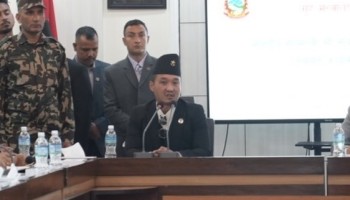
During a cabinet meeting at the Office of the Prime Minister and Council of Ministers on Wednesday evening, officials appointed a four-member commission to investigate assets amassed by politicians since 2005. The inquiry will be chaired by Rajendra Kumar Bhandari, a former justice of Nepal's Supreme Court.
“A property inquiry commission has been formed to collect, verify, and investigate the property details of major political office bearers and high-ranking officials who have held public office,” Sasmit Pokharel, a government spokesperson, told journalists following the meeting.
The current probe represents only the first phase of Shah’s ambitious anti-graft agenda. According to the new government’s 100-point reform plan, a second phase will eventually examine the wealth of politicians and bureaucrats dating back to 1990, the year democracy was formally restored in the Himalayan nation.
While Nepal already possesses regulatory frameworks to combat graft—including the Commission for the Investigation of Abuse of Authority (CIAA) and the Department of Money Laundering Investigation (DMLI)—enforcement has historically been a persistent challenge. Under the nation's 2002 Prevention of Corruption Act, public officials are strictly prohibited from acquiring illegal assets. The government stated that any actionable recommendations generated by the new investigative commission will be implemented through these existing constitutional bodies and agencies.
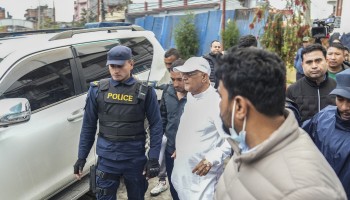
The launch of the wealth probe is the latest aggressive maneuver by an administration eager to prove it represents a definitive break from the past. Since taking power, the new government has already arrested 10 high-profile figures on a litany of severe charges, ranging from money laundering and child labor abuse to criminal negligence connected to civilian deaths during recent mass protests.