Reported by
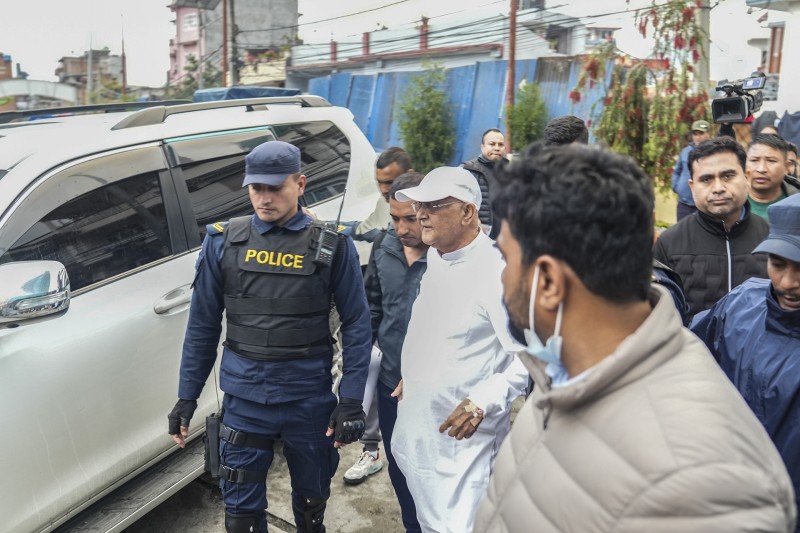
Nepal’s National Human Rights Commission has recommended sweeping legal action and a five-year political ban against former Prime Minister K.P. Sharma Oli, two of his ministers, and top security officials. The commission holds the leaders directly responsible for a bloody crackdown on youth-led anti-corruption protests last year that left at least 76 people dead.
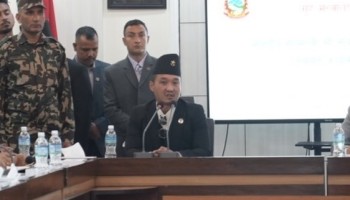
“We submitted the report to the government on Wednesday, so it is now the government's responsibility," said Lily Thapa, who led the inquiry into the September 2025 violence, which saw security forces open fire on Gen Z demonstrators in the capital, Kathmandu. She told OCCRP that the government is required to report back within three months on the steps it has taken to implement the recommendations.
The NHRC is Nepal's constitutional watchdog body, mandated to investigate human rights abuses, make recommendations to the government, and monitor the implementation of those findings.
The commission explicitly blamed Oli, former Home Minister Ramesh Lekhak, and former Communications Minister Prithvi Subba Gurung for the street violence on September 8 and 9. It also called for departmental action against the current inspectors general of the Nepal Police and the Armed Police Force for directing a crackdown that drew widespread international condemnation.
The findings echo a separate government-appointed commission that recommended criminal investigations against Oli and his allies in March. Ironically, the NHRC report also recommended an investigation into the chair of that earlier commission, Gauri Bahadur Karki, along with other former officials, for their own alleged involvement in the protests.
The sprawling NHRC investigation also implicated prominent figures on the other side of the unrest. The commission recommended investigating 17 lawmakers from the ruling Rastriya Swatantra Party (RSP), including its president, former Deputy Prime Minister Rabi Lamichhane.
Lamichhane, who was detained at the time on fraud charges, escaped from prison during the chaos. The report accuses him and two other RSP lawmakers of leveraging a violent mob to threaten a jail administrator into facilitating his release, actions the NHRC said directly contributed to a secondary wave of violence.
The military also faced sharp criticism. The NHRC issued a formal warning to the Nepali Army for failing to intervene and protect highly sensitive sites, including the parliament and the president's residence. Thapa said the army refused to provide a statement to investigators, adding that its failure to protect public property amounted to "a violation of cultural rights."
Current Prime Minister Balendra Shah, who was the mayor of Kathmandu Metropolitan City during the protests, was investigated but cleared of any complicity.
"Our focus is on identifying those who violated human rights. Since he was not found complicit, his name is not included," Thapa said, adding that the commission reached its conclusion after an extensive review of three specific allegations against him. "It wasn't suppressed just because he is the current prime minister."
Neither Oli nor his party has commented publicly on the report.