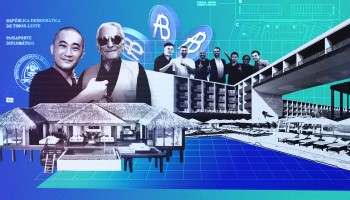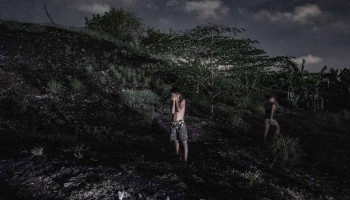
Reported by
Standing at the center of a packed arena in May 2022, a slight man in a navy blue suit basked in the applause of thousands of football fans as he accepted a plaque naming him the honorary president of FC Dinamo Batumi, a powerhouse of the Georgian football league.
The plaque identified the man as Thomas Xu, the founder of Lixin Group, a major real estate developer in Cambodia that had just signed a deal to become Dinamo Batumi’s main sponsor.
The May 2022 event was the culmination of a flurry of investments by Xu, who had recently arrived in Georgia making big promises about what he — and Lixin Group — could do for the small nation in the South Caucasus.
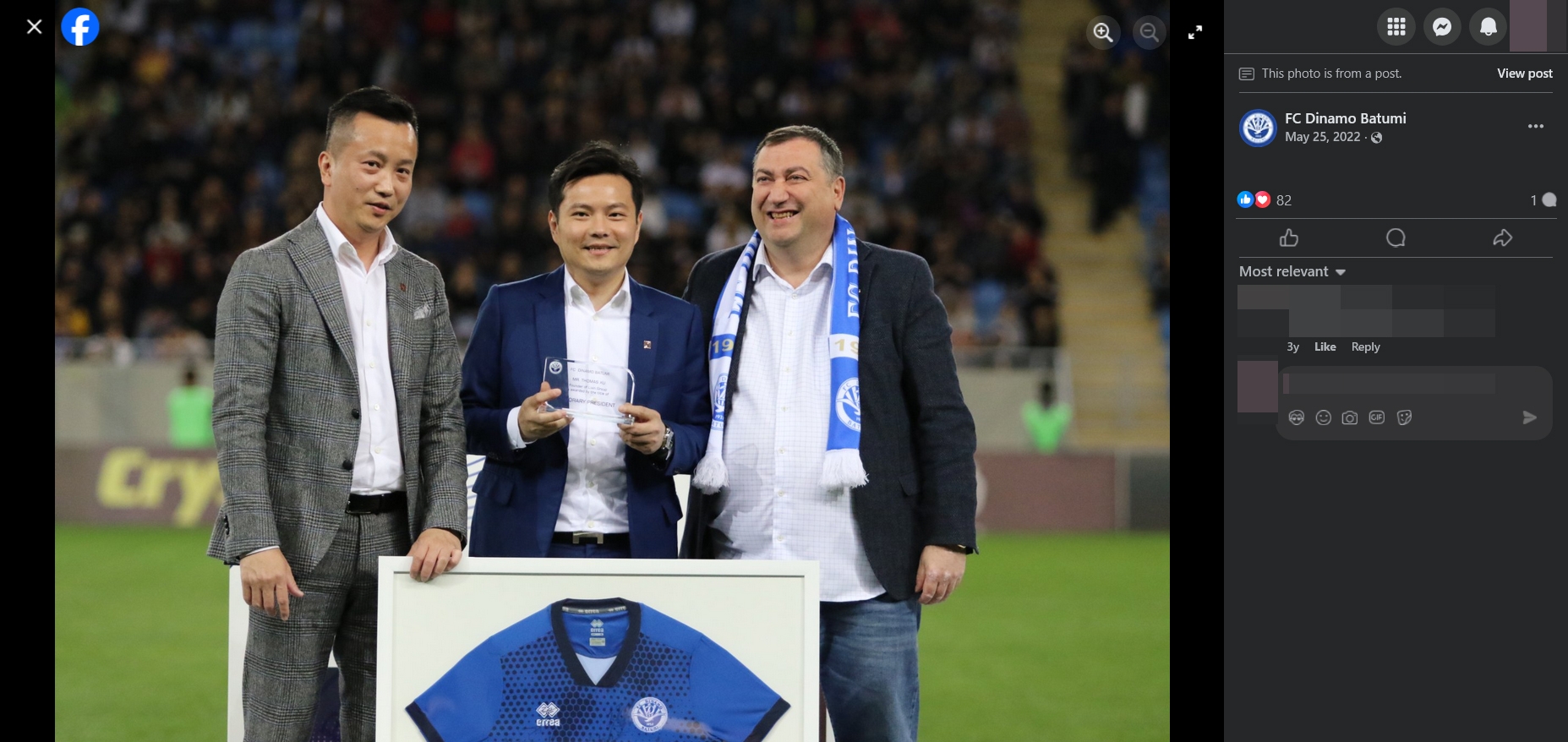
Thomas Xu (center) at a ceremony naming him honorary president of FC Batumi in May 2022.
A glowing profile in the Georgian media outlet Primetime claimed that Xu had become so enamored with Batumi, a booming tourist town on the Black Sea, that he had brought his family there. The story said that Xu, identified as a Cambodia-born investor, was planning to make investments worth 1 billion Georgian lari (about $370 million) through Lixin Group, a fast-growing Cambodian conglomerate.
The story also featured images of Xu posing with his romantic partner and children on a private jet and a ski trip, alongside an architectural rendering of his flagship property investment, the Halcyon, a pair of undulating space-age skyscrapers with rooftop terraces and swimming pools.

Georgian media coverage of Thomas Xu. (Click to enlarge.) This article, which appeared on the Georgian site Primetime, was removed from the internet after OCCRP journalists reached out to Primetime to ask them about it.
Xu made it clear he wasn’t just about profits: He would also be a benefactor to Batumi. When a seven-story residential building collapsed in October 2021, Lixin Group donated more than $100,000 to the victims, according to the Primetime article. The company also began sponsoring a local summer festival and a volleyball tournament.
Thomas Xu seemed like the perfect foreign investor. But he had a secret.
The Cambodian do-gooder was actually a convicted methamphetamine manufacturer from Taiwan, according to public records and court documents obtained by OCCRP and partners. Xu, whose original name was Hsu Ming-chin before he changed it in 2019, fled his home country in 2014 and is still wanted for arrest there. He is also suspected by police in three countries of financing a $364-million drug shipment linked to a major Asian drug syndicate. (He has not been charged with that crime, due in part to the lack of an extradition treaty between Taiwan and Cambodia, according to police.)

A Taiwanese 'Wanted' notice for Hsu Ming-chin.
When OCCRP asked Lixin Group about Xu and his position in the company, lawyers for the group insisted he had no connection to it whatsoever.
“Mr Thomas Xu/Hsu Ming-chin is not involved in the business of any entity within the Lixin Group,” they said in a written response to questions. They dismissed the press releases and promotional material compiled by OCCRP that identified Xu as Lixin’s chairman as “factually incorrect.”
References to Xu as Lixin’s chairman and footage of his appearances at Lixin events were removed from Lixin Group’s website and YouTube channel following inquiries by OCCRP.
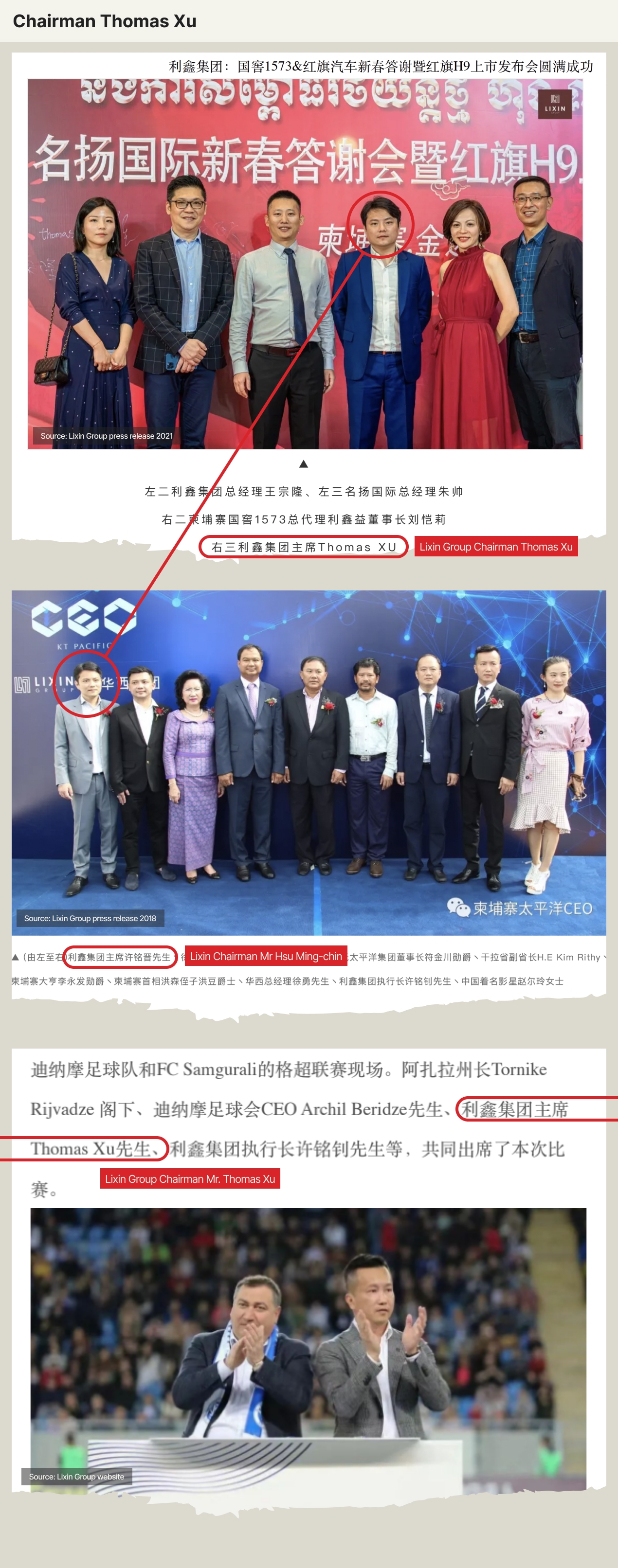
A number of online promotional materials disseminated by Lixin have referred to Thomas Xu as the chairman of Lixin Group. However, lawyers for the group insist that he has no connection to it.
So what was he doing in Batumi?
Contemporaneous media accounts and press releases make it clear that Xu did come to the city to do business on behalf of Lixin — and he started off strong. He quickly made a major investment in the Halcyon, which promised to transform Batumi’s skyline and revitalize its waterfront.
But the following year, things changed. He started moving his Georgian assets out of his hands — and ultimately into those of his older brother, Hsu Ming-chao, the public face of Lixin Group and its chief executive.
He first transferred his $5.2-million stake in the Halcyon development for a nominal sum to his romantic partner, Cheng Ya-Wen at no cost, who then gave it to Hsu Ming-chao, reporters found. She also transferred two other Georgian companies she had incorporated — Lixin Travel and Lixin Trading — to Hsu Ming-chao.

A share transfer certificate showing that Thomas Xu's romantic partner, Cheng Ya-wen, transferred her stake in Lixin Construction, the company that held a stake in the multi-million-dollar Halcyon project, to Xu's brother for free.
Hsu Ming-chao now owns or co-owns almost $22.7 million worth of real estate in Georgia through these and other companies, while Xu’s name has disappeared from these assets.
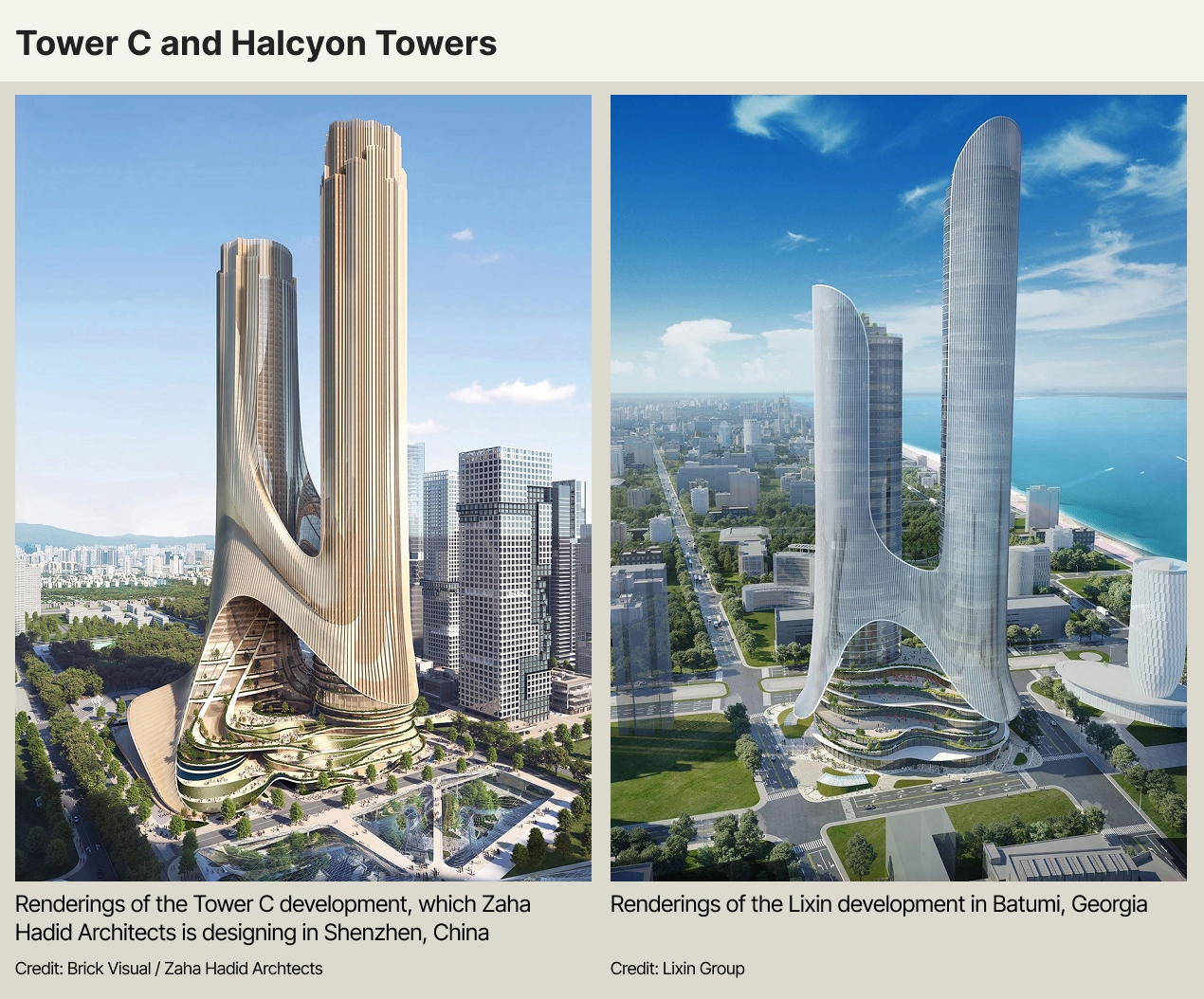
The most prominent one is still the Halcyon tower project. Lixin Group touts the development on its website, calling it “the tallest building in Georgia and a world-class cover landmark.” But construction has not yet begun, four years after the project launched — and reporters found that the architectural renditions of the buildings posted online bear a striking resemblance to the design for a tower in Shenzhen Bay, China by the late Iraqi-British star architect Zaha Hadid.
In response to questions on the design, a company representative, Grant Tao, said that Halcyon Towers was still “in the early conceptual planning stage” and that the design posted online was a “preliminary concept” and “not the final design results.”
"The client hereby declares that they are a responsible real estate developer and will not engage in any real estate activities suspected of being illegal or non-complian[t]," he added of Lixin.
Malkhaz Chkadua, the Batumi office coordinator for Transparency International Georgia, told OCCRP that Xu’s “opaque” investments in the city “expose the weakness of public and institutional oversight” in Georgia.
“No one has shown interest in uncovering what kind of financial groups and interests actually stand behind the so-called “major investor,” Chkadua said.
Half a world away, in Cambodia, Lixin Group really is a major actor in the real estate sector, and has embarked on several large real estate projects, including an entire new city near the country’s casino and tourist hub of Sihanoukville. There, too, the company has cultivated senior officials — even putting out its own biography of the country’s longtime prime minister — and held lavish events to mark milestones in its construction projects.
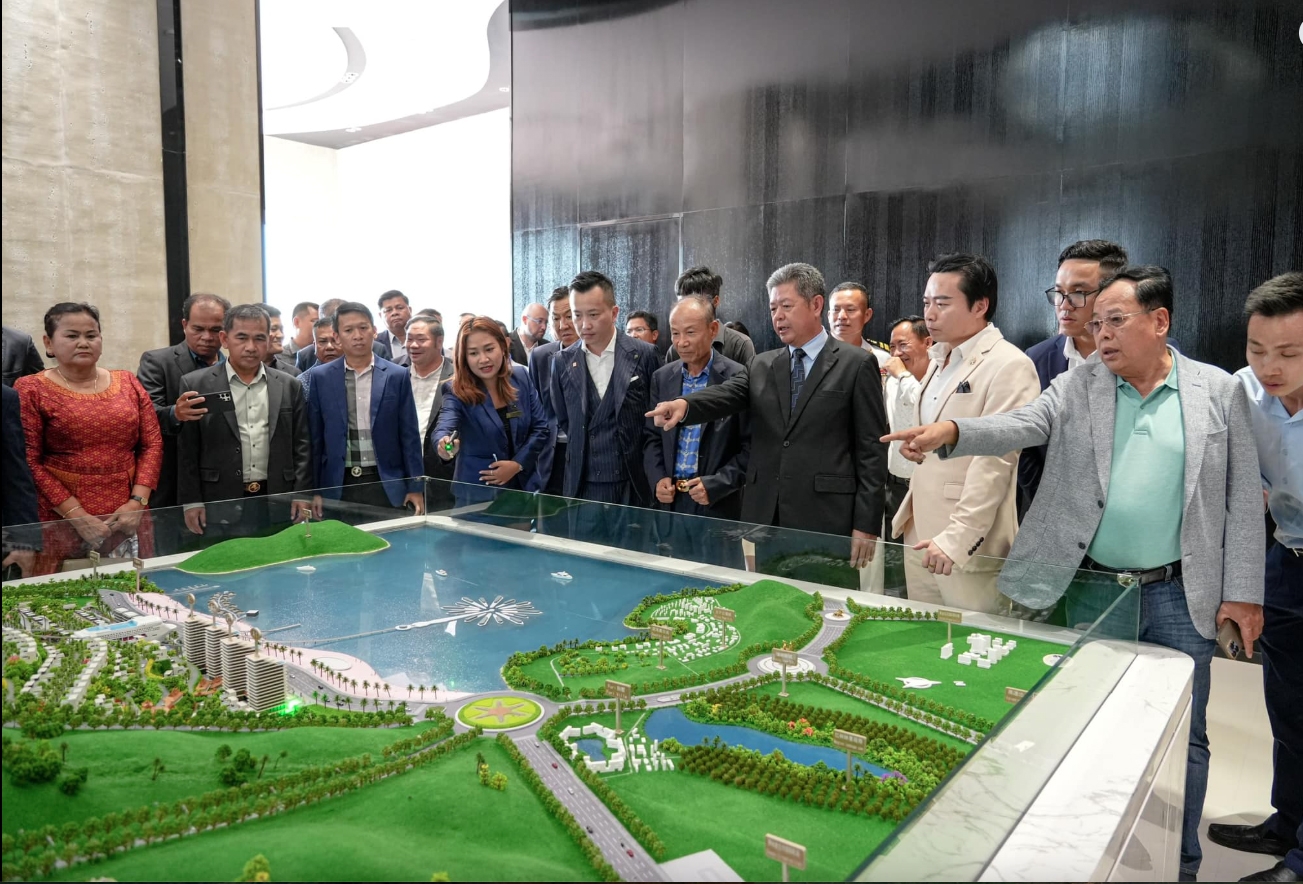
Lixin's chief executive, Hsu Ming-chao, and local officials inspect a large model of Sihanoukville New City, which Lixin Group is building in the south of Cambodia.
But behind the glitz, Lixin Group has a darker side. In a report issued in April 2025, the U.N. Office on Drugs and Crime (UNODC) profiled a Cambodia-based property developer that bears a strong resemblance to Lixin. Although the report refers to the developer only by the pseudonym “Business Group 2,” or “BG 2,” multiple people involved in preparing it confirmed to OCCRP that “Business Group 2” was Lixin Group. (They spoke on condition of anonymity because they were discussing confidential U.N. matters.)
The report describes the group as a “major Mekong-based criminal enterprise” that was started by two Taiwanese nationals — including one still wanted in Taiwan for drug trafficking — before expanding into Cambodia, and later, Georgia.
“Beyond its deep engagement in Southeast Asia, BG 2 has also significantly expanded to Georgia, where the Group has registered at least 25 companies,” the report says.
“Its interests are focused in the coastal city of Batumi, which has been increasingly associated with online gambling and cyber-enabled fraud operations similar to those documented in Southeast Asia.”
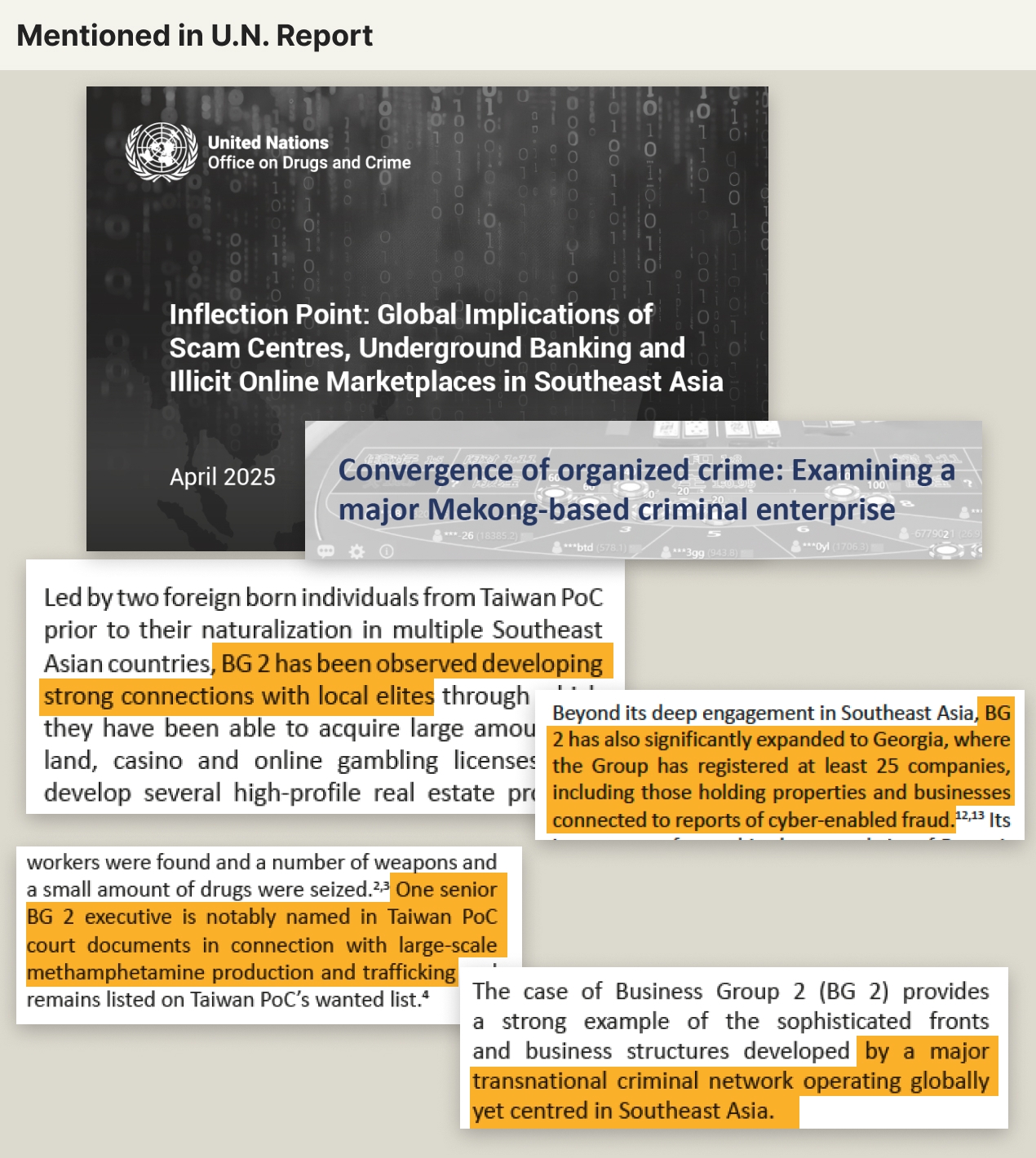
Excerpts from an April 2025 U.N. report that profiled Lixin Group, referring to it as a “major Mekong-based criminal enterprise.”
The Lixin representative, Grant Tao, said the group was unaware of the UNODC report, but strongly denied any wrongdoing or involvement in illegal gambling or cyber-fraud.
“If the client confirms that BG 2 in the U.N. report is alluding to Lixin Group, the client will contact the relevant U.N. departments and submit relevant evidence to explain the situation and clarify the facts,” he told OCCRP.
Although Lixin has never been formally charged with cyber-fraud, OCCRP and partners uncovered Chinese court judgments that found a company called "Lixin" in Cambodia had engaged Chinese workers to commit large-scale fraud in scam call centers.
The UNODC report also highlighted “BG 2”’s link to a major Georgian football club: “In recent years, BG 2 has also invested millions of dollars to become the main sponsor of a topflight Georgian football club, demonstrating its sustained effort to expand its legitimate public-facing brand and influence within the country.”
Lawyers for Lixin denied the company was involved in any illicit activity. Lixin Group companies exited the online casino business after it was banned by Cambodia’s government, they added.
They said that Lixin had ceased sponsoring the Batumi football club, and flatly denied that Thomas Xu had ever been its honorary president — despite the many photographs and even a video posted online showing the event at Dinamo Batumi's stadium.
An Explosion and an Arrest
The explosion at Thomas Xu’s apartment was only the beginning of his problems.
It was October 2009 and the 29-year-old from Kaohsiung, an industrial city on the southern tip of Taiwan, had joined forces with a deeply indebted chemical engineer to cook up crystal methamphetamine. But on their first attempt to make the drug, the engineer failed to wear gloves, creating a static electrical charge that ignited nearby hydrogen gas. The man ended up spending five days in a hospital with burns before being ordered by Xu — who was still known then by his birth name, Hsu Ming-chin — to resume his work.
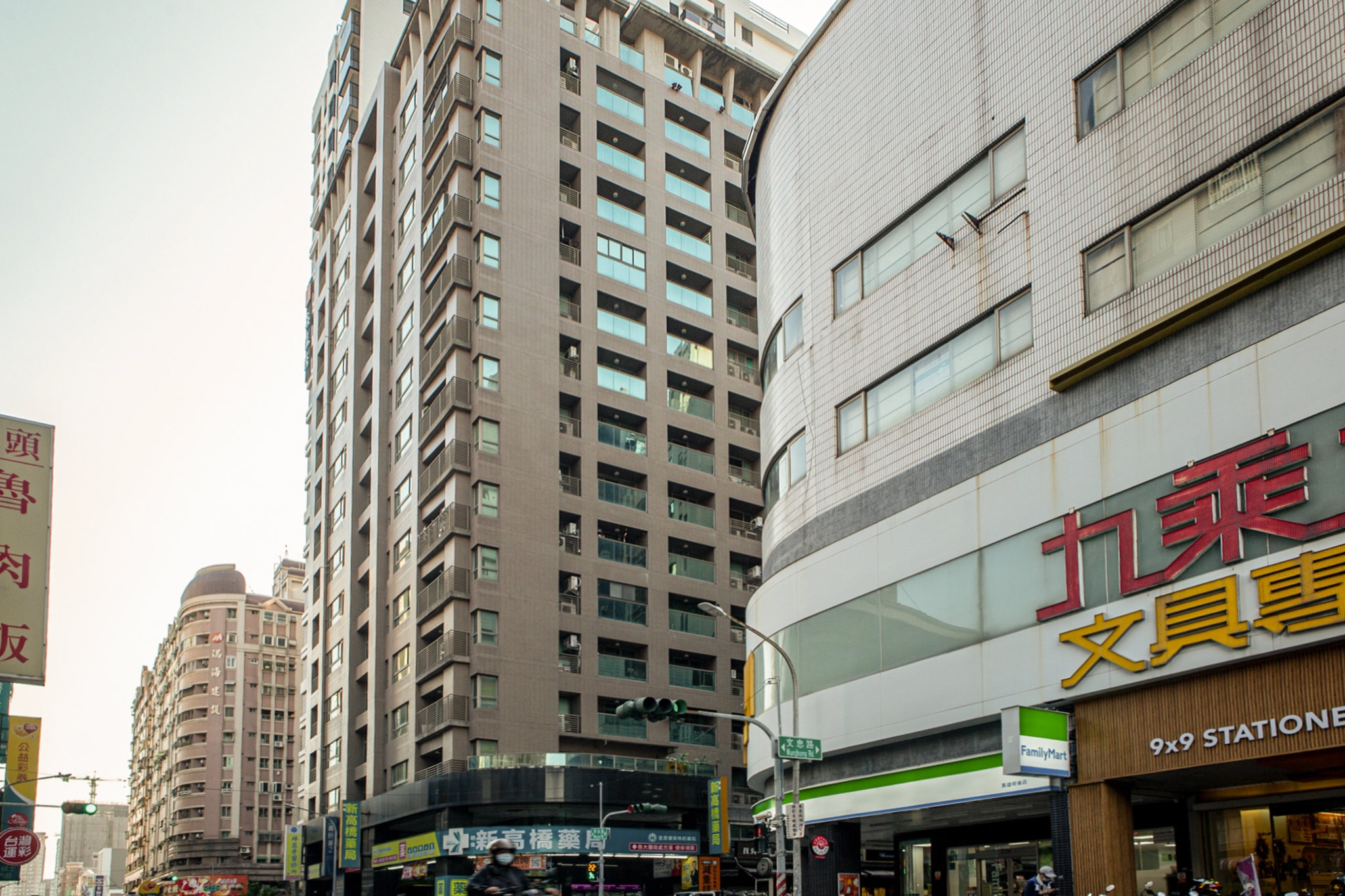
The apartment building (center) in Kaohsiung where Thomas Xu tried to cook up crystal methamphetamine.
Fears of police surveillance — and complaints from neighbors about the foul smell — forced the secret lab to move three times, according to three Taiwanese court judgments. After several failed attempts and rebukes from Xu, the chemical engineer finally extracted ephedrine, an important ingredient in methamphetamine, from 2,000 cold medicine tablets provided by Xu.
But the enterprise was cursed. When a drug consignment to Indonesia was eventually arranged by Xu, it was intercepted in Jakarta in March 2010. Enraged by the failure, Xu and four others kidnapped an associate whom they believed had tipped off police. They held him for 21 hours, demanding that he give them money in compensation for his supposed indiscretion.
Xu, the chemical engineer, and two others were arrested in Taiwan. Xu was ultimately sentenced to 12 years in prison in March 2012, found responsible “for providing financial support and raw materials” while overseeing the operation. He was hit with an additional eight-year term for robbery, and was also convicted of unlawful detention over the kidnapping.
Despite losing his final appeal in late December 2013, Xu managed to flee Taiwan without ever serving his prison sentence. Taiwanese police suspect he managed to escape using two forged identities, according to police files obtained by OCCRP partner The Reporter.
Social media posts from the same month show Xu was already in Cambodia on December 13 that year, sharing snapshots of Angkorian temples and a swimming pool under sunny skies.

Images of Cambodia posted online by Thomas Xu in December 2013.
According to the Taiwanese police files, Xu began building a corporate career in Cambodia alongside his brother — who had already relocated to the Southeast Asian nation — while also laying the groundwork for a new identity.
“He fled to Cambodia using a forged passport and, along with his older brother Hsu Ming-chao, has been running real estate and other businesses there,” one file note from 2017 said.
In October 2018, Xu obtained a Philippines passport that bore his photograph but a different name, Xu Dong Enriquez, and falsely listed Quezon City as his place of birth.
Using his new Philippines passport and identity, he then secured Cambodian citizenship in 2019 — changing his name again in the process, to Thomas Xu.

Whiskey, Jazz, and Real Estate
Xu's older brother, Hsu Ming-chao, had started his career in the Taiwanese real estate sector, helping manage on-site sales for a property development in Taiwan’s second-largest city, Taichung. He first visited Cambodia in 2012 and was struck by the country’s potential for growth, according to a flattering 2020 profile of him published on the website Realestate.com.kh.
“To others, Cambodia is just a backward and poor third-world country, but in Hsu Ming-chao’s eyes, Cambodia was a thriving ‘golden rooster,’ just like Beijing, Shanghai, and Guangzhou in the 1990s,” the article said.
At the time, Cambodia’s capital, Phnom Penh, was on the cusp of a massive property boom fueled by foreign investment, particularly from wealthier Asian nations.
Several Cambodian companies were set up in 2015 with Hsu as director, including Lixin Construction Co Ltd. The companies, and others founded later, operate under the banner of Lixin Group, which has a sleek website and social media pages touting their various investments, although it is not itself a legal entity.
With a penchant for well-tailored suits and loafers without socks, Hsu energetically promoted the fledgling corporate group, while developing a fondness for interior design, whiskey, and jazz. He also started going by the name Kevin Hsu, which he has used interchangeably with his birth name.
By 2017, just two years after it was registered, Lixin Construction announced it was embarking on the CEO Center, the luxury 33-story development in Phnom Penh. Lixin’s initial partner was K T Pacific Group Ltd, chaired by Hong Suon, the wife of Cambodian tycoon Sy Kong Triv, who has longstanding connections to the ruling Cambodian People’s Party. A deputy prime minister, Men Sam An, attended the CEO Center’s first public launch that same year.
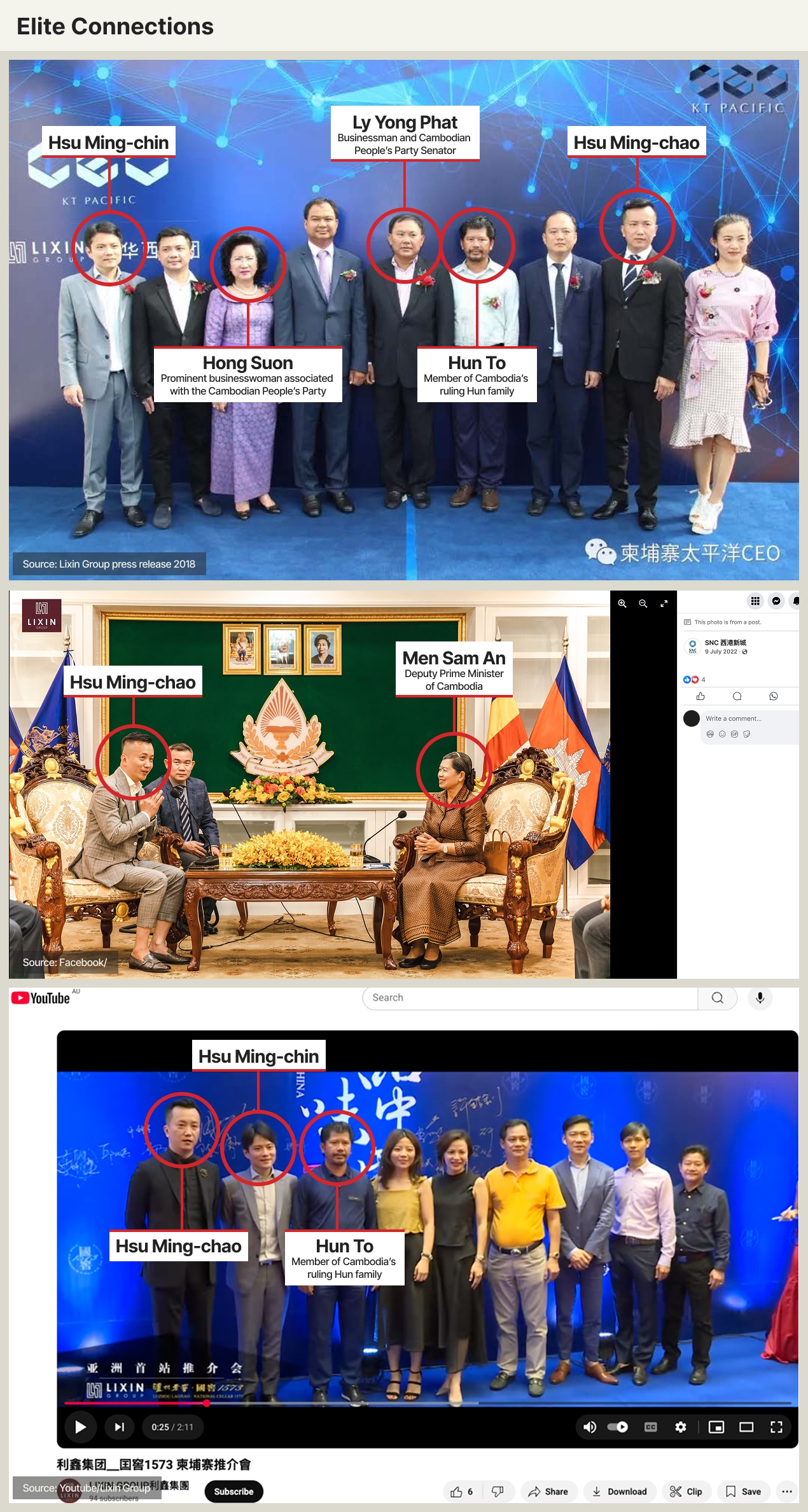
Lixin’s executives have cultivated relationships with Cambodia’s political elite since arriving in the Southeast Asian nation in the mid-2010s.
In 2018, another ceremony was held to mark the groundbreaking of the CEO Center. Both Hsu brothers attended the event. Surrounded by dignitaries, the pair shovelled sand in front of a red-and-gold ‘guardian pillar’ — a symbol of good luck in Chinese culture — with Hun To, the nephew of Cambodia’s prime minister at the time, Hun Sen.
Within 12 months, the Hun family scion would be a 25 percent shareholder and director in one of Lixin’s property development companies.
Hun Sen and his family have dominated Cambodia for four decades, and evidence shows that the Hsu brothers assiduously cultivated them. They made donations to the Cambodian Red Cross, run by Hun Sen’s wife.

Lixin also sponsored the publication of a laudatory biography of Hun Sen in 2023, launched at a posh ceremony in Phnom Penh.
In a post on its Facebook page, Lixin said it was important to "raise awareness" about the “legendary” story of Hun Sen. Lixin “is intrinsically linked to the Cambodian government and people,” the company added.

Hsu Ming-chao and Cambodia's former minister of information, Khieu Kanharith (right), shaking hands at a May 2023 event to launch a new Lixin-sponsored biography of Hun Sen.
The Cambodian government, Hun To, and Hun Sen did not respond to requests for comment. Neither did Hong Suon, Sy Kong Triv, or Men Sam An.
A Drug Shipment Linked to a Major Crime Syndicate
While Hsu Ming-chao was focused on real estate in Southeast Asia, his brother may have been pursuing another lucrative venture.
In April 2016, a Taiwanese ship captain and five others set off to Japan aboard La Gaeta, a Malaysia-flagged catamaran, later rendezvousing with another vessel in the East China Sea to take on a load of methamphetamine, according to three Japanese court judgements reviewed by The Reporter.
After the vessel docked in Okinawa on May 10, Japanese customs uncovered a record quantity of methamphetamine: 597 kilograms, worth an estimated $364 million, according to the UNODC.

Images from law enforcement agencies related to the Sam Gor syndicate and its operations.
Taiwanese police traveled to Okinawa to interview the captain, according to confidential police files obtained by The Reporter. Their investigation, based in part on these interviews with the captain, led them to suspect that Xu was the main financier behind the operation. No charges were brought against Xu in the case. (Taiwanese police told journalists that they could not pursue charges against Xu because Taiwan does not have diplomatic relations with Cambodia. Xu did not respond to requests for comment.)
Two law enforcement agencies involved in the investigation, as well as two internal presentations from UNODC, said that the methamphetamine may have been trafficked by the infamous Sam Gor drug syndicate and produced in Myanmar’s Golden Triangle, a region long associated with transnational drug production and trafficking
The link to the syndicate emerged after police from Myanmar and Australia found photos of the La Gaeta’s illicit cargo and its captain on the phones of a suspected Sam Gor operative, Cai Jeng Ze, who was arrested at Yangon airport.

An excerpt from a Myanmar police report after the arrest of Cai Jeng Ze at Yangon airport.
“The intel on Cai’s phones allowed us to connect the meth seizure in Okinawa to the Sam Gor syndicate,” said a retired senior police officer who was involved in the multinational investigation into the Sam Gor crime group.
“The phones contained information on this meth shipment and others that were not publicly available,” he explained. “In the phones there were also photos of the passports of senior Sam Gor members, including its alleged leader Tse Chi Lop, among a lot of other information.”
Tse, a Canadian national, was arrested in Amsterdam in 2021 and extradited to Australia, where he was sentenced to a maximum 16 years in prison for drug trafficking. Cai’s fate before the courts in Myanmar could not be confirmed.
The Sam Gor Criminal Alliance
The Sam Gor crime network is an alliance of triads and other groups operating across the Asia-Pacific, allegedly led by Tse Chi Lop, dubbed by media “Asia’s El Chapo.”
A Partner in Romance and Business
In 2021, Xu and his romantic partner Cheng Ya-wen embarked on a new adventure in the South Caucasus, spearheading Lixin’s expansion into Georgia with a series of multi-million-dollar investments, public records show. Cheng had been involved with Lixin’s business dealings before — she was briefly director of Lixin Land Co., Ltd., the first Lixin company in Cambodia incorporated in 2015 before being replaced by Xu’s brother, Hsu Ming-chao.
Xu’s locally registered Construction Company made the couple’s first foray into Georgia’s investment market, paying $5.2 million for a 50-percent stake in the Halcyon real estate project in Batumi in August 2021.
Some six months later, Xu sold Construction Company and its stake in the Halcyon to Cheng, for a symbolic price of 100 Georgian Lari (about $32 at the time). A year later, she gifted the company to Hsu, who continues to own it today, although it is now called Lixin Construction.
In September 2021, Cheng, now 38, paid $1.3 million for 14 apartments in a sea-view complex on Batumi’s main strip. She sold 10 of them to Hsu and Xu just 10 days later for a total of $200,000. Xu and Hsu each own five of the properties.
It is not clear why Cheng — who did not respond to requests for comment — sold the properties at such a substantial discount.
Cheng also played a key role in the acquisition of Pirimze Plaza, a business center in the Georgian capital of Tbilisi now co-owned by Hsu Ming-chao and Lin Weixiong, a Chinese businessman identified by authorities in the Philippines as a “drug personality.” Lin is also wanted for corruption in that country.
Who is Lin Weixiong?
Cheng incorporated a company called Business Center Pirimze in August 2022, and was listed as its sole shareholder. Two months later, the firm purchased a multi-level parking garage in front of the Pirimze Plaza for $3 million and spent another $9.4 million to buy the majority of the Pirimze Plaza property, with both purchases financed by bank loans. Cheng then sold an 80-percent share in the company to Hsu and a 20-percent share to Lin.
Lixin Group’s lawyers confirmed that Lin is a business partner of Hsu, including in Business Center Pirimze, and said that Hsu was “unaware of the allegations” against Lin.

An image of Lin Weixiong posted on his wife’s TikTok page. In the caption, she says he is demonstrating a “traditional way of drinking wine in Georgia 🇬🇪”
A law firm representing Lin told OCCRP’s partner Rappler on August 12 that Lin “no longer holds any ownership in [Business Center Pirimze] and has already received full payment for the value of his divested shares.”
However, the most recent available filings for Business Center Pirimze, issued in September, still list Lin as a shareholder.

Pirimze Plaza in Tbilisi, the capital of Georgia.
After OCCRP and its partners approached Lixin for comment, it undertook something of a corporate restructure in Georgia. Cheng was replaced as director Business Center Pirimze by Hsu on July 29, 2025. Cheng was also replaced as a director in Lixin Construction on August 5, the day after journalists sent Lixin’s lawyers follow-up questions.
The Georgian media article featuring Xu and his family was also taken offline in early August, after journalists reached out to the publication for comment.
Today, the Halcyon site in Batumi is still completely undeveloped, amid a business dispute and ensuing legal proceedings. Further complicating matters, Lixin’s partner in the development — the Turkish-Georgian businessman Galip Öztürk — was convicted of drug offenses in 2023. (Öztürk, who is on the run from Turkey after being convicted of murder there in 2012, walked free after reaching a plea deal with Georgian prosecutors in 2025. He did not respond to requests for comment.)

The undeveloped Halcyon site in Batumi, Georgia.
Transparency International’s Chkadua said the project was emblematic of a construction sector dominated by powerful elites — and fueled by foreign capital, sometimes of obscure origins.
“Batumi may be turning into an attractive destination for transnational … criminal actors,” he warned.
Meanwhile, he said, “the interests of residents and the city’s urban development are largely disregarded.”