Reported by
The turboprop plane was meant to touch down in Miami by 4 p.m., early enough for its precious cargo to be sent on to Zurich the same day.
Onboard were 10 bags of gold bars, worth more than $7 million. They were headed for a complex of gray buildings in the foothills of the Swiss Alps, the Argor-Heraeus gold refinery.
But when the plane — which had taken off from Curaçao, a tiny island nation 70 km off the Venezuelan coast — finally landed at Miami International Airport on March 17, 2015, there was no immediate connecting flight.
With the gold bars sitting in the airport overnight, U.S. officials took a closer look at their paperwork — and seized them.
According to an email from the logistics firm Brink’s, which was organizing the shipment, investigators were suspicious about the metal’s true origin.
Though it had been declared as "scrap gold" from Curaçao, U.S. authorities suspected a different source.
“They focused a lot on the origin of the gold and if it was from Venezuela,” a Brink’s official wrote.
U.S. officials never got to the bottom of the question, and ended up releasing the bags of gold after a more than two-year legal tussle.
But now OCCRP and partners have found evidence that not only the gold bars seized in Miami, but over 90 metric tons of additional gold that moved along the same route — from the island of Curaçao to major refineries in Europe and Turkey — was indeed largely sourced from Venezuela, according to invoices, bank statements, emails, refining certificates, and court depositions obtained by journalists.
At the time, Venezuela’s gold-mining industry was plagued by well-documented human rights abuses, corruption, and environmental destruction, and largely controlled by military elites. Because of this, gold from the country was widely considered problematic, and major refineries were expected to voluntarily disengage from supply chains that sourced from Venezuelan mines.
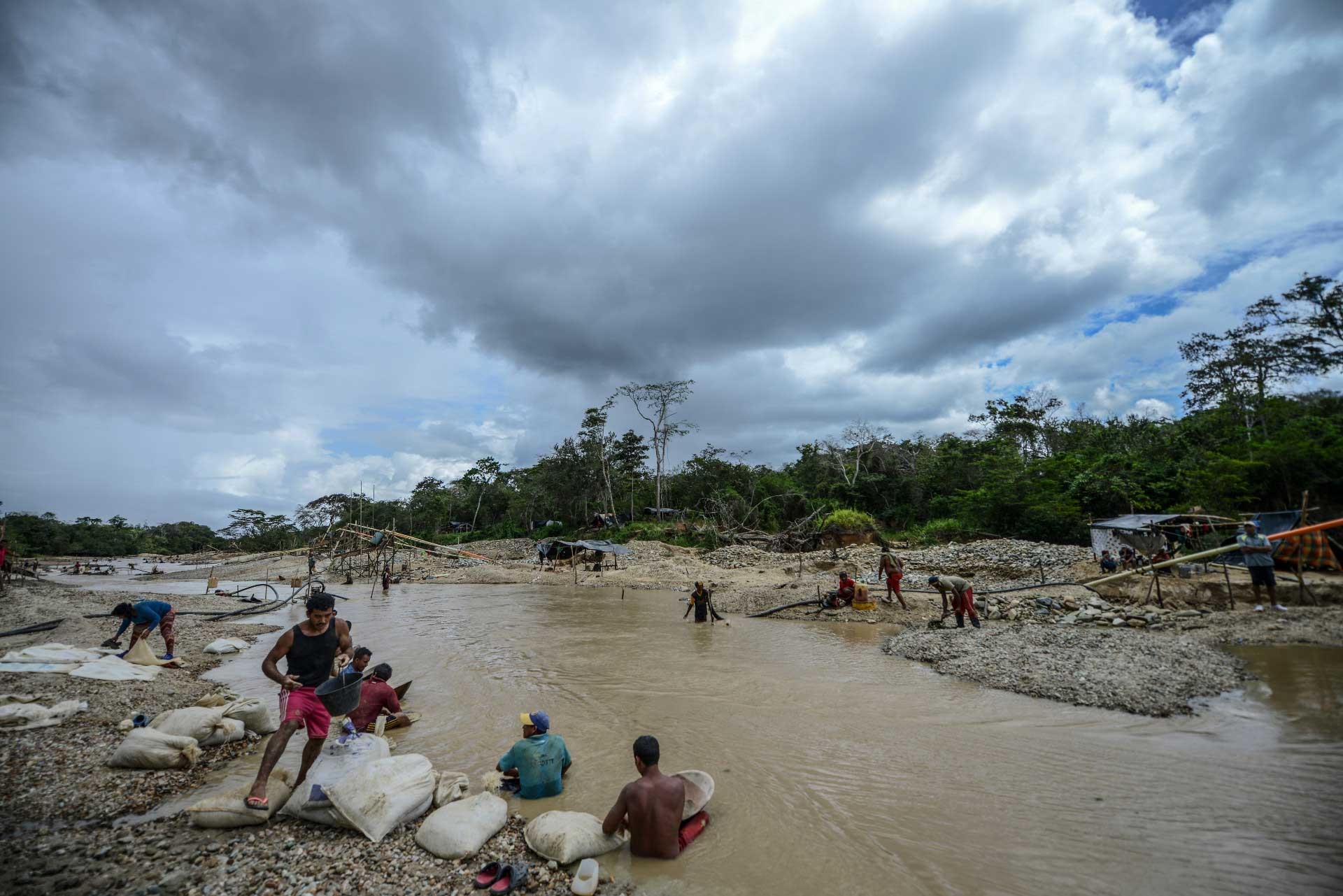
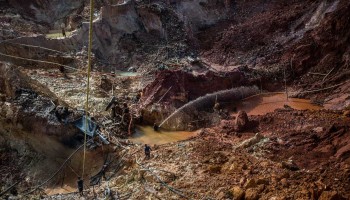
Gold mining in the Yuruari River.
“Gold exploited in southern Venezuela is tainted by the most severe human rights abuses, including torture, summary executions, sexual violence and disappearances,” said Bram Ebus, a researcher with the International Crisis Group. “These wrongdoings have been widely documented and were known to industry actors.”
But between 2012 and 2018, a single trading company in Curaçao funneled huge amounts of gold from Venezuela into Europe, declaring most of it as “scrap” even though its co-founder later claimed much of it originated in mines.
Much of this gold was ultimately sold to Argor-Heraeus, one of the world’s largest refiners, invoices show.
Lawyers for Argor-Heraeus confirmed that much of the gold processed through this supply chain originated in Venezuela, but denied that it came from the country's problematic mines.
"Argor-Heraeus has not processed any mined gold from Venezuela but only scrap gold,” they wrote. They said the refinery stopped importing Venezuelan gold in 2017.
There is no evidence that Argor-Heraeus violated any laws or regulations in this case, since Venezuelan gold was permitted to enter the global supply chain if it was declared as “scrap” or “recycled” gold. But experts say the case spotlights a critical oversight failure in the global bullion trade that persists today: it is relatively easy for suppliers and intermediaries to misrepresent freshly mined gold as scrap, and to obscure the real origin of gold shipments.
The gold industry is largely self-regulated: The London Bullion Market Association (LBMA), which oversees the largest and most important gold market in the world, issues guidelines for companies to follow if they want to trade in London. But at the time, the LBMA did not require gold refiners to look beyond the first tier of their supply chains when buying scrap, which is sourced from melted-down jewelry, dental gold, or recycled coins and bars, not directly from mines.

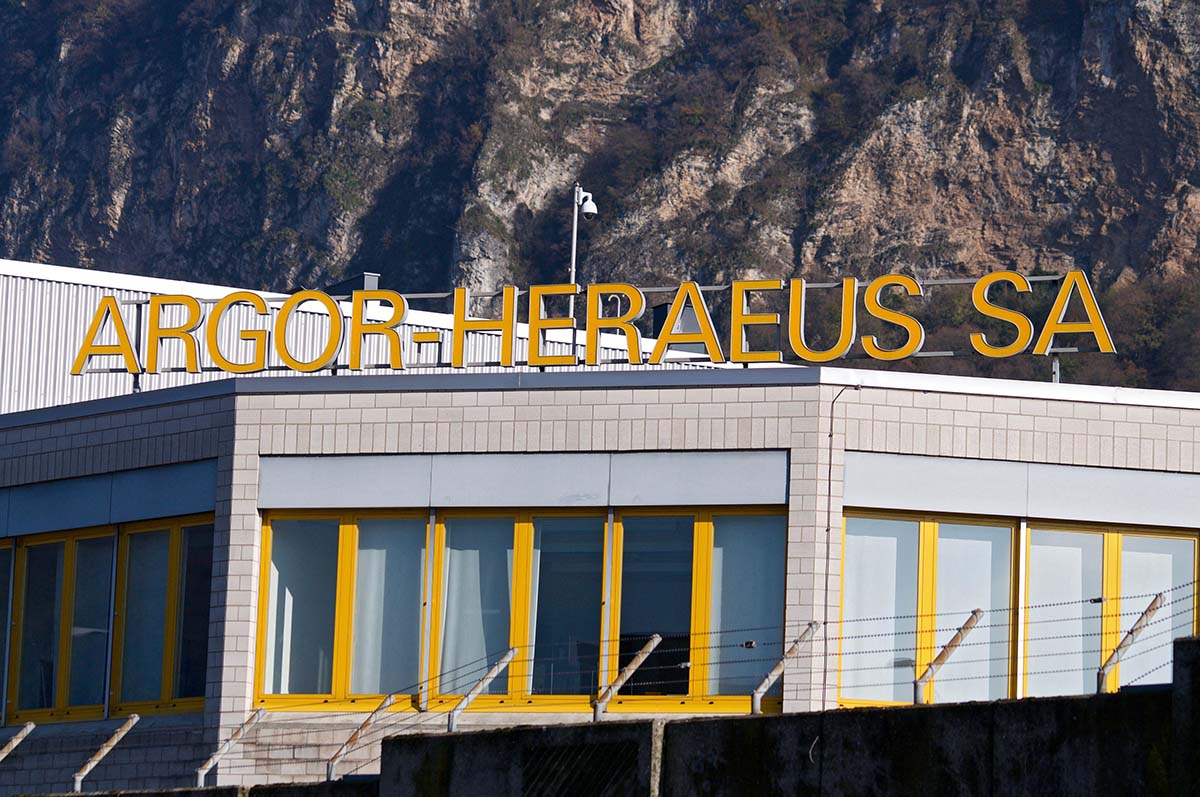
Argor Heraeus's headquarters in Ticino, Switzerland.
This meant that Argor-Heraeus was only required to conduct due diligence on its immediate supplier in Switzerland, even though it was aware that the gold it purchased had actually been sent from Curaçao, and that much of it had been sourced from Venezuela — both considered highly risky sources of gold, according to multiple supply-chain analysts who spoke to OCCRP and partners. (Argor-Heraeus said it had always conducted stringent due diligence on its supply chain.)
The LBMA says it has tightened its reporting requirements over time, but Juliane Kippenberg, a campaigner at the NGO Human Rights Watch, told OCCRP the guidance still has some gaps: For example, it doesn’t require full disclosure of all suppliers, including all mines of origin.
European authorities also say that problems with the LBMA's regulation persist to this day: A 2025 European Commission assessment of the LBMA concluded that its Responsible Gold Guidance remained only "partially aligned" with EU regulations, citing a system of internal controls that is "not working effectively" in practice. (The LBMA said its requirements for public disclosures were unmatched by other industry schemes and that it had “released additional guidance” to address issues raised by the EC.)
The findings raise questions about how much mined Venezuelan gold may have entered the global supply chain under the guise of scrap — finding its way into everyday products like mobile phones, laptops, and electric vehicles at devastating cost to the country’s indigenous lands.
Hundreds of U.S.-listed companies, including Apple, Nvidia, and Tesla, declared Argor-Heraeus was part of their gold supply chain during the period it was buying gold from Curaçao, according to their filings to the Securities and Exchange Commission. (There is no suggestion companies purchasing from Argor-Heraeus knew, or should have known, about the origins of the gold it provided them. Apple and Tesla did not reply to requests for comment. Nvidia said: “We routinely review suppliers to ensure compliance with our responsible mineral policy and conduct due diligence to ensure our products are sourced responsibly.”)
A Golden Destination
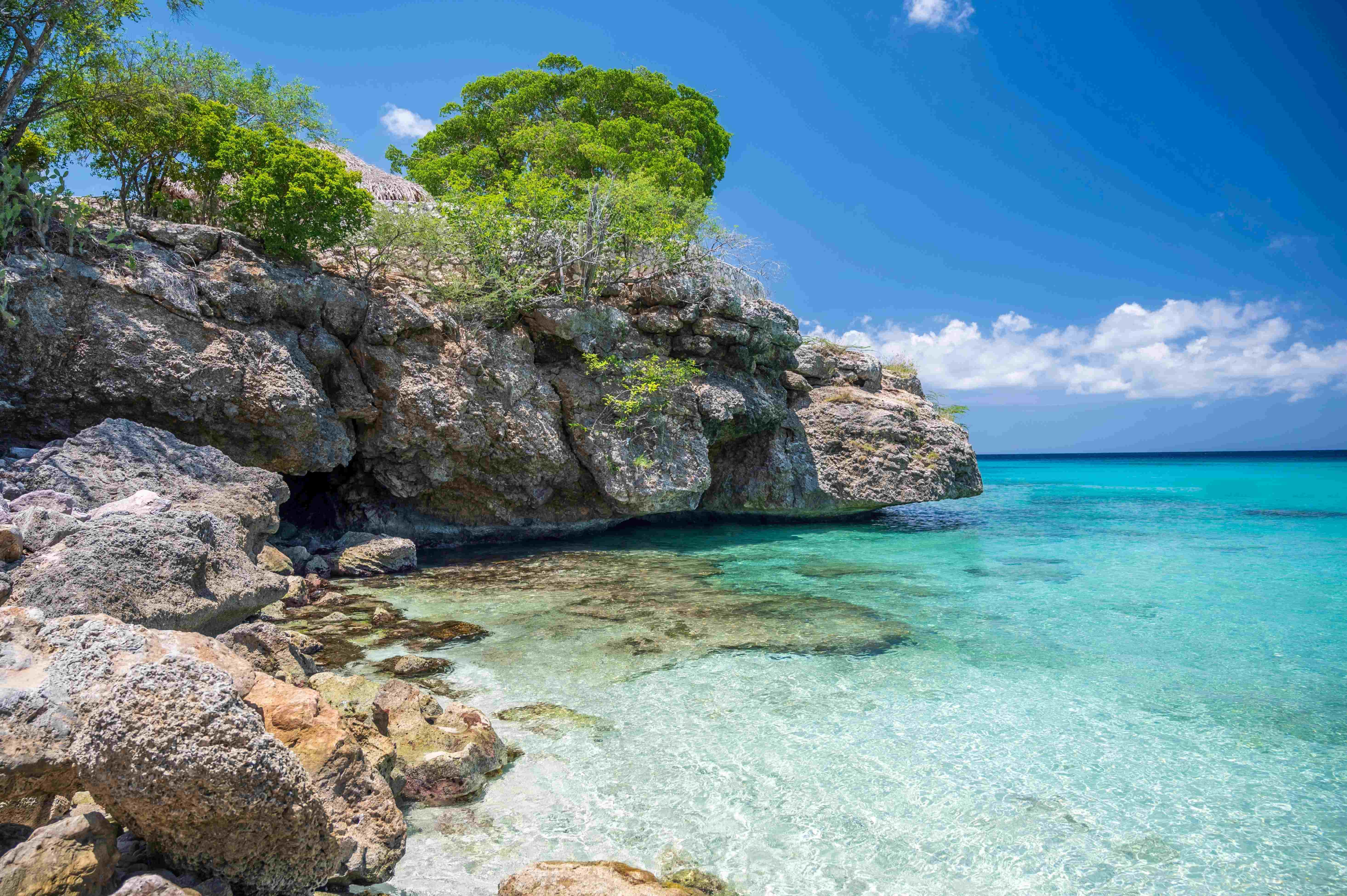
A beach on the Dutch Caribbean island of Curacao.
Turquoise waters, white-sand beaches, iconic Dutch colonial facades painted yellow, pink, and blue — Curaçao is a postcard-perfect Caribbean destination for honeymooners and cruise stopovers.
But there’s more to the island than its picturesque beauty. A Dutch territory with a free-trade zone and direct connections to Europe, it is also an ideal transit point for both legal and illegal trade.
In the 2010s, this tiny island with 150,000 residents and no gold mines suddenly emerged as a major gold-trading hub, with more than 110 metric tons of the metal, worth $4.5 billion, leaving the territory, according to data from the U.N.’s Comtrade database. (In comparison, the entire annual gold production of Colombia, one of the largest gold producers in South America, is around 60 tons.)
“There was no plausible reason why there would be large flows going through Curaçao,” said Alan Martin, head of responsible sourcing at the LBMA.
Around 2018, Martin says, the LBMA asked its members to stop accepting gold from the island. "If we look at the volumes, there aren't enough jewelry stores to justify them. It was clear to us that it wasn't a legitimate source.” But where was all this Curaçao gold coming from?
The answer lies just 70 kilometers to the south, in Venezuela — a mineral-rich nation with a crumbling economy.
In 2011, President Hugo Chávez had nationalized the country’s gold mining sector, forcing out international firms and declaring that all gold mined in Venezuela was state property — at least in theory.

President Hugo Chávez signing documents during a cabinet meeting at the Miraflores Palace in Caracas on August 23, 2011, to formalize the nationalization of Venezuela’s gold mining industry.
In practice, Colombian guerrillas, criminal syndicates, and military units jostled for control over individual mines, according to a 2019 International Crisis Group report, “Gold and Grief in Venezuela’s Violent South.”
“The economic and power vacuum in mining areas created by that policy shift almost immediately led to criminal encroachment into the sector,” the Organization for Economic Cooperation and Development (OECD) wrote in a 2021 report on gold flows out of Venezuela.
After Chávez’s death in 2013, his successor, Nicolás Maduro, faced collapsing oil revenues, soaring inflation and tightening international sanctions. The regime began treating gold as "the new oil,” according to the OECD. In February 2016, Maduro created the Orinoco Mining Arc, a zone of 112,000 square kilometers designated for extraction of gold, coltan, and diamonds.
What followed was an environmental and human-rights catastrophe that made Venezuelan gold globally notorious.
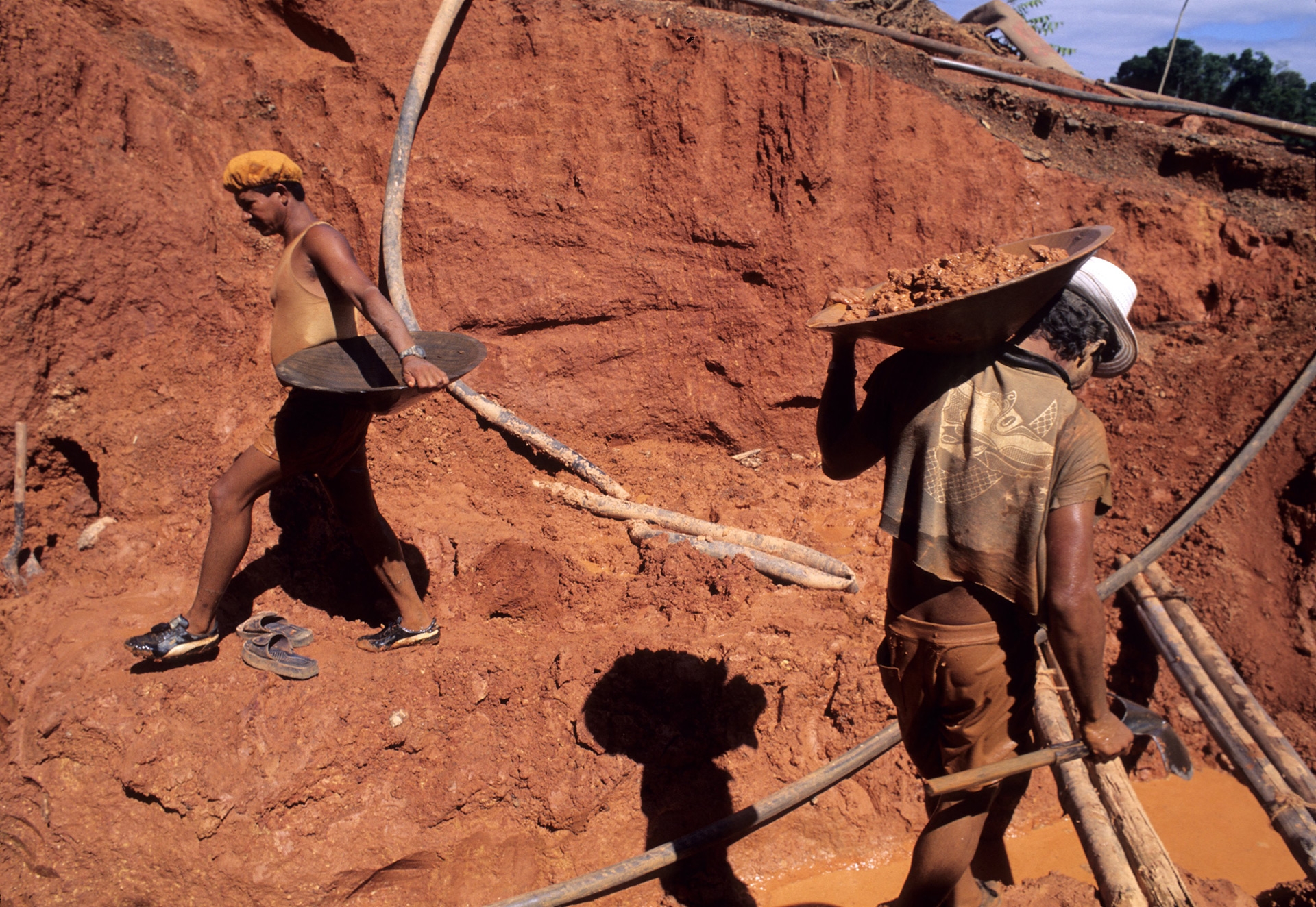
Gold diggers near Las Claritas, Venezuela, in 2007.
Over 2,500 square kilometers of the Venezuelan Amazon was deforested, with mercury from mining contaminating rivers, poisoning fish, and damaging technology used to provide fresh drinking water, according to a 2024 State Department report on gold extraction in Venezuela.
The U.N. High Commissioner for Human Rights documented extensive labor exploitation, child labor, sexual trafficking, killings, and disappearances in the mining zones.
“The mining and subsequent sale of gold has been one of the Maduro regime’s most lucrative financial schemes in recent years, as hundreds of thousands of miners have mined for gold in dangerous, makeshift mines in southern Venezuela, all of which are controlled by the Venezuelan military, which, in turn, corruptly charges criminal organizations for access,” the U.S. Treasury wrote in 2019.
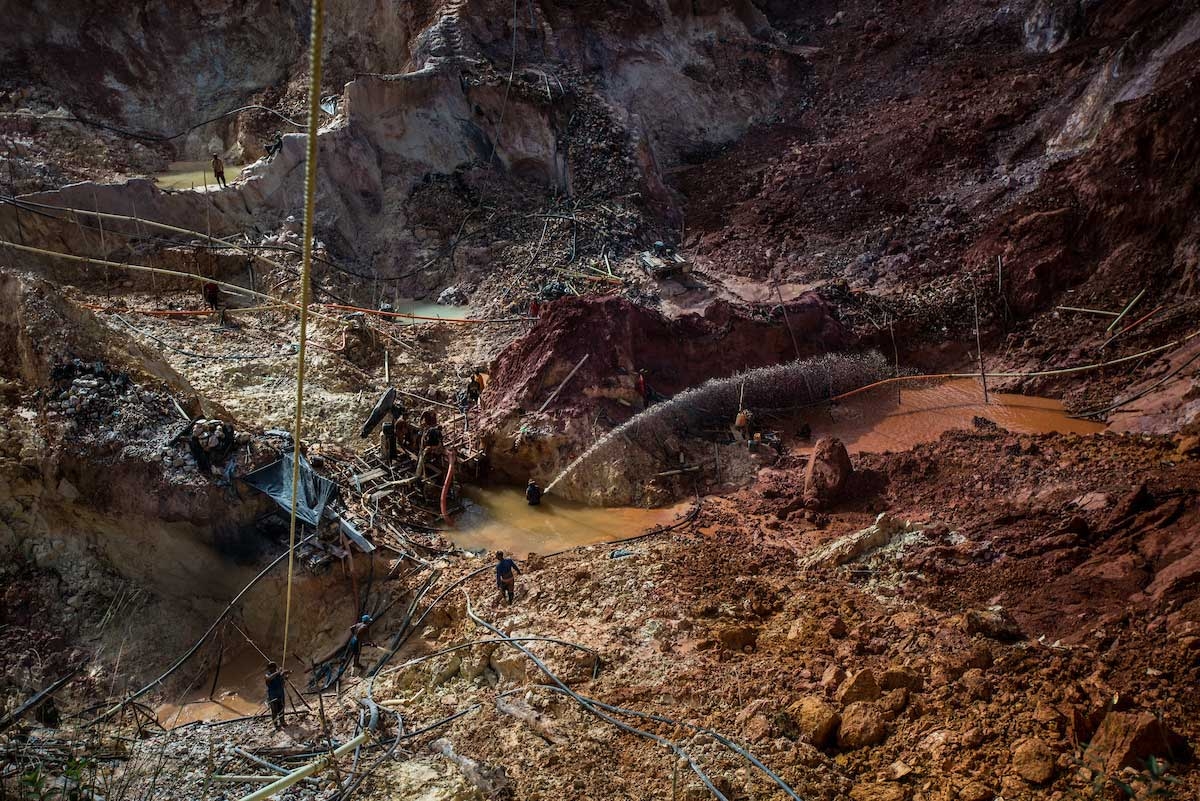
Mining in the Orinoco Arc.
By 2019, a half-decade into its economic collapse, Venezuela was bleeding gold.
Transparency International’s local chapter estimates that some 70 percent of the country’s gold production was trafficked abroad during this period, since the government had made the independent gold trade illegal and required all producers to turn over what they had mined to the Central Bank.
In its 2021 report, the OECD highlighted the role of Curaçao, along with its sister islands Aruba and Bonaire, as a key transit hub for gold fleeing Venezuela.
“Gold transiting the Free Trade Zones (FTZs) in Aruba and Curaçao in particular was routinely shipped out as originating on the islands, effectively erasing its country of origin, and traveled to Europe easily on commercial flights, often heading to Switzerland or Dubai,” the report said, calling the volumes of gold transiting through Curaçao “striking.”
It was against this background that large amounts of gold began flowing from Venezuela to a company called Curaçao Precious Metals & Co., or Cupremeco for short.
From Venezuela to Switzerland, via Curaçao
Registered in one of Curaçao’s free-trade zones, Cupremeco was set up in 2010 by Venezuelan gold broker Héctor Óscar Castellón and Mario Pataro, part of an Italian family that migrated from Italy to Panama after World War II and became major players in the regional gold trade.
The company was established as a trading firm that transported shipments of gold from “clients” in South America to sell in Switzerland, Pataro explained in a deposition given in 2014 as part of his divorce case in a Florida court.
All of these gold suppliers were, in fact, located in Venezuela, he told OCCRP in an interview in December last year.
From Curaçao, the gold would be shipped to Argor-Heraeus’s refinery in Mendrisio, Switzerland.
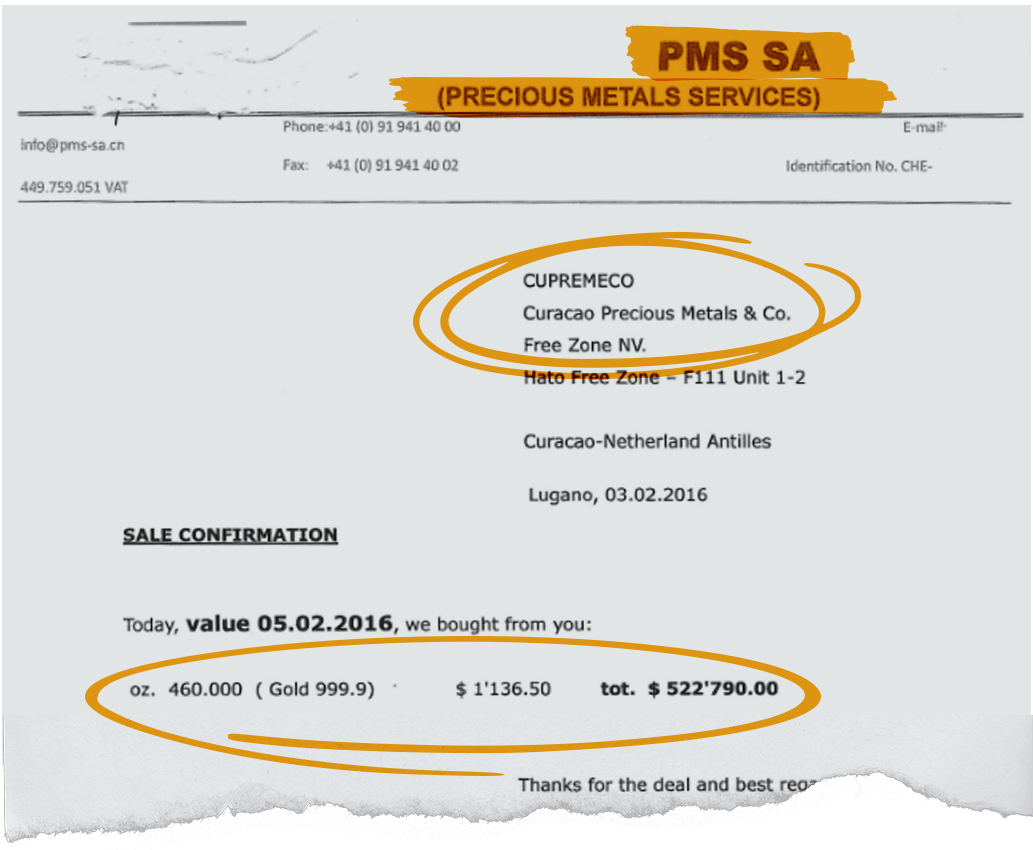
But there was another stop along the way — at least on paper. Invoices show the gold was officially sold to a Swiss-registered broker called PMS SA (Precious Metals Services), which then sold it on to Argor-Heraeus to be refined.
Though Precious Metals Services was technically Argor-Heraeus's immediate supplier, it never took physical possession of the gold, which Cupremeco delivered directly to the Swiss refinery.
According to testimony given by Castellón in Pataro’s divorce proceedings, Precious Metals Services was set up by Marco Briccola, a close business partner of Pataro’s, specifically to act as a middleman company that would help the gold ease through Argor-Heraeus’s compliance procedures. (The divorce proceedings focused in part on establishing Pataro’s wealth, during which time Castellón was questioned on his long-standing business relationship with Pataro.)
“In order for different people to open big accounts in different refineries … you've got to go through … 'know your customer'.… It is a very lengthy process and a difficult process and not everybody makes it. So we decided to go another route,” Castellón told a Florida court while testifying.
“We decided to go through Mario [Pataro], and Mario himself goes through another company that is the one that delivers to Argor-Heraeus in Switzerland.… It is a compliance thing,” he testified.
We decided to go through Mario [Pataro], and Mario himself goes through another company that is the one that delivers to Argor-Heraeus in Switzerland.… It is a compliance thing.
Venezuelan gold broker Hector Castellón
Upon arriving in Switzerland, the gold was declared to Swiss customs as having originated in Curaçao. (The “origin” country of a shipment can refer to either the country in which the product was completely obtained or where the last significant processing took place. In the case of gold, the last significant processing refers to the refinery process, a spokesperson for the Federal Office for Customs and Border Security in Switzerland told reporters.)
Argor-Heraeus told OCCRP it could not confirm Castellón’s characterization of Precious Metals Services as a middleman intended to help pass compliance processes, which it said “would amount to an elaborate fraud to deceive downstream service providers.” (Briccola disputed Castellón’s description of Precious Metals Services’ role. Pataro and Castellón did not respond to requests for comment on the matter.)
Argor-Heraeus said it had no business relationship with Cupremeco and dealt only with Precious Metals Services, and that it fulfilled “all due diligence requirements applicable at the time including KYC (Know Your Customer) checks on all parties along the supply chain known to us.”
The company said that, thanks to improved processes “over recent years…we no longer accept complex supply chain structures. As a result, we can nearly exclude fraudulent behavior circumventing our strict compliance measures nowadays.”
From Mine to Mobile: How Venezuelan Gold Moved Into the Global Tech Supply Chain

The Source
Brokers like Hector Castellón source gold in Venezuela.
“I was acting in Venezuela myself as a broker, buying and selling … and delivering the goods to Curaçao,” Castellón said in court testimony.
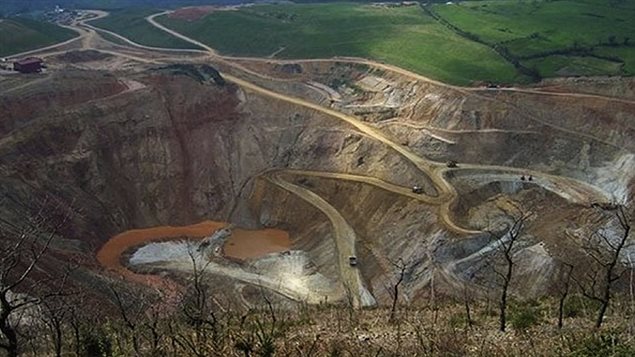
The Island Stopover
The gold is imported by Curaçao Precious Metals & Co, known as Cupremeco, based in a free-trade zone.
“Gold is coming to Curaçao from South America … After going to Customs, it's delivered to [logistics firm] Brink’s … Brink’s deliver the goods to [the airline] … And so the goods are shipped to Switzerland,” Mario Pataro, Cupremeco’s founder, testified in court.
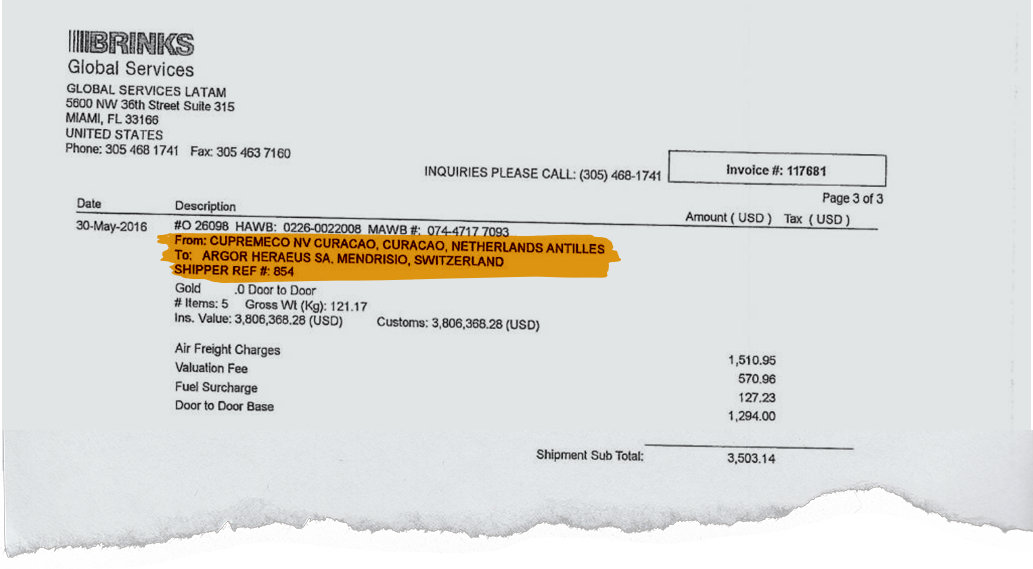
The Middleman
The gold is sold to PMS SA (Precious Metals Services), a Swiss firm owned by Marco Briccola, an associate of the co-founder of Cupremeco.
But the company never takes possession of it. Instead, the logistics company Brink’s delivers the gold directly to Argor-Heraeus.
“The goods left Curaçao, went to Amsterdam, and from Amsterdam went to Zurich, and in Zurich went to Argor,” Briccola told reporters. “They paid us a lot.”
The Refiner
Argor-Heraeus, one of the world's largest refiners, melts down the gold into bars meeting London Bullion Market Association standards. Once refined, the gold's origins become untraceable— it enters the market as "Good Delivery" gold.
Argor-Heraeus declares to the LBMA that the gold was sourced in Switzerland, since it was purchased from Precious Metals Services.
Big Tech
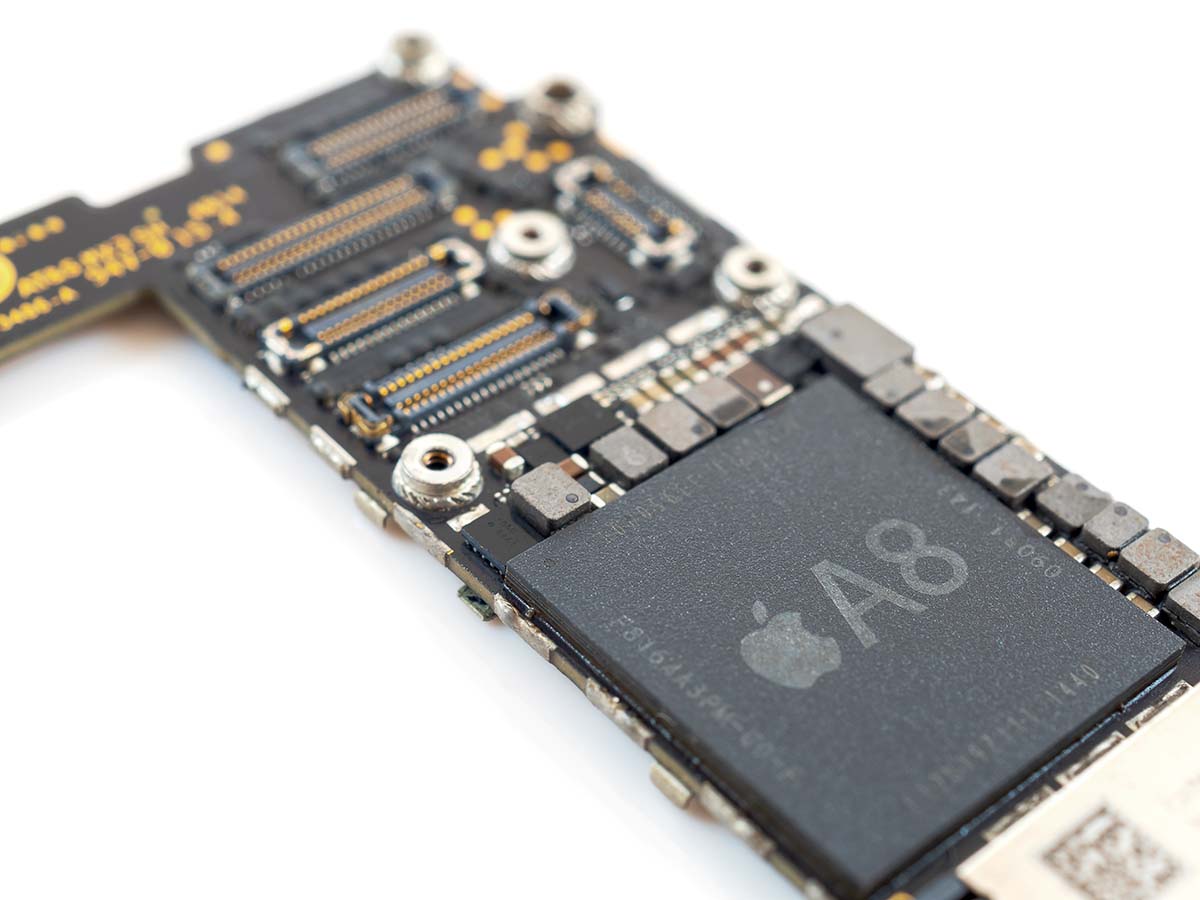
Some of the world’s largest technology companies, including Apple, Nvidia, and Tesla, declare in filings to the Securities and Exchange Commission that they sourced LBMA-approved gold from Argor-Heraeus.

The Consumer
The gold reaches consumers in everyday products like mobile phones, laptops, and electric vehicles.
The trade was lucrative: Between 2012 and 2018, gold valued at $2.2 billion was delivered from Cupremeco to Argor-Heraeus, according to invoices obtained by reporters. Bank records covering 2014 to 2019 show Precious Metals Services received around $1 billion from Argor-Heraeus for the gold it provided. (OCCRP was unable to account for the discrepancy between the two sets of documents. Argor-Heraeus said both figures were incorrect, but declined to provide corrections). For its role in moving the gold, Cupremeco received a cut of the earnings that Precious Metals Services received from Argor-Heraeus, according to Pataro.
Precious Metals Services then paid hundreds of millions of dollars to companies owned by the Venezuela-based brokers who sourced the gold for Cupremeco, or their family members, friends and associates.
One of those brokers was Castellón himself: Bank records show how Precious Metals Services paid more than $400 million to companies owned by him and by people in his close circle.
A second major gold supplier to Cupremeco was Marco Antonio Flores Moreno. Companies managed by him and his close family received more than $55 million from Precious Metals Services.
Flores Moreno was charged in Brazil in 2020 for being a central figure in a gold trafficking organization which allegedly sourced illegally mined gold in Venezuela, transported it to Brazil, and misdeclared it as “scrap gold” to avoid scrutiny, according to a Brazilian federal court decision. (The case is ongoing. Flores Moreno did not respond to a request for comment).
'Proceeds of Crime'
Cupremeco supplier Marco Antonio Flores Moreno's presence in Argor-Heraeus's supply chain ultimately led to a major gold seizure in the U.K., court records show.
Gold Mines or Gold Teeth?
Where were all these Venezuelan gold suppliers sourcing the metal from?
Although it was largely declared on Cupremeco invoices as “scrap” gold, there is evidence that a large percentage of it was actually freshly mined.
Castellón, the biggest supplier to Cupremeco, estimated that the majority of the gold he sent the Curaçao trading firm originated from mines.
"Some from pawnshops, but mostly mines," Castellón said in court testimony from Pataro’s divorce case.
For his part, Pataro doesn’t appear to have been paying much attention — he told OCCRP in December that he simply did not know where all the gold he sourced from Venezuela came from.
“Whether it comes from [a] mine or comes from a poor guy's teeth, I don't know,” he said.

One of more than 200 small gold trading shops in Las Claritas, Venezuela, in the Orinoco Mining Arc, seen in 2017.
Argor-Heraeus said forensic testing ruled out the possibility that any of the gold it sourced from Venezuela via Cupremeco and Precious Metals Services came from the country’s tainted mines. Instead, they said its chemical profile was consistent with scrap gold.
“The gold deliveries from [Precious Metals Services] to our client contained exclusively scrap gold,” lawyers for Argor-Heraeus wrote OCCRP.
They said that Argor-Heraeus had conducted X-ray fluorescence (XRF) analysis of the gold from Cupremeco, finding that “purity levels and quantities are consistent with scrap gold stemming from a mix of jewelry scrap and bullion.”
XRF testing is commonly used by refiners to determine the quantities of gold, silver and other elements in the bars they receive. This process can offer clues about the gold’s origin, since mined and recycled materials tend to have distinct compositional signatures.
Whether it comes from [a] mine or comes from a poor guy's teeth, I don't know.
Mario Pataro, co-founder of Cupremeco, on the gold he sourced from Venezuela
After receiving OCCRP’s questions, the refiner said it commissioned an independent expert, GeoBlock International, to analyze the tests it conducted on all gold deliveries received from Precious Metals Services from 2013 to 2019. GeoBlock corroborated the findings, Argor-Heraeus said.
“Both analyses confirm beyond any doubt that there was no evidence of primary material origins,” its lawyers wrote.
GeoBlock told OCCRP: “The evidence strongly supports the conclusion that the material was scrap gold, not primary gold from mining operations.”
Argor-Heraeus declined to share its laboratory results with OCCRP, citing confidentiality.
But OCCRP did independently obtain the results of 469 of Argor-Heraeus’s own refining operations for 6.5 metric tons of the gold it imported via Curaçao, mostly in 2016. The results show the amounts of gold and silver found in the material which Precious Metals Services delivered to Argor-Heraeus before the latter refined it.
Six experts who reviewed the results, including four university academics with specialties in geology or geochemistry, told OCCRP the purity levels suggested a mixture of mined gold and recycled gold.
“The compositional signature observed aligns more closely with partially beneficiated primary gold than with previously refined gold re-entering the market as scrap,” said one of them, Wendell Fabricio-Silva, a forensic geologist.
“The large amount of gold is not realistically obtainable through scrap alone, such that solely gold bullion from mining or scrap combined with mostly bullion from gold mining is the most logical explanation,” Richard Goldfarb, a professor of geology at Colorado School of Mines, told OCCRP.
Argor-Heraeus told OCCRP it rejected the analysis of experts “whose methodology and results were not shared with us in full. The allegations are based on [an] admittedly incomplete dataset, covering only 2016 with some data points from 2014 and 2015 and only limited to gold and silver content.”
It added: “Over recent years, we have significantly strengthened our standards and due diligence processes further, including mandatory on-site assessments and limiting partnerships to direct scrap collectors in the country of origin.”
The Limits of ‘Good Delivery’
As part of its standard-setting for the gold industry, the London Bullion Market Association maintains what it refers to as a “Good Delivery List” of refiners that follow guidelines based on OECD advice on “responsible” sourcing of gold.
By 2013, the LBMA required refiners importing mined gold from “high-risk” supply chains to verify the identities of each company in the chain, as far back as the exporter — or even the mine itself. If there was any possibility of human rights abuses or contribution to conflict at any step in this chain, they were required to immediately disengage from the supply chain.
Gold supply chain experts told OCCRP that in practice this advice would have made it extremely difficult for any refiner to source its gold from Venezuelan mines.
“The conditions of extraction and trade in Venezuela were well documented since 2011, particularly following the establishment of the Orinoco Mining Arc in 2016,” said Luca Maiotti, a policy analyst at the OECD.
But experts say the LBMA’s guidance at the time had a significant loophole: Although refiners had to follow a stringent due diligence process for gold sourced from mines, the same wasn’t true of recycled gold, which is considered less risky to purchase, since it has already been extracted and cannot come directly from conflict-tainted mines.
Refiners purchasing scrap gold only needed to scrutinize their immediate supplier, not their full supply chain. Because of this, freshly mined gold is sometimes intentionally mislabeled as recycled to evade scrutiny, or roughly smelted and made into crude jewelry, which can then be declared as “scrap.”
"Companies sourcing gold cannot take origin declarations or claims of being recycled at face value," said Maiotti.
Companies sourcing gold cannot take origin declarations or claims of being recycled at face value.
Luca Maiotti, Policy Analyst, OECD
Because the gold sold by Cupremeco had been declared as scrap and routed through Precious Metals Services, Argor-Heraeus was not required to look further back in its supply chain.
Instead, in submissions to the LBMA, Argor-Heraeus reported sourcing the scrap gold from a Swiss importer between 2013 and 2018, without mentioning a Venezuelan origin.
“LBMA’s review of Argor-Heraeus’s submissions for the relevant reporting period did not indicate sourcing from Venezuela or Curaçao,” the LBMA told OCCRP.
Argor-Heraeus said it had always exceeded the LBMA’s requirements under the applicable rules and regulations at the time. “This includes a structured and comprehensive due-diligence framework to all gold-supplying counterparties along the supply chain back to the actual origin of gold as far as technically possible,” the refiner added.
LBMA said it had updated its reporting requirements “[a]s part of continuous improvement” to include “country-level data from 2019 and subsequently, information on material types.”
How Robust Are the Gold Market’s Internal Checks?
The supply chain from Curaçao to Argor-Heraeus eventually ran aground for good in June 2019, after British and Cayman authorities seized a cargo from Cupremeco. Most of the gold was eventually forfeited as proceeds of crime. (See box above.)
The investigation was finally enough to splinter the relationship between Argor-Heraeus, Precious Metals Services, and Cupremeco.
“In line with our strict guidelines, we immediately disengage from supply chains or business partners whenever there is suspicion of fraudulent behavior,” Argor-Heraeus said of the incident.
“This approach was also applied in 2019 to the relationship with [Precious Metals Services] and its upstream supply chain, including Cupremeco.”

Gold bars seized from Cupremeco by the U.K.’s National Crime Agency.
But by then, the Curaçao corridor had already shifted more than $2 billion worth of gold into the global supply chain via Argor-Heraeus.
“Once the refiner has put it into those shiny gold bars that have their stamp on them, then it becomes legitimate and you lose all traceability and it flows into the international monetary system, into consumer electronics and jewelry and everything else,” said Quinn Kepes, Senior Program Director in the Raw Materials Programs Department at the nonprofit Verité, which helps companies identify labor risks in their supply chains.
This investigation was developed with the support of Journalismfund Europe.
Correction, March 10, 2026: This story was amended to reflect Argor-Heraeus’s comment that it had forensic laboratory analyses conducted on all gold deliveries received from Precious Metals Services from 2013 to 2019.