Reported by
A man who was glossed over in “sweeping sanctions” against a major Cambodian conglomerate appears to have played a far more significant role than was previously known in the corporate network, which the U.S. has labelled a “Transnational Criminal Organization.”
OCCRP has discovered that he participated under multiple identities in the Cambodia-headquartered Prince Group, which allegedly ran extensive cyber-scam operations. Three out of four of those aliases were not listed in the recent sanctions notice.
In October, the U.S. Treasury Department sanctioned a man known as “Chen Xiao’er” based on his partnership in just one company with Prince Group founder and chairman Chen Zhi. Last month, OCCRP revealed that Chen Xiao’er also holds significant assets under the name Wu An Ming, but that alias was not listed by sanctions authorities.
Now, reporters have uncovered two more identities: Hu Shi, and his birth name Hu Xiaowei. A closer look at those names shows that he has a deeper relationship with Chen Zhi, and the conglomerate, than U.S. authorities noted — including his ownership of two important Prince Group companies.
Under his birth name, Hu Xiaowei, he is reportedly being investigated in Taiwan for allegedly playing a major role in the Prince Group. According to local media, prosecutors have labeled him "second in command” under the group's chairman, Chen Zhi.
Taiwanese officials have not publicly connected Hu Xiaowei to his other aliases, and these links have not previously been reported in the media.
Teo Kang Yeow Cliff, a Singaporean man who previously managed some of the Prince Group companies, alleged that Hu Xiaowei held a position of significance to Chen Zhi.
Teo claimed that Chen Zhi, who was also born in China, looked up to Hu Xiaowei.
“Hu Xiaowei is the person who brought Chen Zhi into the business, online gaming,” Teo told OCCRP. “He’s a ‘big brother,’ that’s what Chen always said. He always treated him with utmost respect, that’s for sure.”
Teo was sued in Taiwan by four Prince Group firms that accused him of embezzlement. He told OCCRP he was afraid to travel to Taiwan and face charges, but he denied the allegations. He lost the case, and Taiwan has issued a warrant for his arrest. Teo said he was speaking out, because he was unwittingly drawn into Prince Group business he thought was legitimate, but parted ways when he began to suspect otherwise.
The U.S. and U.K. imposed sanctions on the Prince Group in October in a coordinated action, while South Korea followed suit in late November. All three governments accused the Prince Group of running compounds in Cambodia where workers were kept in conditions of slavery, and forced to carry out online scams that bilked billions from victims around the world.
The Prince Group has said the allegations are “baseless and appear aimed at justifying the unlawful seizure of assets worth billions of dollars.” The conglomerate did not respond to a request for comment.
Hu Xiaowei did not respond to requests for comment emailed to his assistant, who had provided statements for OCCRP’s previous article, which identified Chen Xiao’er as Wu An Ming and revealed he owned London properties worth more than $44 million. The assistant declined to answer a question at the time about Hu Xiaowei’s multiple identities.
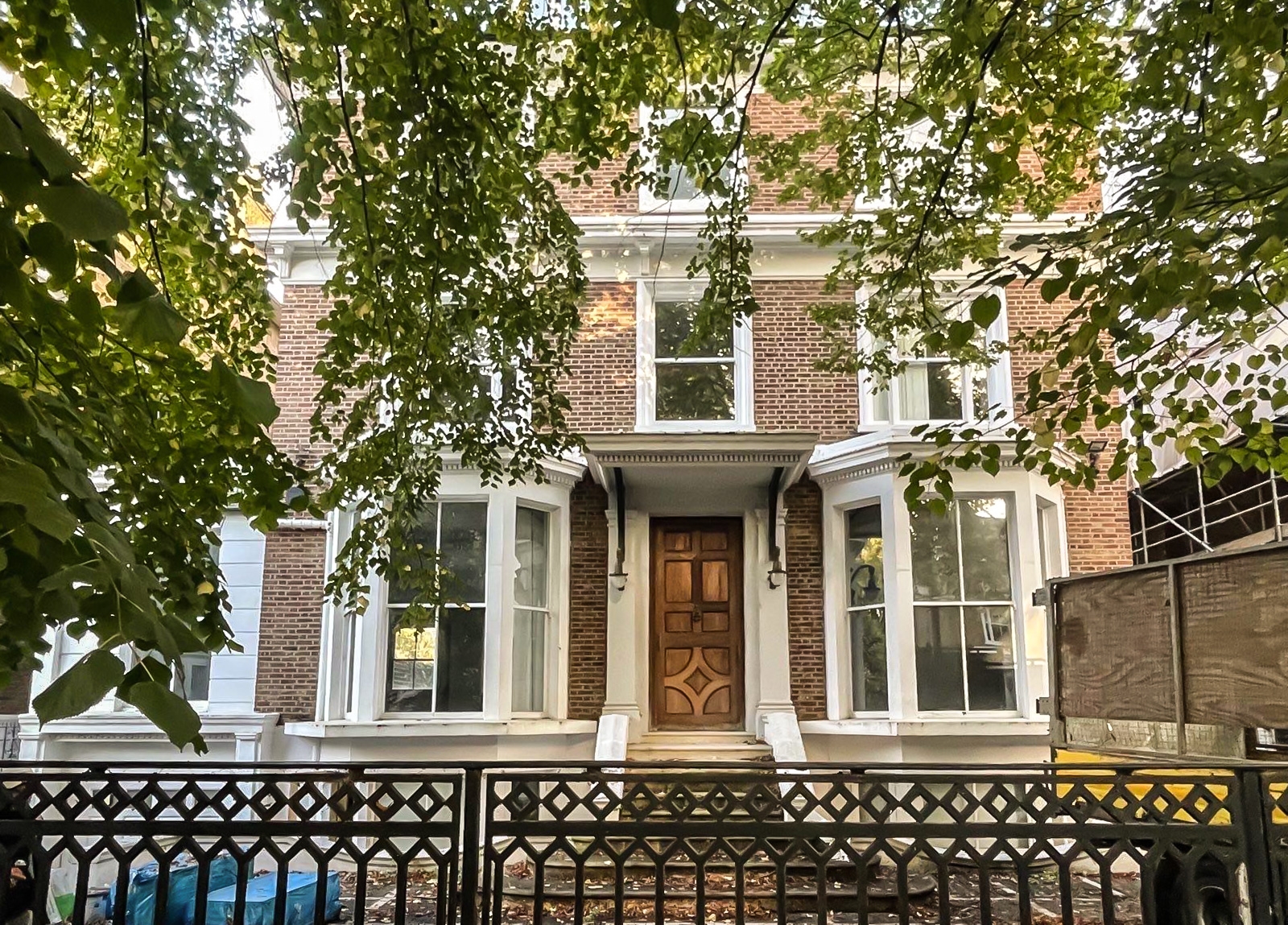
OCCRP
Names and Passports
OCCRP has now confirmed Hu Xiaowei, Hu Shi, Chen Xiao’er and Wu An Ming are all identities used by the same person — and that he has held citizenship issued by at least four different countries.
Hu Xiaowei was born in 1982 in China’s eastern Jiangsu province, according to information from corporate registries. The first public mention of him appears to be in Chinese state media reports from 2011, which cite authorities accusing him of leading the “Knight Attack Group” of criminal hackers.
The group was accused of hacking the servers of an online video game, according to media reports. The group then directed online traffic of the game through their own servers, and skimmed off advertising revenues worth more than $10 million.
Authorities reportedly arrested 19 members of the group in 2011, and some were convicted the following year. Hu Xiaowei, however, evaded arrest and fled the country, according to state-owned media.
He apparently returned to China sometime in the next few years, because he was arrested there in 2016 on charges of running an online gambling operation worth about $850 million, according to state media reports.

Hu Xiaowei
Journalists could not determine the outcome of that case, but by September 2017 Hu Xiaowei was in the U.S. where he was a director and shareholder in a medical investments company called New World Technology II Inc.
Carl Rausch, an American biotechnology entrepreneur who held 45.5 percent of the shares in that company, said Hu Xiaowei had been busted for illegal gambling in China, because he had refused to hand over a portion of the profits to corrupt authorities. He said Hu Xiaowei changed identities and acquired new citizenships in order to shake off Chinese law enforcement.
“He set up a Cyprus company so he could be inside the E.U., because he has somewhat of a following that he doesn’t want in China: the police,” Rausch told OCCRP.
In 2017, Cypriot records show, Hu Xiaowei applied for a passport under the European Union country’s citizenship-by-investment program, which has since been shut down. He received citizenship in 2018 under his birth name. However, corporate records show that he was using Hu Shi as the name in his Cypriot passport the following year.
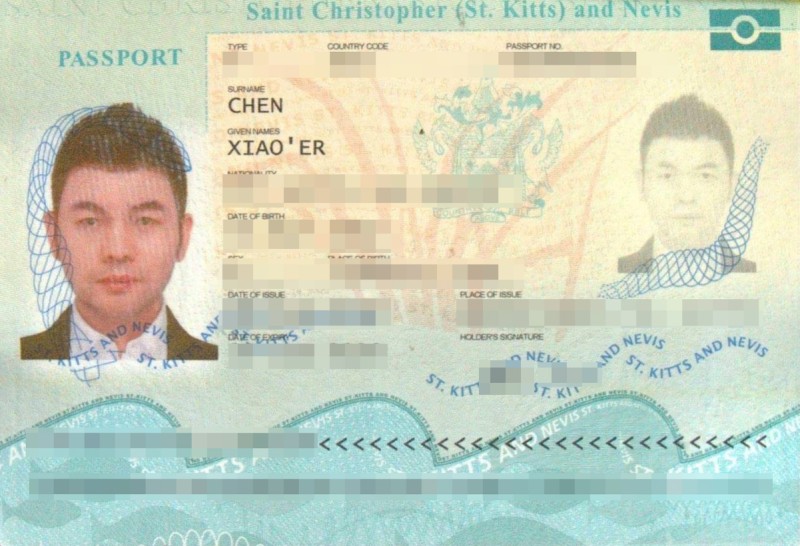
Also in 2018, Hu Xiaowei acquired citizenship from Saint Kitts and Nevis under the name Chen Xiao’er. By 2020, he had changed the name in that passport to Wu An Ming.
By January, 2020, Hu Xiaowei had also become a Cambodian citizen under his birth name. Two years later, Cambodia appointed him an advisor “with a rank equivalent to minister” to Heng Samrin, a top politician who at the time served as president of the National Assembly.
OCCRP obtained a copy of the Saint Kitts and Nevis passport. The passport photo matches images of Hu Xiaowei, including those provided directly to OCCRP, as well as others posted in Chinese media and on company websites. The year and place of birth also match information for Hu Xiaowei found in company registry and citizenship records.
Prince Group Player
Like Hu Xiaowei, Chen Zhi, the head of the Prince Group, was Chinese-born but obtained Cambodian citizenship and rose to lofty heights in the Southeast Asian country.
According to the U.S. Treasury Department, the Prince Group is a multi-national conglomerate with investments in sectors including entertainment, finance and real estate. But its real business is allegedly “scam compounds reliant on human trafficking and modern-day slavery where industrial scale cyberfraud operations target victims around the world.”
When the U.S. Treasury Department targeted the Prince Group, it sanctioned Hu Xiaowei — under the name Chen Xiao’er — in relation to a company that was developing a luxury resort in the Pacific nation of Palau. He had set up that company, under his Chen Xiao’er alias, along with Chen Zhi.
He previously told OCCRP, via his assistant, that the Palau firm was his only business with Chen Zhi.
However, corporate records show their business relationship stretches back to at least 2015 when they were both shareholders of Zhongjing Technology Investment Co Ltd., according to Chinese corporate records. He is listed in that company under his birth name, Hu Xiaowei.
Under the name Hu Shi, he was also listed as the 100-percent shareholder of Alphaconnect Investment Pte Ltd., and Alphaconect Investment Pte II Ltd. Those two Singaporean companies were among the 146 targets sanctioned by the U.S. Treasury as part of the Prince Group.
Both companies were shareholders in Taiwanese firms that purchased apartments in Taipei’s Peace Palace tower block in 2019. They did so alongside six other Taiwanese companies whose shareholders were also Singaporean firms owned by senior Prince Group executives, including Chen Zhi. In a two month period in 2021, all eight companies were transferred to Chen Zhi’s control.
The U.S. sanctioned Karen Chen Xiuling, who is listed as director of both Alphaconect companies. However, the sanctions list did not include the name Hu Shi who listed his residential address in corporate records at a $15-million coastal villa in Hong Kong. Land records show that he owns this villa under his Saint Kitts & Nevis identity.
OCCRP has previously reported Hu Xiaowei’s ownership of aircraft leasing companies. Several jets were leased to Cambodia Airways, a commercial airline that — as Radio Free Asia reported — was described by its communications officer as being part of the Prince Group.
The Prince Group holds more than 100 companies in 30 countries, according to a U.S. indictment for Chen and seven unnamed “co-conspirators.”
“In secret, CHEN and his top executives grew Prince Group into one of the largest transnational criminal organizations in Asia,” the indictment says.
There is no indication that Hu Xiaowei is among the co-conspirators in the indictment, and he was listed in the U.S. sanctions notice as a relatively minor figure — in relation only to his shared ownership with Chen Zhi of the company in Palau.
But the sanctioned companies — which OCCRP discovered he owns under the name Hu Shi — show that he actually played a role in the Prince Group’s real estate business that extends far beyond the Palau resort development project.
Teo, the former Prince Group employee who was a founding shareholder in one of the sanctioned real estate firms, called him part of the “team” that Chen Zhi had assembled around himself.
“He’s the most decent and well behaved among all the team,” said Teo, noting that Hu Xiaowei is “well groomed, tall, well mannered, speaks fluently in Chinese.”