Reported by
Jeffrey Epstein bought Venezuelan oil bonds issued by the hardline socialist state’s national oil company, according to newly-released documents. He was advised in the purchases by Francisco D’Agostino, a businessman currently wanted in Venezuela on charges of money laundering and criminal association.
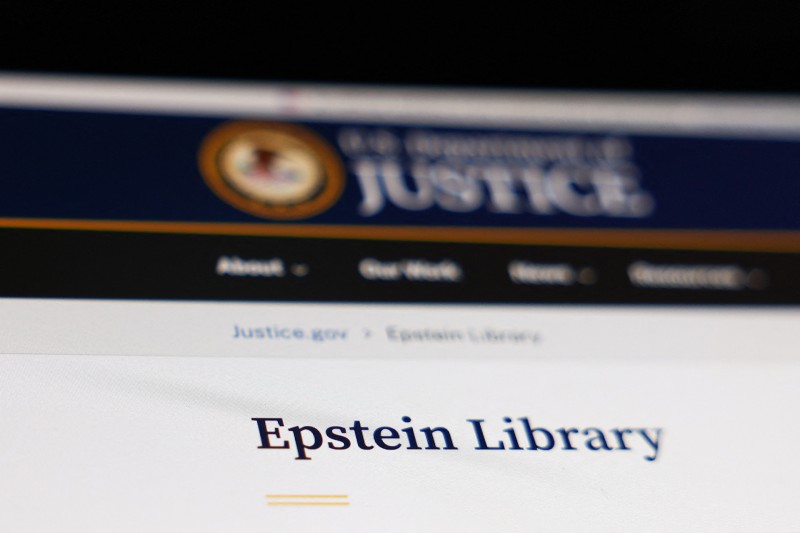
Emails included in the files released by the U.S. Department of Justice show that D’Agostino visited the Caribbean island owned by Epstein, which is at the center of sex trafficking allegations against him.
In correspondence between the two men, D’Agostino advises Epstein in his purchase of bonds issued by Venezuela’s state-owned oil company, Petróleos de Venezuela SA (PDVSA).
After talking business with D’Agostino, who holds both Venezuelan and Spanish citizenship, Epstein bought at least $4.5 million in oil bonds beginning in 2012. The bonds were set to mature in 2015 — during the period when Venezuela’s oil revenues collapsed, as corruption at PDVSA increased and production plummeted.
D’Agostino did not respond to requests for comment, which were sent by email and via his assistant by phone. OCCRP also emailed a lawyer who represented D’Agostino in Italy, but did not receive a response.
OCCRP was unable to obtain comment from PDVSA before publication.
'I had so much fun'
D’Agostino’s relationship with Epstein appears to have begun not in a financial institution or boardroom. Instead, emails refer to their meeting during a visit by D’Agostino to Epstein’s private island in the U.S. Virgin Islands, Little Saint James — which was sometimes referred to as “Little Saint Jeff’s.”
“I had so much fun in Little St Jeffery...and Jane, the water gazelle is really stunning...what a beautiful and smart girl,” D’Agostino wrote to Epstein in October 2012.
“I enjoyed very much talking to you and would love to continue=to explore the different possibilities to make some money together,” D’Agostino added in the email. “I see the beginning of fun longlasting friendship.”
In October 2012, D’Agostino proposed a series of meetings in Caracas, which suggests he enjoyed a high level of access to Venezuela’s political and economic elite.
Among those he proposed introducing Epstein to was Baldo Sansó, a financial adviser to PDVSA and brother-in-law of Rafael Ramírez, then president of the state oil company. OCCRP sent questions to an email address in Sansó’s name, but did not receive a response.
Epstein appears to have chosen to wait for the outcome of the October 2012 presidential election before making any plans to travel to Venezuela. When D’Agostino informed him that populist President Hugo Chávez had won his fourth term by approximately 10 percent, Epstein replied succinctly: “Great.”
An email from December 2012 shows D’Agostino keeping Epstein up to date about Chávez, who had been diagnosed with cancer and was rumored to be close to death.
“It seems very acccurate that Chavez has about 6 months left or less,” D’Agostino wrote, adding that Venezuela’s constitution would require elections within 30 days of a president dying.
“I think there is a very high probability that someone from the Chavez movement, but less radical will win the elections,” he predicted.
As political uncertainty pervaded in Venezuela, emails in January 2013 show Epstein offering to host D’Agostino again on his private island, telling him to “visit when you like.”
D’Agostino responded: “By the way…how is my water gaselle???” Epstein replied that she was “here and naked.”
Chávez died on March 5, 2013. His loyalist, Nicolás Maduro, won elections the following month. It is unclear whether Epstein ever made the planned visit to Caracas.
Increased Exposure
Over the two years following that exchange of emails, Epstein increased his exposure to Venezuela’s oil sector, placing direct orders for additional purchases of PDVSA bonds.
Meanwhile, the industry suffered a steep descent.
Venezuela’s oil revenues fell by 40 percent over 2014 and 2015, reportedly due to low prices. As the years wore on, PDVSA would be severely undermined by corruption, decimating Venezuela’s oil industry. The U.S. imposed sanctions on the entire oil sector in 2019.
That same year, Epstein was arrested on U.S. federal sex trafficking charges and later found hanged in his New York City jail cell, in a death ruled a suicide. American prosecutors were preparing to try him for allegedly abusing dozens of underage girls at his homes and elsewhere. He had pleaded not guilty.
D’Agostino himself came under scrutiny in the years after making contact with Epstein, and following his death.
One of the influential people he suggested introducing Epstein to was his alleged business associate Alejandro Betancourt López, a co-founder of Derwick Associates.
Derwick received contracts to build power plants directly from Venezuelan state companies without going through a competitive bidding process, OCCRP has reported. The company then overcharged the government by $2.9 billion, according to the Venezuelan chapter of the anti-corruption group Transparency International.
Betancourt did not respond to a request for comment, but told OCCRP in 2021 that he was innocent of the corruption allegations against him.
On November 6, 2012, D’Agostino wrote to Epstein: “Alejandro Betancourt, my business partner, and I are available to meet you Monday November 19th. Shall we have lunch? Your place?”
Multiple lawsuits alleged that D’Agostino was a key figure in Derwick's operations. These included a 2013 civil suit by a Washington lobbyist and former U.S. ambassador to Venezuela, Otto Reich, which accused him and several executives of bribery and racketeering linked to the energy contracts. That case was dismissed in a U.S. court for lack of jurisdiction.
D’Agostino has consistently denied holding a position at Derwick, and has not been charged or convicted in the alleged fraud. In 2024, Spain’s National Court reportedly opened an investigation into former executives of Derwick — including D’Agostino — over that alleged financial fraud, which involved Spanish companies.
D’Agostino was sanctioned by the U.S. Treasury in 2021 for “ties to a network attempting to evade United States sanctions on Venezuela’s oil sector.” Treasury removed him from its sanctions list last year.
Last month, D’Agostino was reportedly arrested on an international warrant from Venezuela, where he has been charged with money laundering and criminal association.
D’Agostino was detained while attempting to cross the border from Italy to France. He was released after Italian judges ruled he would be at risk of suffering inhumane or degrading treatment if imprisoned in Venezuela.