Reported by
Two small eastern Caribbean countries are facing new U.S. travel restrictions, apparently over concerns that their citizenship-by-investment programs allowed nationals of American adversaries such as Russia and Iran to obtain alternative travel documents.
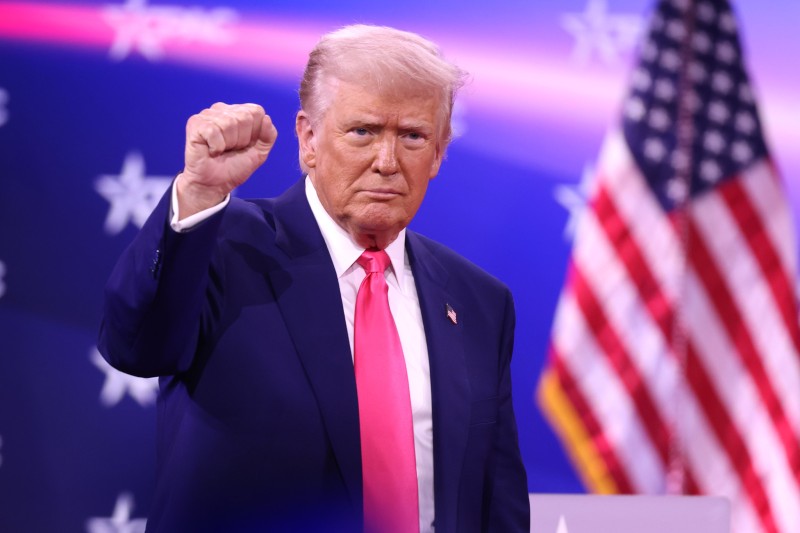
Starting in January, travelers from Dominica and Antigua and Barbuda will face restricted entry to the United States under a travel ban announced by President Donald Trump on Dec. 16.
A White House proclamation said the two nations were added to the blacklist because their citizenship-by-investment programs historically lacked residency requirements. The programs, sometimes called “golden passport” schemes, allow wealthy foreigners to obtain citizenship and a passport in exchange for direct payments.
The proclamation said the programs pose “challenges for screening and vetting” travelers and raise law enforcement and national security concerns. It added that such risks include allowing individuals to conceal their identities or assets to evade travel, financial or banking restrictions.
Three other Caribbean countries — St. Kitts and Nevis, St. Lucia and Grenada — also operate citizenship-by-investment programs but were not included in the ban.
Dominica Prime Minister Roosevelt Skerrit said the decision was unexpected and disappointing.
“Over the past several years, and particularly throughout 2024 and 2025, Dominica has worked closely with the United States through multiple channels,” Skerrit said in a Facebook post a day after the ban was announced. He said those talks addressed concerns raised by Washington about the program’s operations.
Skerrit said his government is seeking talks with the Trump administration before the restrictions take effect. “The government of Dominica is seeking clarification on whether the measures already implemented satisfy the conditions referenced in the proclamation, and if not, what additional actions may be required,” he said.
Concerns over citizenship-by-investment programs were highlighted in a 2023 investigation by the Organized Crime and Corruption Reporting Project and its partners, which reviewed 7,700 individuals who obtained Dominican citizenship. The investigation identified people including Russian oligarchs, alleged agents of Iran’s Revolutionary Guard, fugitive fraud suspects and war crimes figures.
Since then, Caribbean governments have taken steps to reform the programs, including raising minimum investment thresholds, introducing residency requirements and strengthening background checks and interviews.
In September, the five Caribbean nations with such programs agreed to create the Eastern Caribbean Citizenship by Investment Regulatory Authority, an independent body meant to regulate brokers, enforce anti-money laundering standards and coordinate data-sharing to prevent competition that weakens oversight.
The authority was formed with input from U.S. agencies including the Treasury and Homeland Security departments, as well as from the European Commission and the British government.
It is also set to work with the Joint Regional Communications Centre, part of the Caribbean’s regional crime and security agency, to coordinate vetting and biometric data collection. The center already cooperates with the U.S. Department of Homeland Security and will now maintain a regional database of citizenship applicants.
Despite those steps, Dominica and Antigua and Barbuda were added to a U.S. travel ban list that now includes 39 countries.