Reported by
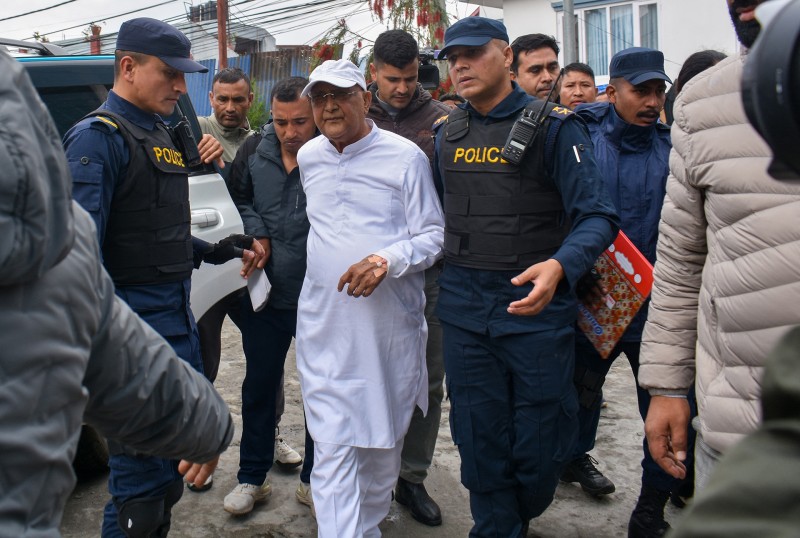
On March 28, dozens of police officers moved in the predawn darkness through the streets of Gundu, a village east of Nepal’s capital, to raid the home of the country’s former prime minister, K.P. Sharma Oli.
By the time the sun had risen, Oli was under arrest on charges of criminal negligence related to the killing of 76 people during the “Gen Z” protests last year that led to his ouster from power.
“No one is above the law,” said Sudhan Gurung, a former DJ and the country’s newly-installed home minister. “This is not revenge against anyone, it is just the beginning of justice.”
Oli’s arrest came just 18 hours after the new government was sworn in, led by a champion of the Gen Z protests, 35-year-old former rapper and Kathmandu mayor Balendra Shah.
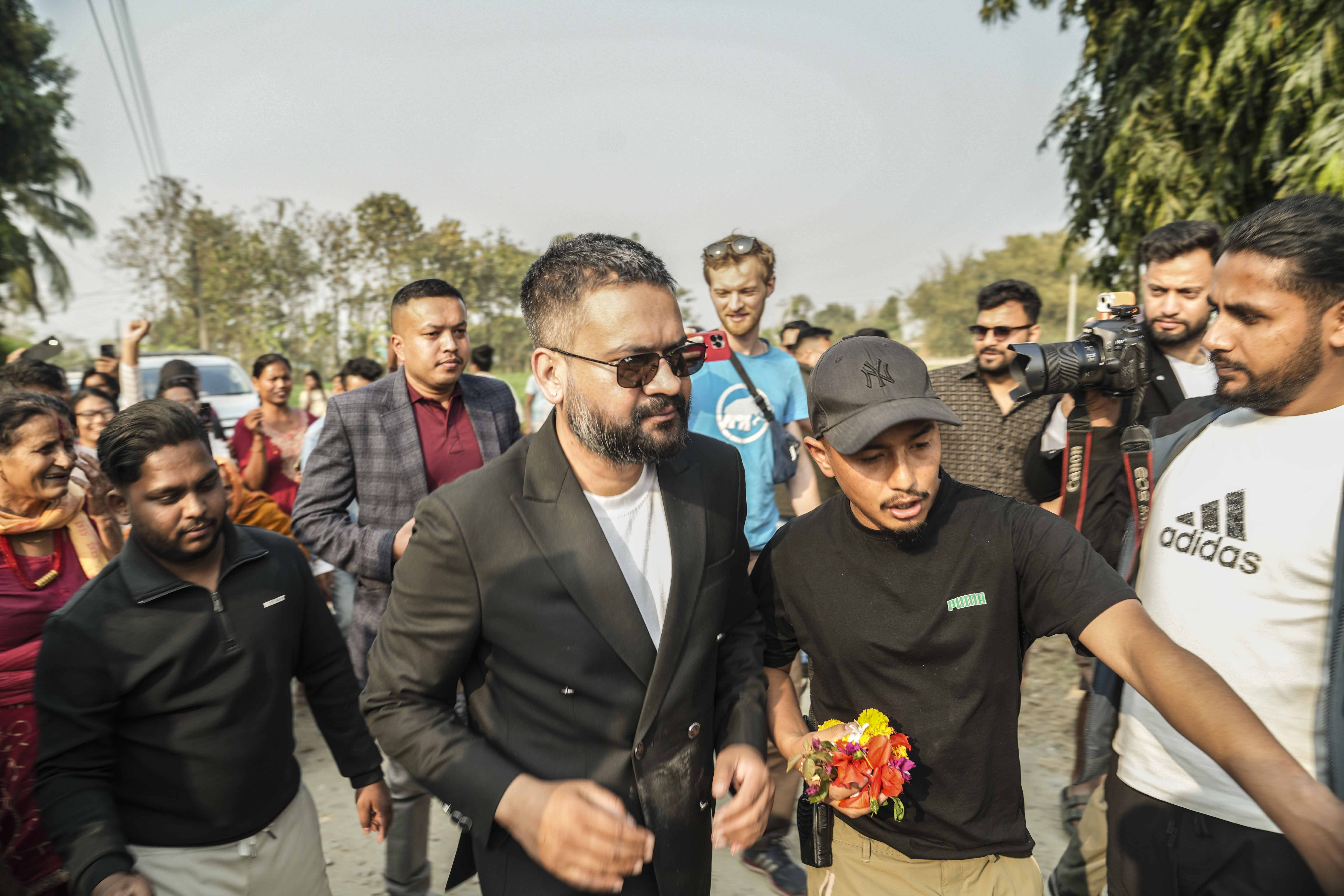
Ex rapper and mayor of Kathmandu Balendra “Balen” Shah during his election campaign to become prime minister in Jhapa–5, Nepal, February 22, 2026.
The judicial pursuit of Oli, his former home minister Ramesh Lekhak, and other high-profile politicians was a sign that Nepal's political order had dramatically shifted.
Gone was a discredited political elite dominated by a handful of political parties and their aging leaders.
In its place was a young, savvy new leadership that, in a few short days, arrested 10 high-profile figures on charges that include money laundering, child labor abuse, and criminal negligence related to protest deaths.
Five of them have since been released, three on bail and two on the condition they remain available to investigators. (After his release, Oli said he had been detained illegally, accusing the government of pursuing "a criminal case with prejudice and vindictiveness." His former home minister Lekhak did not respond to OCCRP’s request for comment.)
For many Nepalis, the arrests feel like a long-delayed comeuppance for a political class that has mired the country in corruption and underdevelopment, pushing many young people to emigrate to make a living.
“They looted the public — the leaders just colluded with each other and feasted. They kept making the poor and those suffering even more miserable,” Gopal Prasad Koirala, a 48-year-old from Kathmandu, told OCCRP.
Experts, however, caution that the arrests do not mean that Nepal has definitively turned a corner.
Ranking 109 out of 182 countries on Transparency International’s corruption perceptions index, the country faces complex challenges. And while there is a history of new governments sweeping to power with big promises, the country has far less experience with follow-through.
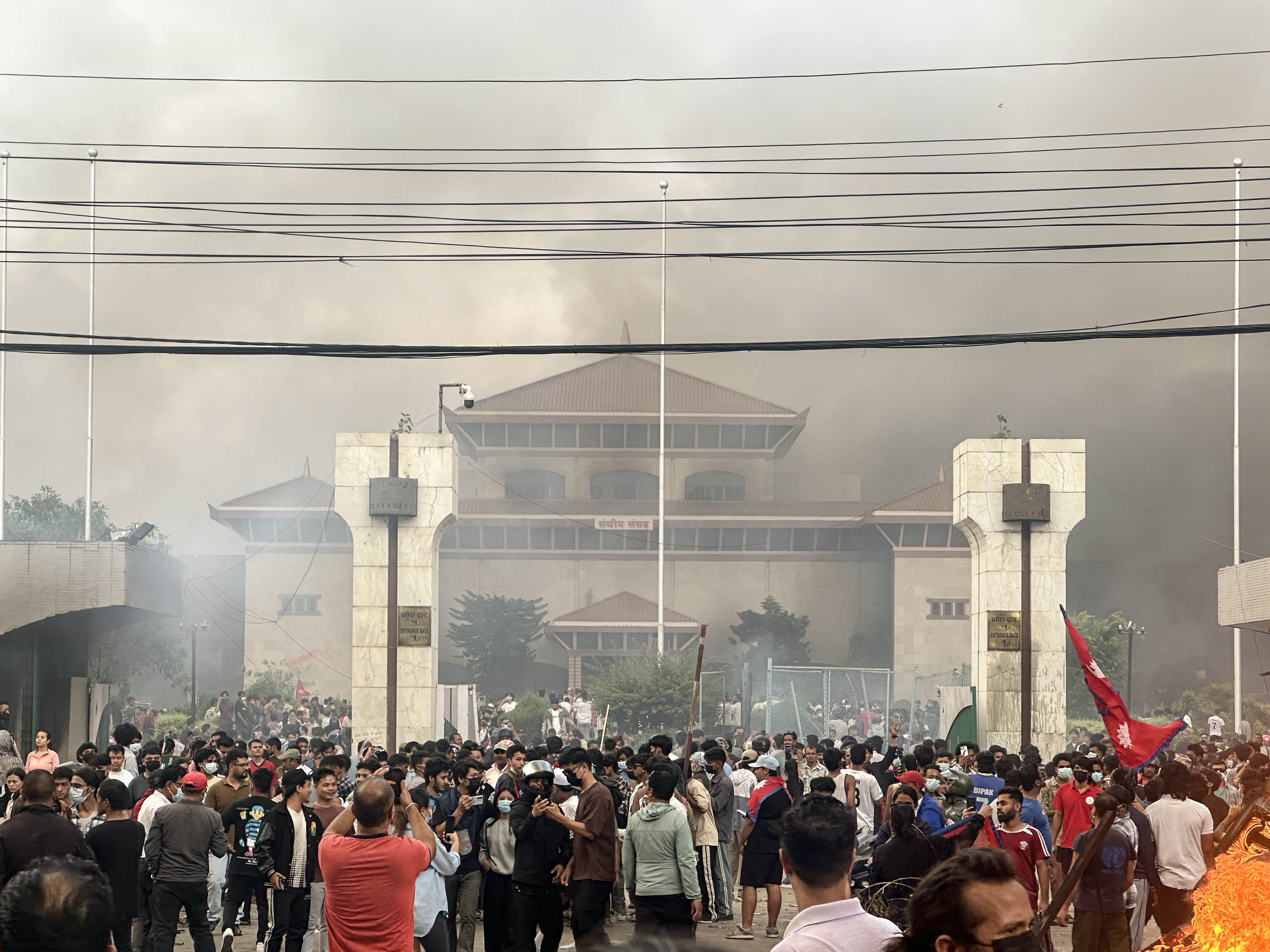
Nepal’s parliament building burns amid Gen Z-led protests in Kathmandu on September 9, 2025.
'No One Could Do It Until Now'
For over three decades, Nepal has been dominated by a small coterie of leaders who have rotated through power while failing to fix the economy and improve services.
It was previously considered unthinkable that such top political figures would ever be held to account.
"In these 35 years, no one could do it until now,” Nepal’s former acting auditor general, Shukdev Bhattarai Khatri, told OCCRP of the recent arrests.
“Earlier, the top leaders had to protect their own party members. All of them fell into the same trap."
Since Prime Minister Shah’s Rastriya Swatantra Party (RSP) took power with a near two-thirds parliamentary majority last month, his administration has moved at an incredible pace.
The Himalayan country’s new Home Minister Gurung seems to have reveled in the crackdown, keeping what appeared to be a rolling tally of arrests on his Facebook page.
"If anyone asks you for a bribe, tell the police. There will be zero tolerance for corruption,” he said on his first day in office.

K.P. Sharma Oli (seated) shakes hands with Sher Bahadur Deuba during the Nepal Investment Summit 2017 in Kathmandu, Nepal, on Thursday, March 2, 2017. Pushpa Kamal Dahal (seated, first from left), like Oli and Deuba a former prime minister, is also present.
The list of arrested former officials includes ex-energy minister Deepak Khadka, who was detained as part of a money laundering probe. A lawyer representing Khadka, who remains in detention, declined to comment.
Arrest warrants have also been issued for another former prime minister, Sher Bahadur Deuba, and former foreign minister Arzu Rana Deuba in a separate money-laundering inquiry, although neither have been arrested or charged. (Sher Bahadur Deuba has publicly rejected the allegations, saying he has dedicated his life to establishing a democratic system of governance in Nepal. Arzu Rana Deuba could not be reached by OCCRP for comment.)
Well-connected businesspeople have been swept up in the crackdown too.
Among them is the prominent businessman Deepak Bhatta, chairman of Kathmandu-based business conglomerate Infinity Holdings, who is under investigation for a series of suspicious transactions, according to authorities. The chairman and vice chair of the local conglomerate Shanker Group have also been arrested in connection with the money-laundering investigation into Bhatta.
Bhatta’s lawyer declined to comment, while a lawyer representing Shanker Group's leadership did not immediately respond to OCCRP’s request for a statement.
Less prominent figures have also been targeted for alleged corruption.
Nepal’s police told OCCRP that since the new government came to power more than 460 people have been arrested and charged for acting as middlemen in illegal activities such as bribery in government offices or “hooliganism” — intimidating or harassing members of the public to make illegal payments in exchange for public services.
More than 330 have been released on bail, and 130 remain in custody pending investigation.
The cases now publicly under investigation span years of unfinished business.
They include allegations of money laundering by senior politicians; a scheme in which Nepali citizens were fraudulently documented as Bhutanese refugees and resettled in the United States; the systematic misappropriation of high-value public land; and alleged corruption in the construction of Pokhara International Airport.
'Just a Part of That Cycle'
While the pace of change has been impressive, analysts caution that Nepalis’ high hopes for change have been dashed before.
Last year’s anti-corruption protests were the third popular uprising in the Himalayan country in the last four decades.
A 1990 “People’s Movement” forced the country’s king to lift a ban on political parties, while a 2006 revolution removed the centuries-old monarchy itself.
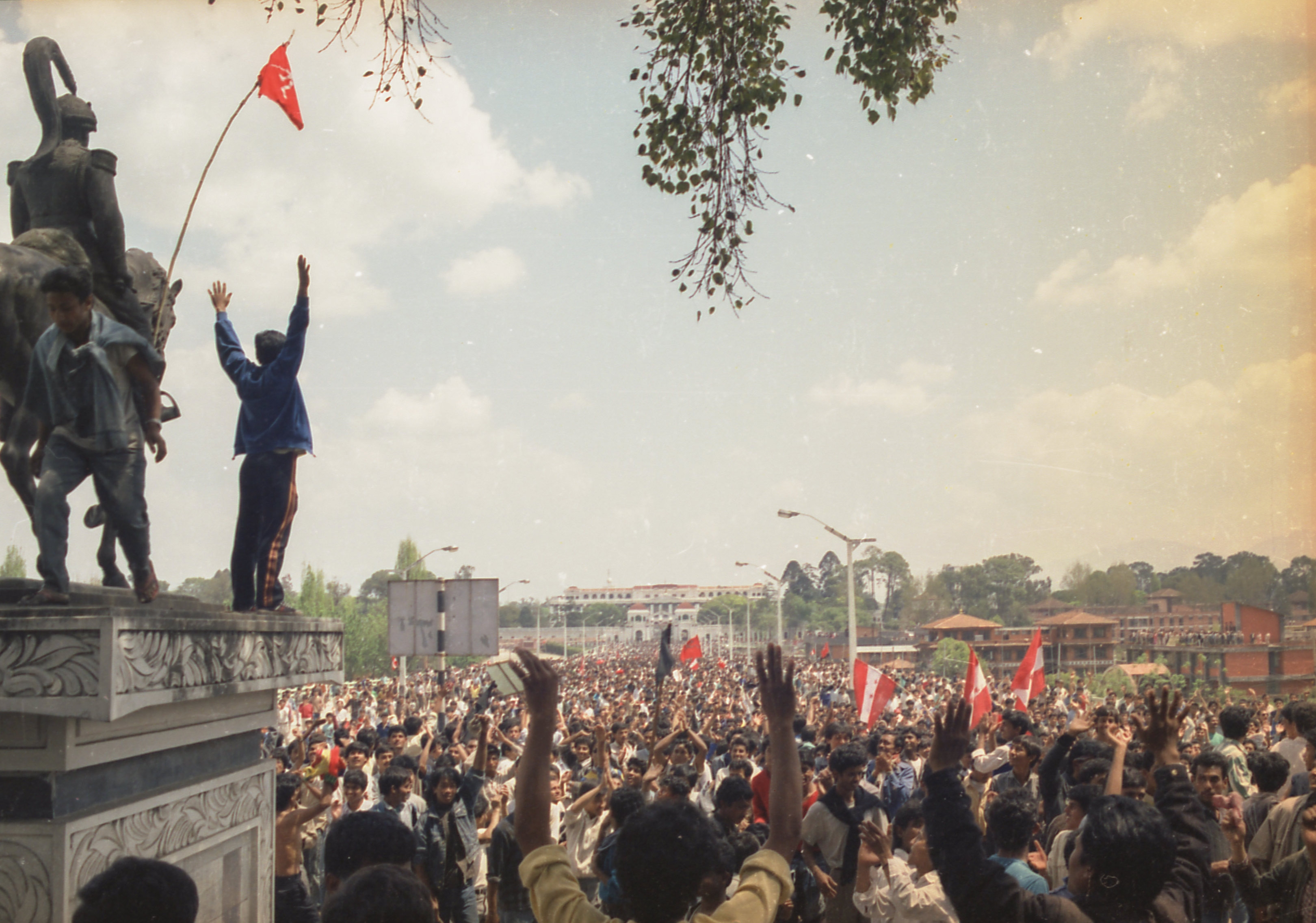
A crowd of people gathers at Bhadrakali, Kathmandu, Nepal, during the 1990 Nepalese revolution.
Both revolutions were followed by pledges for accountability that were never realized, political analyst and former ambassador Lok Raj Baral told OCCRP.
“This was true for the Mallik Commission in 1990 and the Rayamajhi Commission in 2006,” Baral said, referring to two investigations into violence against protesters.
Bijaya Prasad Mishra, president of the Nepal Bar Association, told OCCRP that some of the recent arrests appear to have been carried out hastily.
"It shouldn't be about arresting people just for popularity and keeping records of it," Mishra said.
“This is what every government does after an election or a movement. They do something to show that they are active. This is just a part of that cycle,” Mishra added.
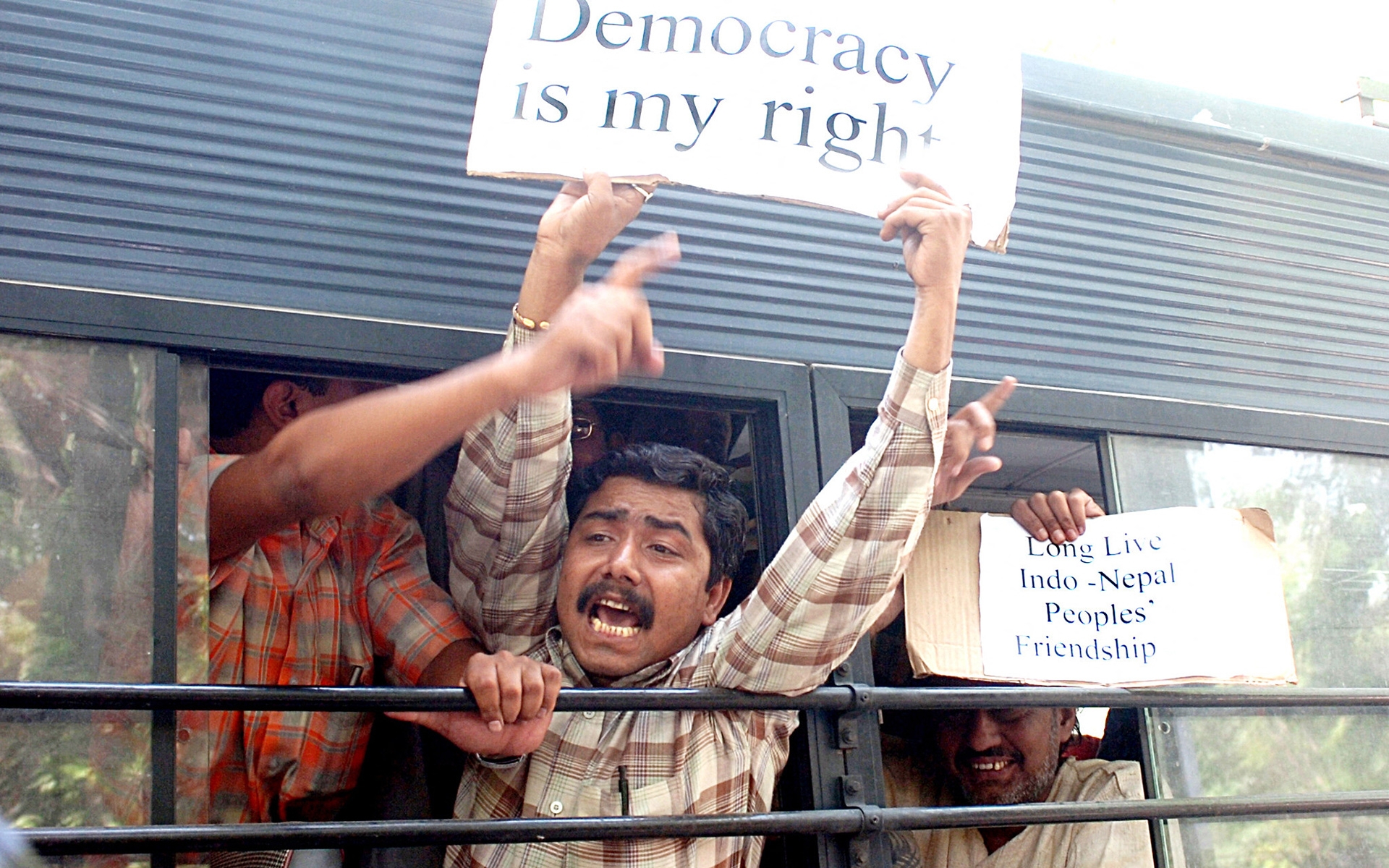
Nepalese activists shouting slogans against King Gyanendra from a bus during a protest against absolute monarchy outside the Nepalese Embassy in New Delhi on Thursday, April 20, 2006.
Good governance expert Kashi Raj Dahal said the true test for the Shah government is what kind of systemic reforms it can bring.
“There are challenges whether political parties will cooperate, whether the bureaucracy will be supportive, and whether our laws are adequate for crime prevention and control. Our law-making processes are long and complex,” Dahal said.
“The government, with its significant majority, needs to improve existing laws where necessary and move forward with actions against anyone, regardless of their position.”
Brewing Backlash
Beyond the arrests, the Shah government has announced a 100-point work plan that includes the formation of a high-level Asset Investigation Committee, tasked with investigating the wealth of major political figures and senior officials who held office over the past 34 years.
The country’s Central Investigation Bureau and the Commission for the Investigation of Abuse of Authority are both actively pursuing multiple cases.
Transparency International Nepal has praised the government’s 100-point plan as a "laudable beginning” that reflects Nepalis' long-standing demands for accountability.
But the new government’s actions have already invited a response from the old guard and its supporters.
The arrests have triggered sustained street protests in Kathmandu, led by members of Oli's Nepal Communist Party (UML) and its student wings, who have characterized the detentions as politically motivated and unlawful.
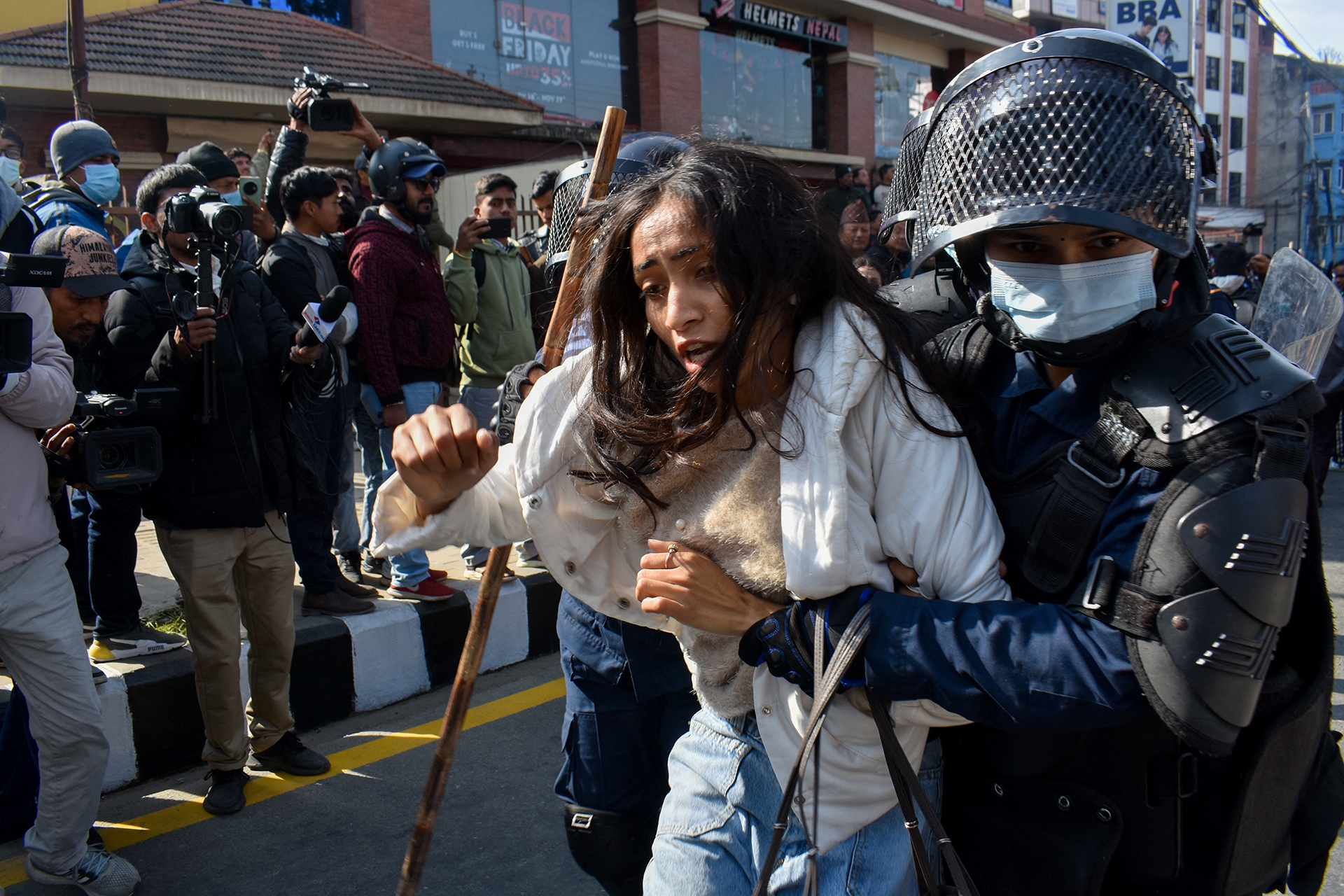
Police take into custody a Gen Z protester during an anti-government demonstration in Kathmandu, Nepal, on December 22, 2025.
Cases alleging illegal detention have been filed at the Supreme Court. Oli, meanwhile, has been admitted to the hospital, citing health problems.
The country also faces challenges reforming the financial system and strengthening anti-money laundering measures which have seen Nepal relegated to the “gray list” of the Financial Action Task Force (FATF), a global watchdog for anti-money laundering and counter-terrorist financing standards.
The government has said it is ready to implement a strategic action plan to fix the problem.
Good governance expert Dahal told OCCRP that Nepal’s new government should be given 100 days to show if its push to clean up the country is on track.
“The public mandate is for corruption control, action against crime, and the restoration of the rule of law. We must see if this political will continues,” Dahal said.