Reported by
A rare breach of Iran’s 12-day internet blackout allowed protesters to share reports of a deadly crackdown — including allegations that authorities demanded families pay to retrieve the bodies of their relatives.
“I got connected,” one person wrote to other participants in a private group chat, during the brief window of connectivity. Another asked, “How?” to which the first user replied: “I don’t know.”
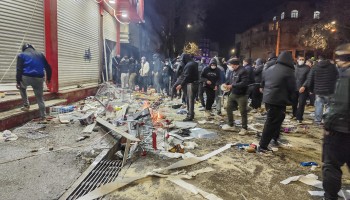
Seizing the fleeting access, group members traded accounts of the bloodiest unrest since the 1979 Islamic Revolution. One participant described seeing “endless dead bodies” in a local hospital, alleging that security forces had targeted “the eyes, hearts, and genitals” of protesters with live rounds.
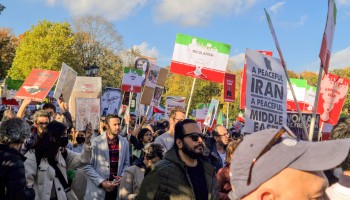
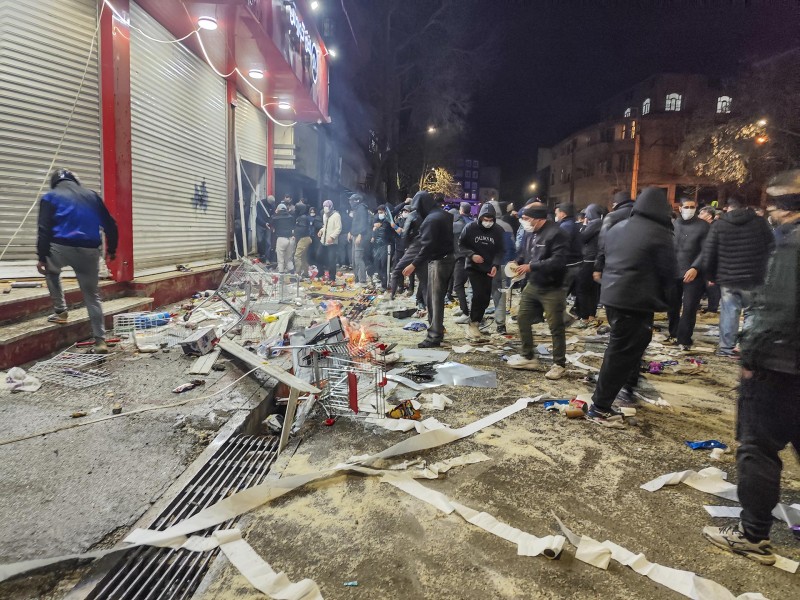
Another recounted how the protests escalated in early January, spilling over from the uprising’s birthplace in Tehran’s Grand Bazaar to the rest of the city. What began weeks earlier as demonstrations against inflation, economic mismanagement, and corruption had grown into a nationwide revolt against Iran’s clerical establishment.
The pro-government Tasnim News Agency this week cited an Iranian foreign ministry spokesperson denying widespread reports that authorities had demanded payment for returning the bodies of murdered protesters to their families.
However, participants in the group chat contradicted the spokesperson’s statement.
One person said authorities are pressuring grieving families, demanding 800 million ($5,200) or more tomans in exchange for “handing over the dead bodies.” The person described a case in which an entire family tried to pool money to meet the demand. Funeral ceremonies are also being banned, they alleged.
One person who spoke to OCCRP from Iran recounted visiting a local business, only to discover a memorial for a young woman who had worked there. The victim’s family said she had been “shot in the throat” on her way home. Authorities released her body without charge after deeming her a bystander rather than a protester.
“Otherwise,” the person said, “they’ve been charging a billion tomans (around $7,000) in ‘bullet fees’ and forbidding any kind of funeral service.”
The testimonies emerged amid partial restoration of internet access.
The London-based internet monitoring group NetBlocks reported that the general blackout persists. Despite the blackout, NetBlocks observed increased traffic “to some online services including Google.”
NetBlocks founder Alp Toker said on X that while some users could access WhatsApp on the morning of January 20, connectivity was “selective, discriminated by region and other factors.”
The information blackout has hindered verification of the full scale of the crackdown.
On Tuesday, the U.S.-based Iranian advocacy group Human Rights Activists News Agency reported 4,519 verified deaths, with 9,049 additional cases “under investigation.” The Norway-based group Iran Human Rights has cited estimates that place the death toll between 5,000 and 20,000 protesters.
Iran’s Supreme Leader Ayatollah Ali Khamenei acknowledged on January 17 that “several thousand people” had been killed, but blamed “seditious” groups backed by the U.S. and Israel.
U.S. President Donald Trump had repeatedly vowed to intervene militarily on behalf of the Iranian protesters, but he said during a White House press briefing last week that “we’ve been told that the killing in Iran is stopping.”
The internet blackout has made it difficult to understand exactly what is happening across Iran. The security forces appear to have suppressed mass street protests, at least in some areas.
But the anger that led to the uprising remains.
“People here are angry, frustrated, grieving and helpless,” said one person in the group chat.