Reported by
A French court has rejected Tunisia's request to extradite the sanctioned daughter of late President Zine El Abidine Ben Ali over alleged financial crimes, the Paris Court of Appeal confirmed to OCCRP Thursday.
Tunisian authorities accuse Halima Ben Ali, the youngest daughter of the late dictator, of several financial crimes. The charges include laundering funds allegedly acquired while her father held power from 1987 to 2011.
"The investigating chamber of the Paris Court of Appeal issued a ruling on April 1, 2026, rejecting the extradition request from the Tunisian authorities for Halima Ben Ali, and lifted the judicial supervision to which she was subject in connection with this procedure,” a court communications officer told OCCRP.
The 33 year old was arrested at Paris-Charles de Gaulle Airport in fall 2025 at Tunisia’s request. She was preparing to board a flight to Dubai, where she currently resides.
Italian authorities also briefly detained her in 2018 under an Interpol arrest warrant requested by Tunisia. She has faced European Union sanctions since 2011.
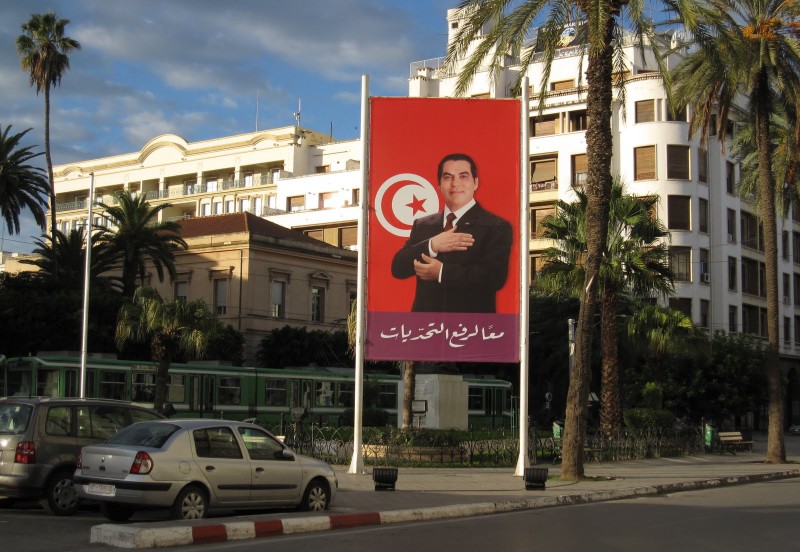
Ben Ali ruled Tunisia for 23 years before fleeing during the 2011 revolution that toppled his regime and sparked the Arab Spring. While he lived in exile in Saudi Arabia, a Tunisian court sentenced him to life in prison in 2012 for the deaths of 338 protesters. In 2017, he and his wife, Leila Trabelsi, received an additional 10-year sentence. Ben Ali died in exile in 2019 at age 83.
“This decision is an immense relief; justice has been served, and we can only be satisfied that the court has made a decision in accordance with the law,” Samia Maktouf, Halima Ben Ali's lawyer, said following the ruling, Agence France-Presse (AFP) reported.
During the extradition hearings, Maktouf argued that sending her client back to Tunisia would amount to “a death sentence.”
However, anti-corruption advocates warned the ruling could undermine efforts to recover the regime's illicit wealth. Speaking to OCCRP, the Tunisian chapter of Transparency International, I Watch, said the fight against impunity is a cornerstone of justice.
The NGO's legal advisor added that “any decision likely to hinder accountability in cases of corruption and financial crimes sends a troubling signal regarding the effectiveness of international judicial cooperation, as well as the ability of Tunisian authorities to achieve concrete results in this matter.”
In response to the court’s decision to block the extradition, the NGO stressed the need for Tunisian authorities to “redouble their diplomatic and judicial efforts to ensure that those prosecuted are held accountable for their actions before the Tunisian courts, in accordance with the guarantees of a fair trial.”
I Watch noted that despite the numerous legal proceedings and convictions linked to the Ben Ali regime, “very few individuals have actually served their sentences in Tunisia due to their presence abroad or procedural delays.”
In a rare exception in early March, Tunisia’s judiciary sentenced businessman Marouan Mabrouk, a son-in-law of the former president, to 20 years in prison for money laundering and embezzlement. He has been jailed since late 2023.
The NGO also voiced concerns about the fate of frozen assets and their repatriation, noting that “the European Union's gradual lifting of the freeze on assets linked to certain individuals from the former regime sends a troubling signal which risks further complicating efforts to recover ill-gotten gains.”
NOTE: This story has been updated to add comments from the Tunisian chapter of Transparency International, I Watch.