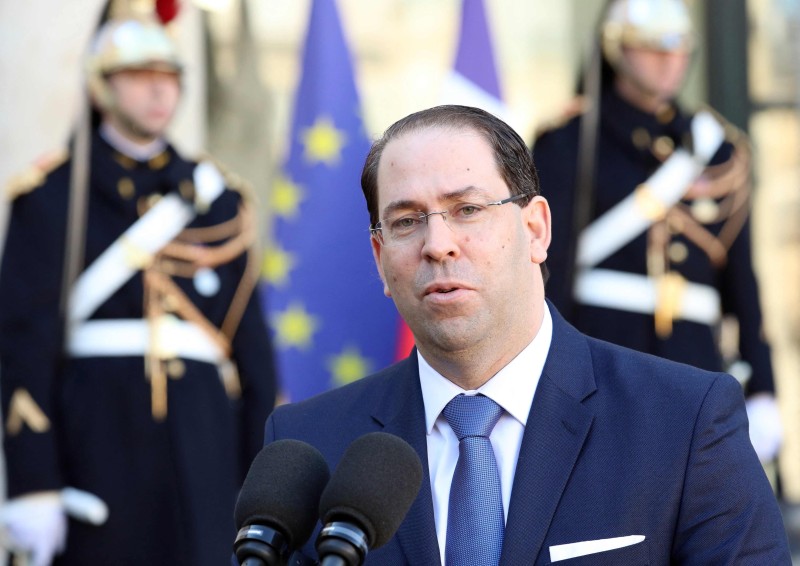
A Tunisian court has handed prison sentences to former Prime Minister Youssef Chahed, businessman Marouan Mabrouk—the son-in-law of former President Zine El Abidine Ben Ali—and several other former ministers on corruption charges.
Chahed, who served as prime minister between 2016 and 2020, was sentenced Monday to six years in prison, along with former ministers including the foreign minister, finance minister, state property minister, human rights minister, and information and communications technology minister, the state-run TAP news agency reported Tuesday, citing a judicial source. The court also ordered each defendant to pay a fine of 800 million dinars (about $276 million).
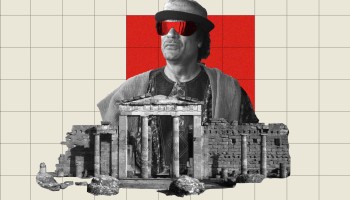
Mabrouk, considered Tunisia's wealthiest businessman, was handed a 20-year prison sentence on charges of money laundering, embezzlement, and receiving unlawful benefits from Chahed's government.The ruling stems from a case concerning the lifting of the freeze on Mabrouk’s funds by the Ministerial Council in January 2018. He is the son-in-law of the late Ben Ali, the dictator who ruled Tunisia for 23 years before being forced to flee during the 2011 revolution that toppled his regime and sparked the Arab Spring.
Former Minister of State Property and Real Estate Affairs Mabrouk Korchid, who was sentenced to six years in prison, denounced the ruling as "bizarre" and "unjust." He pointed to the acquittal of four other defendants while seven were convicted in the same proceedings.
“Why didn’t the other ministers [receive the same ruling]? There is no logic behind it,” Korchid said in a video posted to social media. In a separate post, he congratulated those acquitted in what he described as a “major injustice,” saying that the case is politically motivated. Korchid held ministerial post from September 2017 to November 2018.
Speaking to OCCRP, Korchid said the case is bizarre because "there is no precedent in the history of the Tunisian judiciary for a collective government body to be tried in its entirety for a sovereign decision taken within a state institution.”
Lifting the freeze on Mabrouk's assets was a “decision issued by a fully constituted cabinet, comprising the head of government and ministers legally performing their duties, who took a decision within the scope of their powers and in the interests of the state,” he added.
In 2022, Tunisian President Kais Saied established a "criminal reconciliation" commission, adopting a penal settlement for businessmen involved in corruption cases predating the 2011 revolution, in exchange for the recovery of funds. In 2021, Saied estimated the money looted from the country at roughly 13.5 billion dinars (at least $4.6 billion).
However, a year later, Saied dismissed the head of the commission, saying nothing notable had been achieved. To date, the commission has failed to collect any substantial sums.
Korchid told OCCRP he may appeal the ruling. “This is not merely a strange ruling, but a dangerous precedent that undermines the very essence of the rule of law, the principle of judicial independence,” he said.
NOTE: This story has been updated to clarify that all comments made directly to OCCRP were made by Former Minister of State Property and Real Estate Affairs Mabrouk Korchid. One comment was previously misattributed to Marouan Mabrouk.