Reported by
Criminal networks are increasingly deploying high-tech tools, ranging from drones to submarines, to smuggle cocaine into Europe, according to a new Europol report. The agency warned that cocaine trafficking to Europe has reached "unprecedented levels," driven by expanding production in Latin America and sustained demand across the EU.
Smuggling strategies have undergone significant shifts as crime syndicates adapt to heightened security at Europe's major maritime hubs. To bypass traditional law enforcement barriers, traffickers are increasingly utilizing small, non-commercial vessels and conducting mid-sea transfers.
“In this way, they avoid commercial ports and the risks associated with law enforcement presence and controls,” Europol stated. “By transferring cocaine at sea, criminal networks seek to avoid commercial ports and exposing shipments to inspection.”
One method increasingly deployed by criminal networks involves custom-built submarines. These vessels are reportedly “becoming increasingly sophisticated and capable of traveling larger distances,” according to Europol.
While typically used for shorter trips in Latin and Central America, these “self-propelled semi-submersible vessels” are becoming a “trend here in Europe,” Artur Vaz, director of the Portuguese National Unit for Combating Drug Trafficking, told OCCRP.
“In Colombia, it's nothing new. Criminal groups use this kind of vessel to transport cocaine from the Pacific Ocean toward the United States and Mexico, and also in the Atlantic area,” Vaz added.
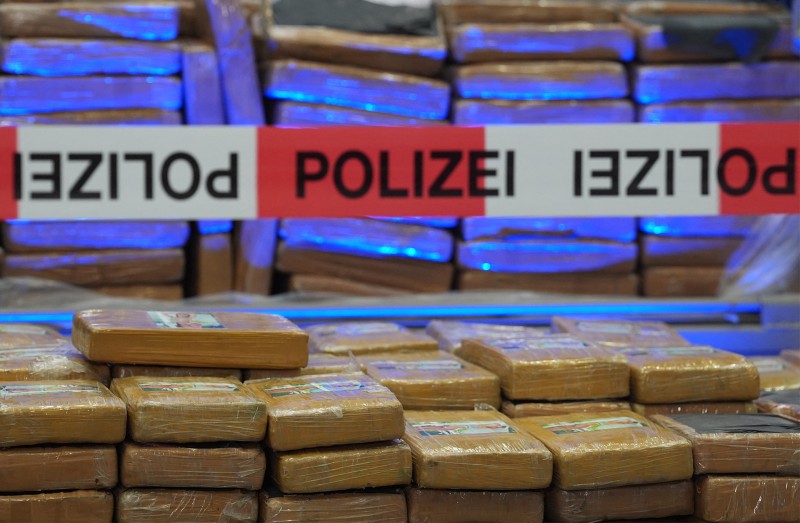
Portuguese police said on Monday that it intercepted a semi-submersible vessel carrying 300 packages of cocaine, equivalent to nearly nine tonnes of the narcotic, in what Vaz confirmed as the “largest cocaine seizure ever made in Portugal.”
“Everything indicates that this quantity would be distributed across several European countries,” he said, adding that the street value of the narcotics is estimated to be in “the hundreds of millions of euros.”
Vaz also noted that while semi-submersibles will likely continue to be used for smuggling, they may be deployed “with less intensity, as criminal organizations are realizing that Portuguese and European authorities are demonstrating the capacity to intercept this type of vessel despite all the difficulties.”Europol noted that another key indicator of the criminal networks shifting their smuggling tactics is a drop in cocaine seizures at major European ports, such as Antwerp, Hamburg, and Rotterdam, following the implementation of tighter security. The agency suggests this decline likely reflects criminal networks relocating their operations to smaller, less-monitored ports.
These major ports have typically been the primary targets for industrial-scale trafficking, with the sheer volume of illicit activity raising alarms. A joint report by the European Union Drugs Agency (EUDA) and the World Customs Organization (WCO) in June 2025 warned that the massive quantities of seized drugs point to "a significant degree of penetration" by the criminal networks and the corruption of port personnel.
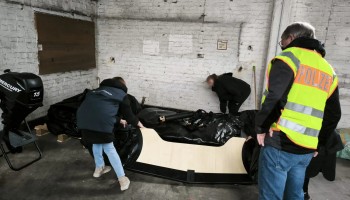
Beyond changing routes, criminal networks are pivoting to methods that further complicate detection, such as hiding cocaine within industrial equipment and machinery. By concealing drugs deep inside heavy machines, standard scanners fail to detect the narcotics.
Europol cited the example of a European country where the authorities seized 900 kilograms of cocaine concealed inside a stone crusher. According to the agency, the drugs were so well- concealed that the machine had to be "[completely dismantled]” to access them.
Explaining this new modus operandi, Vaz told OCCRP that this method involves “sending in coca base, which is more difficult for us to detect, and they transform the coca base into hydrochloride here in Europe.”
“We are seeing more and more groups involved in drug smuggling because it's highly profitable. Even as prices go down, it remains a highly profitable illegal activity,” Vaz said. He added that drug smuggling fuels “other forms of crime, such as corruption and violent crime, and, of course, the money laundering which is always associated with drugs.”