Reported by
The EU Delegation to the United Nations in Geneva on Monday commemorated the Russian opposition leader Alexei Navalny, marking two years since his death in custody as European officials pointed to new laboratory findings they say strengthen evidence he was poisoned.
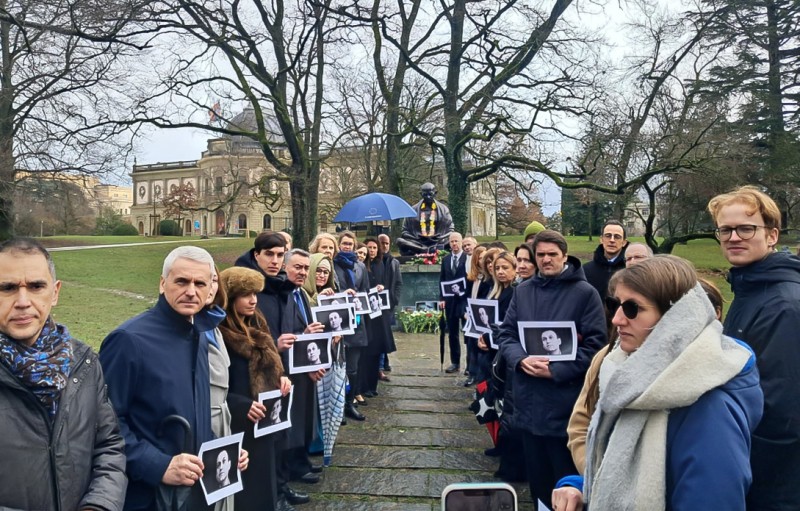
Diplomats gathered at a memorial in Geneva, laying flowers and holding photographs before observing a minute of silence. In remarks, the EU ambassador, Deike Potzel, said several European governments had concluded that Navalny’s death was the foreseeable outcome of a political system designed to silence dissent, noting that Russia holds more than 2,000 political prisoners, including journalists, lawyers and rights advocates.
Her comments came days after the United Kingdom, Germany, France, the Netherlands and Sweden said analyses by their national laboratories had “conclusively confirmed” the presence of epibatidine — a rare, highly toxic alkaloid associated with South American poison dart frogs — in biological samples linked to Navalny. The governments said the substance is not found naturally in Russia and that poisoning was therefore “highly likely” to have caused his death.
Speaking in Bratislava, Marco Rubio said the United States had “no reason” to doubt the European findings, calling the report troubling, though he stopped short of announcing any formal U.S. action.
The announcement coincided with international security meetings in Munich attended by Navalny’s widow, Yulia Navalnaya, who said the laboratory conclusions confirmed what she had long alleged: that President Vladimir Putin bore responsibility for her husband’s death.
European officials described the findings as significant because they link Navalny’s death to a specific toxin identified by multiple laboratories, potentially strengthening grounds for international action. The five governments said they had notified the Organisation for the Prohibition of Chemical Weapons, signaling a possible violation of the Chemical Weapons Convention.
Members of the Russian opposition platform at the Parliamentary Assembly of the Council of Europe said the report confirmed long-standing accusations that Russian authorities were responsible and called for an international tribunal to investigate Navalny’s death and other alleged crimes.
Russian officials have denied involvement and dismissed the accusations as propaganda.