Reported by
How does someone end up giving millions of dollars to a scammer impersonating a famous Dubai prince?
Our recent investigation looked at one such case, but research shows this type of fraud is far from unique.
There is a blueprint for pulling off what has come to be known as the “Fake Dubai Prince” scam, and it often involves a meticulous, months-long effort to gain a victim’s trust before robbing them of their savings.
Drawing on our own investigation and other reported cases of the scheme, plus insights from a fraud expert, we’ve broken down the scammer’s playbook to understand how it works, why it is so dangerous, and how to spot the red flags.
What is the Fake Dubai Prince Scam?
The Fake Dubai Prince scam is just one variation of the classic romance scam, in which an impersonator cultivates an online relationship with a victim with the goal of milking them for as much money as possible before they realize they’ve been swindled.
“They are perpetrated usually by organized criminals, and they use sophisticated social engineering and manipulation techniques based on psychological assessments to essentially create and deepen trust with individuals,” said Andrei Skorobogatov, the director of policy at the Global Anti-Scam Alliance (GASA).
In this version, perpetrators pose as the real-life Crown Prince of Dubai in an attempt to woo victims with their alleged status and power.
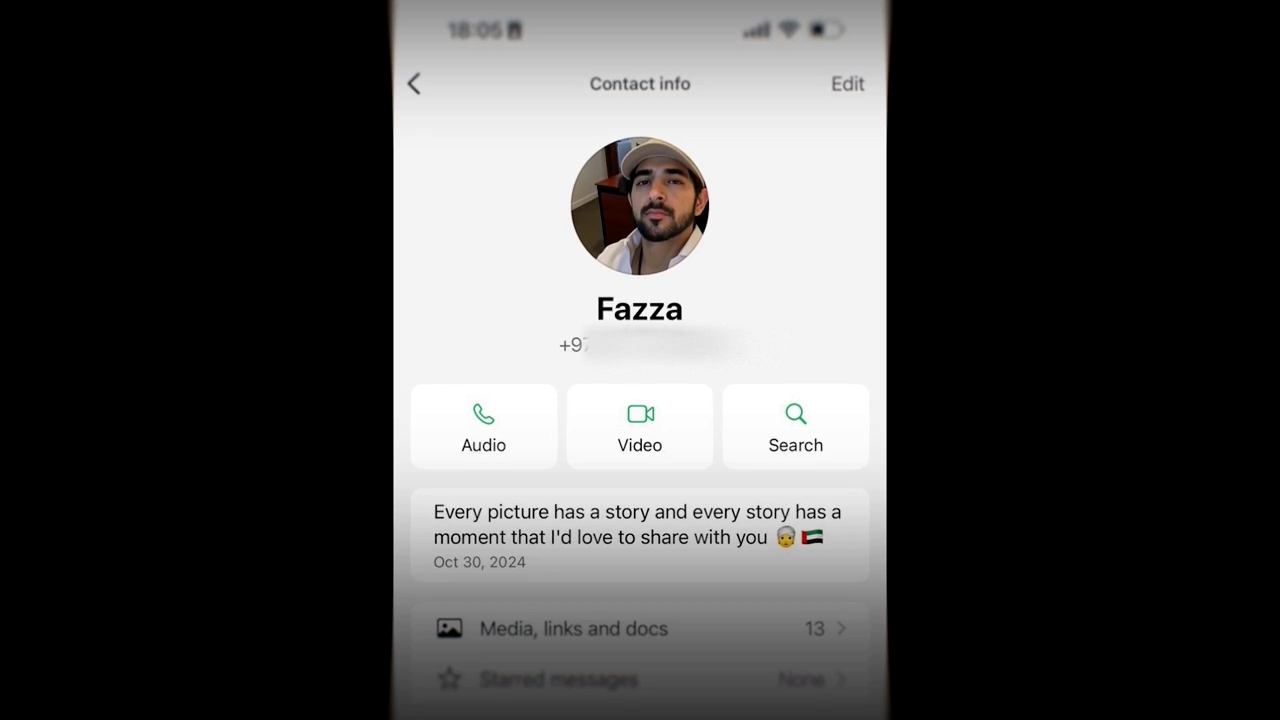
The WhatsApp profile of a fake "Fazza" impersonator.
A 43-year-old popularly known as “Fazza," Sheikh Hamdan bin Mohammed bin Rashid Al Maktoum is a globe-trotting celebrity. Crucially, his large online presence — including 17 million Instagram followers — provides ample content for fraudsters to draw from. (Numerous examples of scams using his likeness have been documented).
Yet what starts as a whirlwind romance with the Dubai prince steadily turns into financial pressure.
How Does It Work?
It typically begins online, with victims contacted on social media by a person with a handsome avatar who claims to be a member of Dubai’s royal family. Only, as OCCRP’s recent investigation exposed, this so-called prince is usually a scammer in a different country.
Fraudsters are known to identify potentially vulnerable people — such as the elderly or those in financial distress — by harvesting data from breaches or public profiles. They may also join interest groups on social media platforms as a plausible pretext to chat.
Once the conversation gets going, scammers often insist on moving the back-and-forth off of a dating site or social media platform to private, encrypted messaging apps.
The reasons why the crown prince — a billionaire — may claim he needs to borrow money from his new lover can be due to any number of bureaucratic or diplomatic hurdles, such as frozen assets or needing help bypassing foreign banking restrictions. In some cases, victims have reported being told they needed to purchase a “Dubai Royal Membership Card” in order to meet the prince, even though such an accreditation does not exist.
The swindle may also involve other characters. The case covered by OCCRP saw a collaborator pose as Fazza’s financial manager and meet with the victim in-person to bolster the ruse.
To downplay fears that they are seeking to steal, the scammers may make it appear as if they've sent large sums of money to the victim’s accounts, though in reality such deposits are often fake. In some cases, victims are tricked into becoming “money mules” for the scammers and end up unknowingly laundering illicit funds.
“These are criminal networks and gangs. These are not people working by themselves. And they will use whatever tools and requirements they need to make themselves more legitimate,” said Skorobogatov.
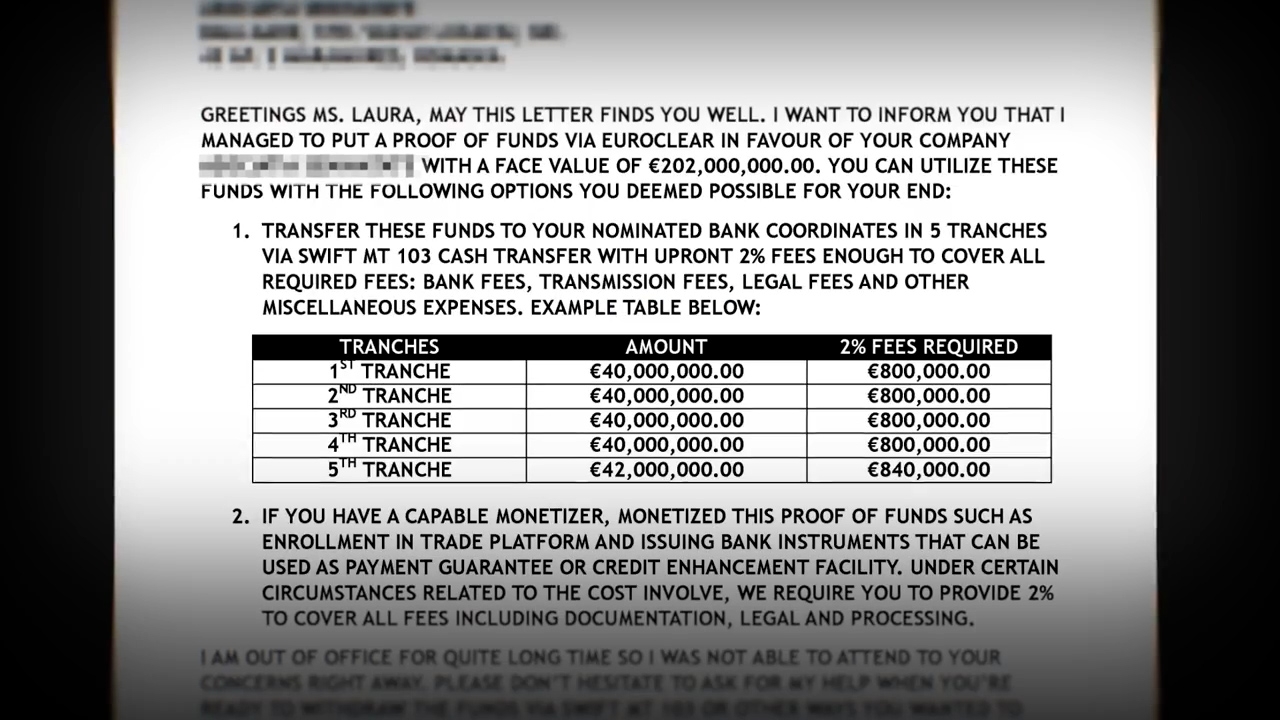
Details of fees associated with a fake bank deposit that a "Fazza" impersonator said he had given a victim.
Even after victims of a romance scam have started to catch on, they may find themselves losing even more money in a second stage of the scheme known as the “asset recovery” scam. This phase sees scammers pose as representatives of banks, authorities or asset recovery companies and promise victims they can recover their funds — by paying even more.
The Fazza persona is just one of the more recent vehicles for this kind of fraud. Fraudsters tend to use whatever is popular, current, and attractive, says Skorobogatov.
They want to use “something recognizable enough that you trust it in principle, but distant enough that you don't actually know anything about it and you're not going to question anything.”
“Whether in this case it's a Crown Prince of Dubai, a Nigerian prince, or a prominent Hollywood celebrity... it really doesn't matter. Fraud fundamentally is a crime of abuse of trust."
Why Does It Matter?
The Dubai Prince scam is part of a larger ecosystem of fraud that plays on people’s hearts, and targets their wallets. GASA estimates that in 2025, $442 billion was lost to scams around the world.
In the context of the broader global fraud industry, romance scams are low in frequency but extremely high in impact, says Skorobogatov.
Scammers are adept at putting people under their spell, which can be extremely hard to break, even after repeated warnings from loved ones or authorities.
There is also often a level of self-denial that prevents victims from realizing what is happening, combined with the belief that “I wouldn’t get scammed,” even when others do.
Anyone can fall victim to a romance scam, but people may be more vulnerable if they are feeling lonely or going through an emotional transition in their life, such as divorce or grief, or are less familiar with how to stay safe online.
How To Spot Red Flags
Here are some of the red flags to look out for when it comes to online romance, according to anti-fraud organizations GASA and the internet safety group Global Cyber Alliance:
They are unable to meet you in person. Various excuses can be given for this. Even be wary of video calls now – scammers can take advantage of AI or deepfakes to mimic a stranger’s face during brief calls.
A claim to prestige. This is often used to make the prospect of a relationship with the figure seem especially alluring.
“Love-bombing.” The relationship escalates quickly, despite never having met one another in-person. There may be elaborate gifts, early proclamations of love, and even marriage offers.
Being redirected to other platforms. Be wary if a person is quick to ask you to leave a social media or dating platform to communicate directly on messaging apps.
Isolation. Scammers are often keen to distance you from friends and family.
Financial asks. It can start with small amounts for innocuous reasons, tied to displays of their own wealth through fabricated bank accounts or similar techniques. Watch out for requests to move money or open accounts on their behalf, which could implicate you in financial crimes.
Detailed payment instructions. The perpetrator or their associates will have ready answers to any questions of how to transfer them money, often through obscure means like crypto exchanges.
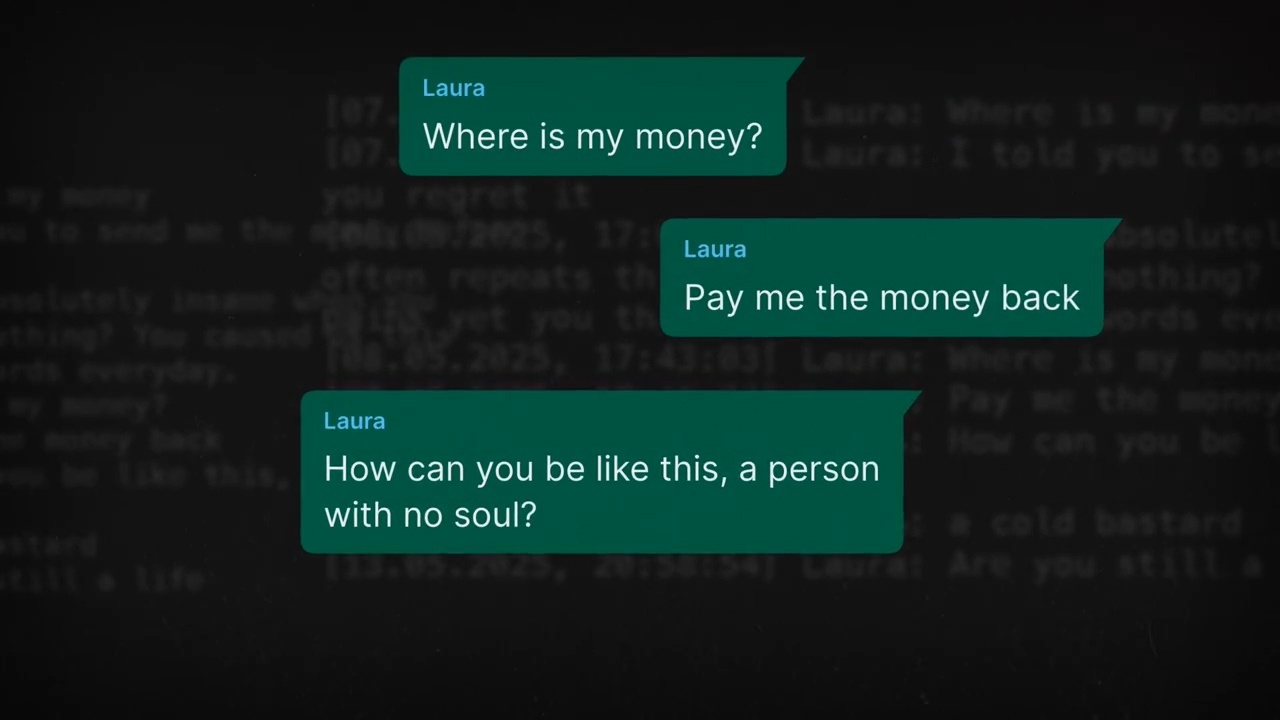
Text messages sent by a victim of the Dubai prince scam after she realized she had been swindled.
If You Suspect You’ve Been Swindled