Reported by
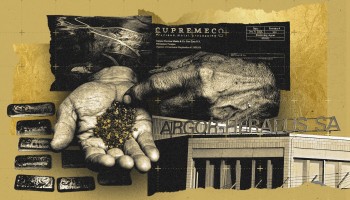
A March investigation by OCCRP and partners found that Venezuelan gold from conflict-affected areas could have found its way into everyday products like mobile phones, laptops, and electric vehicles.
Mark Pieth, who has held various prominent anti-corruption roles, including Chair of the Organization for Economic Cooperation’s (OECD) Working Group on Bribery, spoke with OCCRP about the root of the problem: gaps in the gold trade’s regulatory system that make it easy to obscure the precious metal’s true origin.
Tell us about your home country’s particular role in the global trade of gold.
It's a country with no gold at all, but until recently 70% of the world's gold was refined in Switzerland. It's probably now down to 50%, but it's still the biggest place in the world for refining gold. And of course, that raises a lot of questions.
As I’ve written in my book, it starts with a very difficult history, where Nazi Germany brought stolen gold to Switzerland in exchange for a convertible currency, the Swiss franc. The second chapter of that story is Switzerland kind of saved apartheid South Africa from bankruptcy.
Today, I have followed gold from conflict areas like Congo and Sudan going on a trail to the United Arab Emirates. It is first refined there, but cannot be sold to a bank because the stamp demonstrates that it is a problematic refinery.
Instead it is then sent to another refinery in Switzerland. That refinery doesn't really have to do an awful lot... They refine it again and stamp Swiss gold on it, and then it is suddenly bankable, everybody can buy it, and commercially, it can be used.
I call this mechanism “gold laundering” because in the end it carries the name of a very reputable refinery.
A recent OCCRP investigation found around 70 metric tons of Venezuelan gold worth more than $2.2 billion was funneled through the Caribbean island of Curaçao before being refined in Switzerland between 2012 and 2018. What can you tell us about the role of gold in Venezuela?
Venezuela is very rich in gold, and the control of that gold is crucial for the ruling junta to stay in power. They use it to pay off the military and so on. Until recently, the export of Venezuelan gold was sanctions busting — it was illegal.
But you have problematic gold from all over the world. And it just depends what kind of problems you're talking about. Are we talking about chopping down rainforests? Are we talking about organized crime? Are we talking about child labor, about trafficking in human beings, et cetera. You have a whole set of forms of illegalities, and some of them are worse than others.
The new OCCRP investigation touches on how the gold industry is self-regulated. What are some of the standards being applied in the industry?
There are standards that are quite good, written by the OECD. But they are not binding. They are for the industry to implement — for instance, the LBMA, or the Responsible Jewellery Council or something called RMI — that’s the electronics industry — or the big mining companies. They all copy those rules, and they claim that they control themselves. And in many cases, what they’re doing is just not effective.
Now, the U.S. has a law, but that law doesn't aim for illegality of problematic gold. It just says, let the market kick in. It's about making a declaration of where you got it, and it's very much focused on Democratic Republic of Congo and the neighboring countries.
There is however a new rule, which is now becoming binding, and that's the European Union’s Conflict Minerals Regulation. That is probably the best we've got at the moment, but countries are slow in implementing these rules. You do find quite a lot of policymakers who say it's about time we did something about the problem. But there is no real supervisory authority.
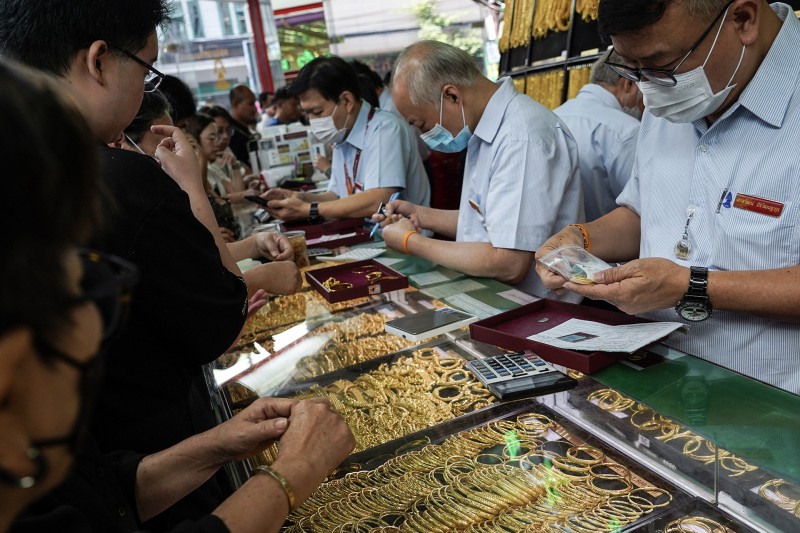
Due to economic uncertainty, we’ve seen the price of gold skyrocket — around 75% — over the past year. How does that affect the effort to implement regulations that would improve the lives of the millions of people involved in or affected by gold mining worldwide?
The regulation is down because the price of gold is so attractive. So actually controlling where the gold comes from is absolutely secondary.
This affects all players in the supply chain. You can go to a central bank in Indonesia or China, they don't care a bit where the gold comes from. They just need gold because they want to out maneuver the dollar. They don't want to be dependent on the dollar, so they try to obtain gold instead.
This is recent and linked to the price and to the challenges of the dollar and the U.S. They want to become independent of the U.S., because of course being dependent on the dollar and being dependent on Trump is not a good thing.
What do you think are the main solutions to this persistent weakness in gold industry rules that causes so much misery?
Well, I think we're on a good route with the European Union to actually transform what is soft law in the OECD. It's [a] good soft law, basically, but needs to be implemented, applied. That makes sense: If you transform that into national laws, that is the first major step.
At the other end of the story, I've been doing [workshops] bringing together regulators like the OECD with the refiners, and the LBMA, the World Gold Council and jewelers, watchmakers, and then very local jewelers. The topic there was how do you raise awareness with the people buying gold? It's relatively easy with people buying jewelry. It's not easy at all with investors or with central banks.