Reported by
A Chinese national wanted in his home country for allegedly running illegal gambling operations has had 85 luxury properties in London frozen by the U.K.’s Crown Prosecution Service.
The prosecution service, or CPS, announced on March 24 that it froze the assets after issuing Unexplained Wealth Orders and Interim Freezing Orders under the Proceeds of Crime Act. The announcement did not name the subject of the freezing orders, referring to him only as “Mr. X.”
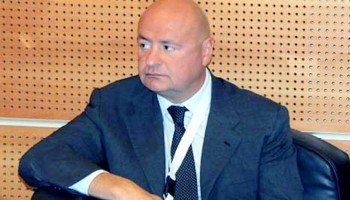
OCCRP and the Sunday Times have obtained corporate and property records showing that Mr. X is Su Jiangbo, who is wanted by Chinese law enforcement. He used a St. Kitts and Nevis ‘golden passport’ to create U.K. companies that bought up at least $108 million worth of London real estate.
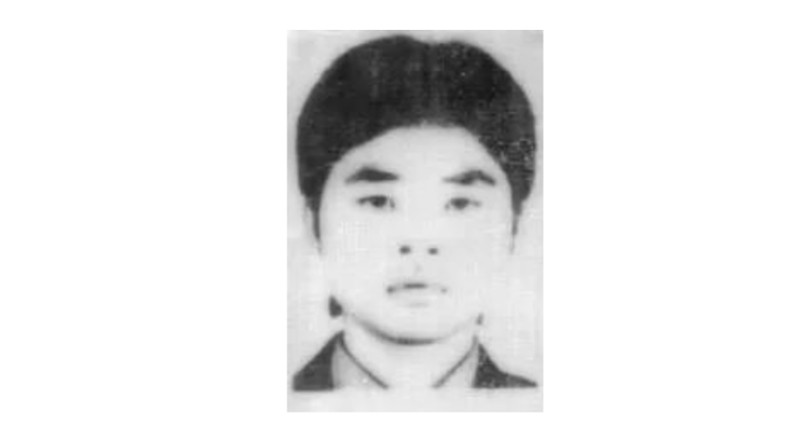
Su Jiangbo, 40, is featured on an arrest warrant list published by Datian county court in China’s southeast Fujian province, which describes him as a “fugitive criminal suspect.” The court did not respond to a request for comment on the case.
The list included 38 individuals suspected of offenses including involvement in illegal gambling, fraud and cybercrime. The list of wanted men included their photos and home addresses, as well as a police hotline number. It was re-published in Chinese-language media from both China and Taiwan.
Su Jiangbo did not respond to questions sent to his personal email, as well as addresses associated with companies he owns in Singapore, Cambodia, the U.K. and Hong Kong. Reporters were unable to reach him on phone numbers listed in different company registries, including a mobile phone number found in Singapore company filings.
Just weeks before the wanted list was published on September 15, 2023, Su Jiangbo began his spending spree in London. He carried on buying until at least June 2025, according to property records.
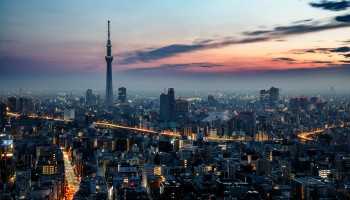
During that timeframe, companies owned by Su Jiangbo purchased at least 85 properties in new-build developments across central and south London. Among the purchases were a $13-million penthouse with a view overlooking St. Paul’s Cathedral, the Tate Modern art gallery, and the River Thames.
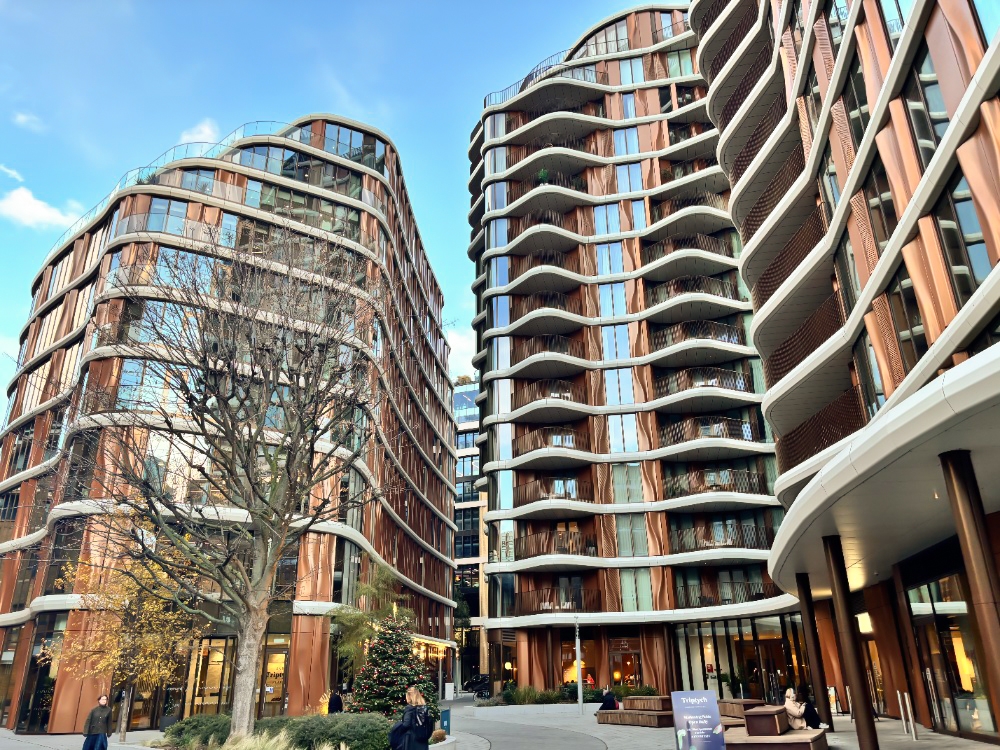
Triptych Bankside, a London development overlooking St Paul’s Cathedral, where Su Jiangbo bought at least $24 million in properties, including a penthouse.
Records show that properties owned by Su Jiangbo’s companies were hit with freezing orders on the same day the CPS says it froze “flats across central and south London” belonging to Mr. X.
“The orders were granted against a Chinese national and associated U.K. companies, suspected of using money that has been illicitly obtained to purchase properties,” the CPS said in a statement.
The prosecution service added that there is an “ongoing civil recovery investigation into whether they were purchased with the proceeds of unlawful conduct.”
Su Jiangbo has not been charged or convicted of any criminal activity in the U.K. The CPS declined to comment further on the case.
Golden Passports
Records from the U.K., Hong Kong and Singapore company registries show that Su Jiangbo holds a passport from St Kitts and Nevis, the tiny Caribbean nation that sells passports for around $270,000, which give access to more than 150 countries without a visa. He is also a citizen of Cambodia.
So-called “golden passports,” which are purchased through citizen-by-investment schemes, should trigger “enhanced due diligence,” according to U.K. Money Laundering, Terrorist Financing and Transfer of Funds Regulations.
“Unusually complex or unusually large” transactions should also raise red flags.
Su Jiangbo used his St. Kitts passport to create 12 firms, according to records from Companies House, the U.K. corporate registry. At least 10 of those U.K. firms were used to purchase London properties.
Su Jiangbo’s multiple passports and major transactions do not appear to have set off alarm bells at Triptych Bankside, a new-build by the developer JTRE London. He purchased 15 flats worth around $26.5 million, putting almost half that sum towards the 18th-floor penthouse overlooking St. Paul’s Cathedral, and the River Thames.
A JTRE spokesman said the company “complied with all applicable legal and regulatory requirements.”
A person involved in the sale of the apartments at Triptych Bankside said Su Jiangbo’s purchases did not raise any red flags.
“From memory, it went through relatively straightforwardly,” said the individual, who requested anonymity as they were not authorised to speak to journalists.
They said Su Jiangbo never visited the development, which boasts 169 apartments.
“He had a certain amount of money he wanted to spend and he wanted a certain number of units,” the person said. “There was an opportunity to do a bulk deal, which obviously when you’re selling 169 apartments is very attractive, to say the least.”
The person noted that developers are not subject to any legal requirement to carry out anti-money laundering checks, adding: “We rely on the agents and the lawyers.”
Zhong Lun Law Firm, Riseam Sharples, and Ackroyd Legal LLP — law firms that records show represented Su Jiangbo’s companies in the conveyancing of his apartment purchases — did not respond to multiple requests for comment by email and phone. There is no suggestion that these firms didn’t carry out required anti-money laundering checks.
“The anti-money laundering legislation that the agents and the solicitors have to go through is pretty strenuous,” said the person involved in the Triptych Bankside purchases. “We lost three or four deals because certain purchases couldn’t pass some of the anti-money laundering checks that are required.”
New builds can be especially attractive to people looking to launder money through real estate, according to Ben Cowdock of the Transparency International’s U.K. chapter, which assisted OCCRP in acquiring conveyancing documents.
“Criminals can buy from developers off-plan and in bulk, often with fewer questions asked than in the resale market, and then generate apparently legitimate rental income,” said Cowdock, who was speaking generally and not about Su Jiangbo.
“A targeted programme of enhanced guidance and enforcement is needed to ensure that solicitors handling new-build sales are conducting robust checks,” he said.
The person involved in Su Jiangbo’s purchases at Triptych Bankside agreed that the regulations are not precise enough to ensure thoroughness in all cases.
“If you don’t ask the right questions — about multiple nationalities for instance — people aren’t necessarily going to volunteer that info, particularly if they’re malevolent,” they said.
Unexplained Wealth Orders
As part of an attempt to halt suspicious funds flowing into U.K. real estate, the Conservative government led by Prime Minister Theresa May introduced Unexplained Wealth Orders, which came into force in 2018.
Alicia Kearns, an MP with the Conservative Party, now in opposition, said the orders were intended to “target and hunt down criminal money launderers and protect our markets.”
“These powers must be used to their full extent — including the seizure of criminal assets,” she added.
While anti-corruption advocates applauded the U.K. for introducing Unexplained Wealth Orders, they are not a silver bullet, as OCCRP has reported
The orders enable authorities to investigate the provenance of a person’s assets. But even if the owner fails to satisfactorily explain how they acquired an asset, there’s no guarantee it will end up being confiscated. Prosecutors might begin civil recovery proceedings in the High Court to seize it, but the owner can still contest the proposed forfeiture before a judge, and appeal if things don’t go their way.
In Su Jiangbo’s case, the High Court issued the orders on his properties on 18 March. He will have three months to prove that the money used to purchase the properties was lawfully obtained, or he could risk having them seized.