Reported by
Before Andrew “Drew” Horn became a media fixture promoting the U.S. acquisition of Greenland’s critical minerals, he was an Energy Department official investigated for alleged misuse of his government position.
In July 2025, the U.S. Department of Justice (DoJ) announced that Horn had agreed to pay $59,000 “to resolve allegations that he violated conflict-of-interest rules prior to his departure from the agency in 2021.”
The DoJ noted that there was “no determination of liability.”
Horn was alleged to have used his official position to drum up future business just before leaving the government at the end of the first administration of President Donald Trump in January 2021.
The settlement agreement left key questions unanswered. What companies was Horn promoting, to whom, and what was he promising?
Now, OCCRP has obtained documents and emails that provide answers. The documents include letters of interest written by Horn on government letterhead. These underpinned the Justice Department investigation, which alleged Horn participated in government matters involving a private company at the same time he was negotiating a private-sector role with them.
Source Documents


Horn denied any wrongdoing and told reporters the settlement with the DoJ “resolved” those allegations.
“It put the issue to bed so that it couldn't be used as sort of an allegation that could be damaging from a business perspective,” Horn said in an interview in Copenhagen, later telling OCCRP he did not behave unethically.
The settlement with the DoJ did not name the companies Horn allegedly sought to benefit from his government perch. The documents seen by OCCRP identify companies that correspond to the DoJ descriptions, while emails reveal the identities of individuals to whom Horn was pitching business opportunities.
Horn said he “never violated any sort of ethical constraints or did anything that even constituted the start of a conflict of interest.”
“I will say that there's been various allegations made about me in part due to my past work and perceived, you know, closeness to President Trump,” he told the Danish newspaper Berlingske, OCCRP’s media partner.
In the final settlement, the DoJ explicitly stipulated that the mutual agreement was not "a concession by the United States that its claims are not well founded."
Opportunity in Emergency
Horn’s actions at the tail end of the first Trump presidency came amidst concerns that China’s control over much of the global critical minerals supply threatened U.S. national security.
That security argument has carried over into the current Trump government, and Horn — now a private citizen — has been at the forefront of efforts to mine rare earth minerals in Greenland, and has spoken about it to the media.
“Rare earth” deposits contain minerals essential for manufacturing some electronics, including for green energy and defense technology.
OCCRP recently reported on GreenMet, which is part-owned and co-founded by Horn and has rare earth interests in Greenland. The company was created with the involvement of two men who previously worked with the Trump Organization: the company’s former executive vice president, George Sorial, and security chief Keith Schiller. Sorial and Schiller previously told OCCRP that they remain passive investors in GreenMet.

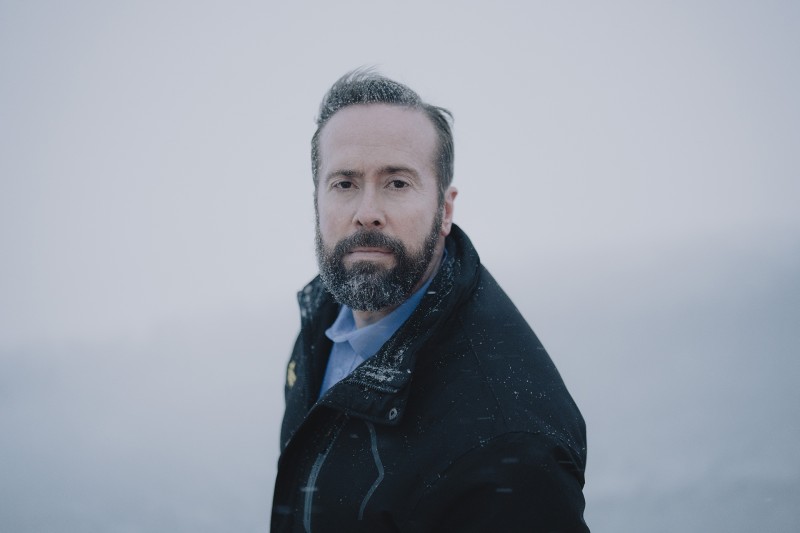
Drew Horn featured on GreenMet’s website as founder and CEO.
Back in September 2020, the Trump administration issued an executive order declaring American reliance on Chinese minerals a national emergency. It directed the federal government to promote a domestic supply chain.
In the waning weeks of the first Trump administration, from the end of 2020 into 2021, Horn drafted several official letters of interest. The letters expressed the government’s desire to support critical minerals projects needed for defense and green energy sectors.
Horn signed three letters on the Department of Energy letterhead five days before he left his position in the Trump administration. One company is named in three letters of interest as VUONG Holdings.
None of the companies named in the letters were accused of any wrongdoing, according to documents available to reporters.
Details of VOUNG Holdings in the letters match the description of a firm referred to in the DoJ settlement with Horn as “Company 1.” It was described as “a privately owned company focused on investments concerning certain minerals critical for national security and economic stability.”
The company was founded by Vinh Vuong, a Pennsylvania entrepreneur who knew Sorial. In a September 2020 Instagram post, Vuong described Sorial as his “dear friend and business partner.” The two also overlapped when they worked with the Washington D.C. lobbying firm Lucas Compton.
A spokesperson for VOUNG Holdings told OCCRP that the company had “responded to any and all federal inquiries fully and completely.”
At the same time Horn wrote letters of interest for VUONG Holdings, he “was also negotiating anticipated post-government employment with the Chief Executive Officer of Company 1,” the DoJ settlement said.
While Horn told reporters he could not discuss the specifics of the DoJ settlement, he said competitors had made “a lot of allegations that are outlandish” about him.
“I will say I never violated any sort of ethical constraints or did anything that even constituted the start of a conflict of interest,” he added.
In one of the letters of interest, Horn proposed a partnership between VUONG Holdings and another firm, which is referred to in the DoJ settlement as “Company 2.” That firm matches the description in the letter of interest of a firm called Grimstone Mining LLC.
Grimstone said it was not investigated or contacted by any law enforcement body, and did not ask Horn to send any letter.
Companies 1 and 2
Incorporated in Delaware but doing business in West Virginia, Grimstone Mining specialized in extracting rare earth minerals from scrap, a mix of rock, toxic waste and low quality coal left over from mining.
In one of his letters of interest, Horn promoted a partnership between Grimstone and VUONG Holdings involving “mineral recovery effort.” That’s news to Grimstone.
“There was no partnership, joint venture, or business agreement with VOUNG,” Frederic Mendelsohn, Grimstone’s attorney, told OCCRP. “Further, there is not and never has been direct contact between Grimstone and VUONG.”
But VUONG Holdings told OCCRP a meeting with Grimstone took place while Horn was still in his government position.
“VUONG Holdings was approached about a potential investment in the Grimstone Mining LLC project. After due diligence, VUONG Holdings declined to move forward,” the company statement said.
In a separate statement to OCCRP via a spokesperson, VUONG said that “Mr. Sorial introduced VUONG Holdings to Grimstone and Mr. Horn did participate in an introductory meeting. But VUONG added, “nothing came from it.”
In the letter obtained by OCCRP dated January 15, 2021 — five days before the end of the first Trump term — Horn expressed the “official interest” of the U.S. government in purchasing 10 million tons of scrap from the “VUONG-Grimstone partnership” at $100 per ton, a deal that would total $1 billion.
Analyses, he said, revealed Grimstone’s “stockpiles of coal inventory have a mineral value in excess of $3.5 billion."
In January 2021, just 10 days after Horn left the government following Trump’s defeat in the presidential election, he sent an email from his personal address to Sorial and Schiller — the former Trump Organization executives who would later join him in forming GreenMet, and pursuing mineral deals in Greenland.
Under the subject heading “New Firm,” he explained that he was looking at projects both domestically and in Greenland, and singled out Grimstone.”
“The Grimstone opportunity looks great,” Horn told the two men in the email obtained by OCCRP.
Sorial and Schiller did not respond to a request for comment.
Horn wrote that he could get a $500 million loan from financier Erik Bethel from his investment fund.
Horn wrote that Bethel’s “viewpoint is that if we can secure Letters of Intent from the government for some of the larger projects, he can then lend the money from his private investment fund to get started.”
Shortly before that email, while still in government, Horn had written just such a letter of interest for Grimstone.
Bethel told OCCRP he had never heard of Grimstone, and denied there was any arrangement for a loan.
“I don’t do business with Drew Horn and never have,” Bethel said.
Horn declined to further discuss the case and referred future questions to his lawyer, whom he copied on the email.
Neither Horn nor his lawyer answered questions about his relationship with Bethel.
Eva Jung of Berlingske contributed reporting.