



Reported by


It's a Wednesday afternoon in March 2017 and two men are sitting in a car in downtown Madrid, quietly discussing plans for an upcoming meeting.
One of them is a Venezuelan lawyer named Pedro Binaggia. The other is a police agent.
Binaggia sounds nervous — and for good reason.
He is about to secretly record a meeting in which he and four other men will discuss a scheme to launder millions of dollars that were corruptly obtained from Venezuela’s state oil company.
“Just make sure it's on,” Binaggia says about the microphone he’s wearing.
“Yes, it’s on,” the agent assures him. “I will be here...I’m going to be in the car.”
The recording that Binaggia would make that afternoon, which was obtained by OCCRP, offers an unprecedented glimpse into the back-room mechanics of the corruption that has hollowed out Venezuela’s state oil and gas company, Petróleos de Venezuela S.A. (PDVSA), in recent decades.
As the custodian of the world’s largest proven oil reserves — which the U.S. has now set its sights on after ousting former president Nicolás Maduro — the firm holds the key to Venezuela's prosperity.
Yet in recent decades it has instead become a vehicle for Venezuelan elites to enrich themselves at the rest of the population’s expense.
According to Transparency International’s Venezuelan chapter, alleged mismanagement and graft at the state oil firm have compromised more than $42 billion of Venezuela's public assets over the past two decades.
While these looted funds have travelled the world — landing in Swiss bank accounts or bankrolling Miami real estate — the majority of Venezuelans back home have been battling extreme poverty, marked by shortages of food, medicine, and other basic necessities.
The money that Binaggia, the lawyer wearing a microphone, was set to discuss on that Wednesday afternoon in Madrid was investigated as part of “Operation Money Flight,” a case pursued by the U.S. Justice Department into a massive corruption scheme that siphoned $1.2 billion out of PDSVA between 2014 and 2018.

A photo taken of Venezuela's state oil company, PDVSA, in Maracaibo in June 2018.
The secret recording captures just one of many conversations connected to a plot that unspooled over the course of years, and had numerous tentacles. But it is striking in the unvarnished view it provides of the business of shadow bankers. Versed in the complexities — and vulnerabilities — of the global financial system, these professionals help clients shift dirty cash around the world until its origins have been washed clean.
To the outside world, these money men may look no different than your ordinary white-collar financier, ready to help the wealthy invest lucratively but legally. Behind closed doors, however, they are far more loose-lipped.
In the secret recording made by Binaggia — which forms the basis of OCCRP’s new Spanish-language podcast Cuello Blanco, Manos Sucias (“White Collars, Dirty Hands”) — the men openly discuss the tricks of the trade. Let’s listen in.
Getting Organized
The first person we hear Binaggia speaking to after he leaves the car is Carmelo Urdaneta, a soft-spoken U.S.-educated lawyer who served as legal counsel to the Venezuelan oil ministry until 2015. He is also the man who organized this meeting. (Urdaneta would ultimately plead guilty to conspiracy to commit money laundering before a U.S. court, and was sentenced in 2022 to more than four years in prison for his role in the scheme, which included receiving more than $49 million in bribes. He did not respond to repeated requests to comment).
The two men stop in a cafe before they meet up with the others inside No. 8 Orellana Street, a pink-and-white office building with elegant balconies in the heart of the Spanish capital.
The purpose of the gathering is to figure out how to retrieve some of the nearly $80 million that had been sent to Binaggia two years earlier. It’s a complicated task given that the cash is tainted: The funds form part of the $1.2 billion embezzled from PDVSA, according to court documents from Urdaneta's case.
To execute this complex transaction, the Venezuelan official has enlisted a trio of financial specialists, who have traveled to Madrid to meet their client:
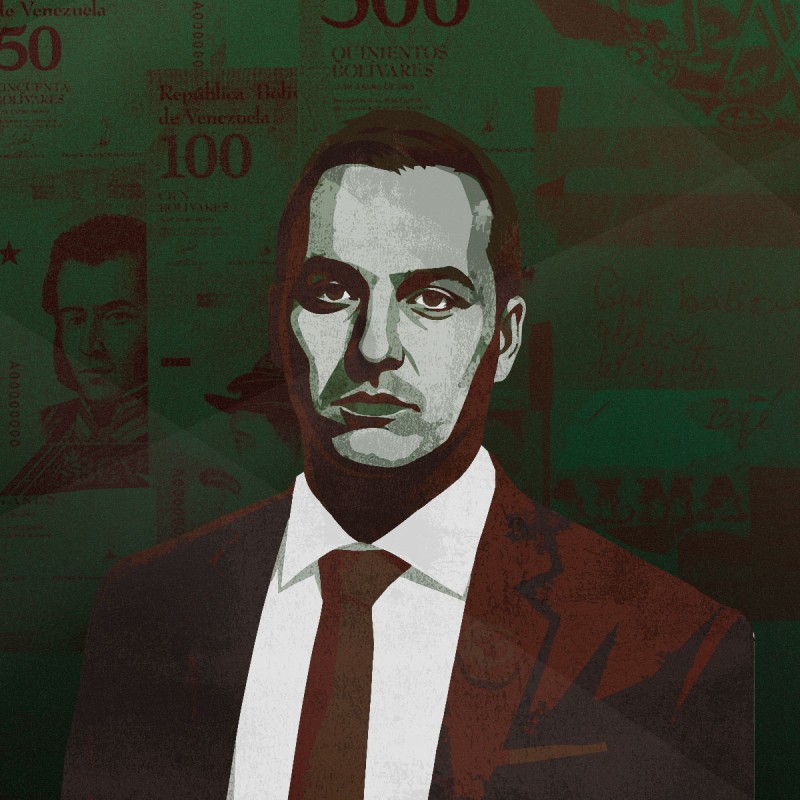
Hugo Gois
Gois, a 46-year-old Portuguese national, is described by his associates in the Madrid meeting as the expert in “how to move [money] from A to B.” Investigators in the U.S., where he has been indicted for conspiracy to commit money laundering as part of the Money Flight investigation, put it more bluntly, alleging that he was a “professional money launderer.” He is also currently under investigation for money laundering in Spain. In response to questions from reporters, Gois said his financial activities had been investigated by several countries — including Spain, Portugal, Switzerland, Georgia, Liechtenstein, and Italy — and that none had found him guilty of a crime. He added that he is currently collaborating with U.S. authorities for the ongoing investigation there, and declined to comment further.
Ralph Steinmann
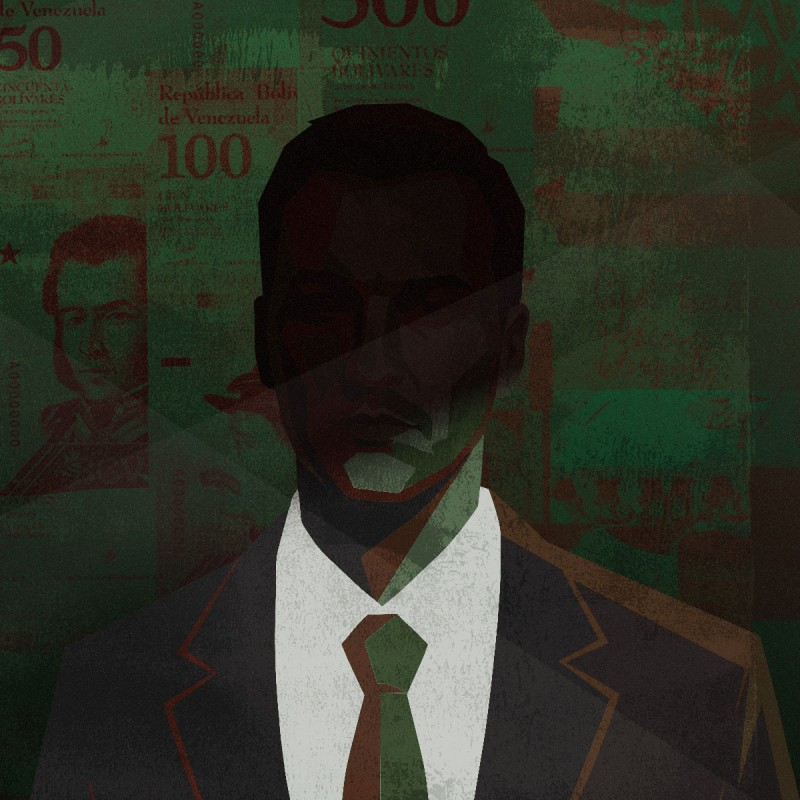
Steinmann, a 51-year-old Swiss asset manager with an Argentine accent, is accused by U.S. authorities of working alongside Gois to forge a plan to launder more than $200 million of the funds corruptly obtained from Venezuela's state oil company. In his own words, Steinmann can be heard in the Madrid meeting describing his speciality as the "structural” side of the trio’s services, including designing favorable tax structures for clients, securing their money in investment funds where “even the bank” is unaware of the ultimate owner, and generating “lots of documentation.” He has been indicted in the U.S. for conspiracy to commit money laundering, but has since been labeled a fugitive by the court, and is under investigation in Spain for money laundering. He did not respond to requests for comment.
José Vicente Amparan
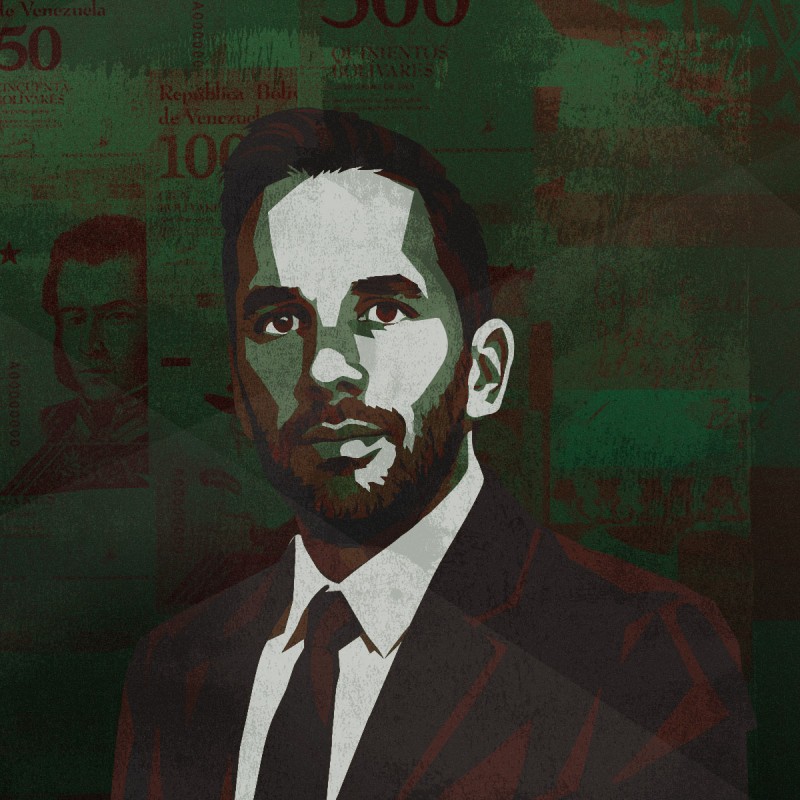
Known by friends as Chente, Amparan is a Venezuelan lawyer and financial asset manager. According to comments made in the Madrid meeting, he helps manage the trio’s third-party payment system, through which they claim to make “many payments a week for many clients” with “a very light KYC.” KYC refers to the “Know Your Customer” protocols that financial institutions carry out in order to spot red flags for money laundering and other forms of illicit finance. Amparan has been indicted in the U.S. for conspiracy to commit money laundering, and is currently under investigation in Spain for money laundering.He did not respond to requests for comment.
As Binaggia and Urdaneta, the former Venezuelan oil official whose money is under discussion, walk towards the office building where they will meet up with the others, Urdaneta stresses a desire to wrap up the operation neatly.
“The thing is to get organized, Pedro,” Urdaneta says. “Because this year what I want to start is being organized.”
“I know,” Binaggia replies into his microphone. “I have more interest in giving you what is yours than you in receiving it, and in closing this chapter.”
“This chapter” began back in 2014, when Urdaneta and an alleged co-conspirator first approached Binaggia, a lawyer known for connecting banks to wealthy clients, with an offer to trade $100 million at a favorable exchange rate with the Venezuelan bolivar.
According to Binaggia, he only later learned that this money had been plundered from PDVSA — with Urdaneta’s assistance.
As the legal adviser to the oil ministry, Urdaneta had helped facilitate two loan agreements that sucked millions out of the state company by exploiting the difference between the Venezuelan government’s fixed exchange rate with the dollar, which significantly overvalued the bolivar, and the true market rate. The huge gap between these two rates created an open field for fraud and abuse, according to U.S. investigators.
One of these two loan schemes, which provided the cash under discussion in Madrid, worked like this:
In 2014, a Venezuelan shell company agreed to lend PDVSA 7.2 billion bolivars, whose true market value was around $50 million.
PDVSA then repaid the loan under the Venezuelan government’s artificially high exchange rate with the dollar – meaning that it returned much more than it had received: the equivalent of some $600 million.
In effect, this generated some $550 million in profits out of thin air.
The proceeds from this and a similar loan agreement carried out earlier were then allegedly split between Venezuelan officials, a media mogul, and other elites, according to a sentencing memorandum in Urdaneta’s case.
Millions were also set aside as bribe payments for those who helped arrange the contracts, including Urdaneta.
In order to safely spend his portion of the proceeds — and distribute some of the cash to other alleged beneficiaries of the scheme — Urdaneta needed to obscure the money’s corrupt origins. So he and an alleged co-conspirator set out to whisk the funds through a maze of international transactions, including the currency exchange deal offered to Binaggia.
Binaggia accepted the deal, but soon started spotting errors in the documents that Urdaneta and his alleged associates had provided to justify the transfer to his bank.
After raising his concerns, Binaggia was summoned to a meeting in Venezuela's capital Caracas, according to the U.S. criminal complaint against Urdaneta and others.
Inside a heavily-guarded office, he found Urdaneta and two other men sitting behind a desk.
On top of it lay a handgun.
A German shepherd prowled around the office with a shock collar, and the dog's handler warned that he couldn't always subdue the animal in time.
After this intimidating encounter, Binaggia wanted out. He asked to return the money and reverse the transactions. But he was told this was impossible. So he contacted U.S. authorities, who were interested in the case because some of the money was set to be laundered in Florida. Now a double agent, Binaggia began supplying law enforcement with documents and chat logs.
That brings us back to Madrid, where Urdaneta had set up the meeting between Binaggia — who had at that point received approximately $90 million worth of proceeds from the corrupt loan scheme — and the three professionals allegedly tasked with “cleaning” Urdaneta’s portion of those funds and returning it to his pockets.
The conversation starts casually, with the men exchanging jokes and discussing family, their experiences living abroad, and other relatable issues – such as buying passports from different countries.
"In Malta, you buy a passport and you are already European," one of them says.

Then Gois, the so-called expert in moving money from ‘A to B,’ decides it’s time to talk business.
“Let’s get back to more mundane topics,” he says.
Urdaneta takes the lead in laying out the problem he has called the team of experts to resolve.
“There was a minor — well, “minor” in quotes — incident regarding the information in the documents submitted,” Urdaneta says. “They weren’t precise enough. One of the banks noticed something that didn’t add up.”
The problem emerged after Binaggia had tried to wire some of the money, which at that point was sitting in a trust he controlled in New Zealand, to a broker in England. To justify the transfer to his bank, he had provided a phony contract supplied by Amparan. But the bank spotted something suspicious: the contract described the transfer as a “payment to suppliers.”
“I don’t have suppliers to justify an amount like this,” Binaggia tells the group. “Someone with my profile doesn’t have a factory or something to claim I’m paying suppliers.”
Urdaneta stresses that this “minor incident,” as he called it, could have major implications. “We have to resolve this in the best way possible and make sure that no one raises any alarms, no suspicions or whatever, because this is like dominoes, that is, if you knock one down, they all fall.”

The conversation between the five men is not always easy to decipher. The audio is patchy, and many details are missing or only alluded to indirectly. But a few things are crystal clear.
“In these fragmented conversations, it’s clear they’ve received funds that need to be moved,” said José Gonzalez, a Peruvian banker and financial analyst we called to help decode the conversation.
“The problem with laundering money is that documentation doesn’t exist — it has to be fabricated,” he continued. So, as “in every money laundering scheme, the issue is making the source and recipient appear legitimate.”
As the men discuss how to do this, Gois lays out a potential solution. He describes the use of a “bridge” that could help them get the cash into the U.K. without facing too many questions.
The “bridge,” in this case, is Cyprus, an EU member state known for a soft approach to vetting the funds that flow into its financial sector.
Instead of moving the money directly to the broker in the U.K., Gois’s strategy would see the funds travel from Binaggia’s New Zealand trust to an account at a U.K. broker, IFX, that was opened by a Cypriot broker where Gois served as a director.
(IFX, which has not been implicated by U.S. investigators in the scheme, did not respond to queries about whether this transaction ever took place, or if it had any relationship with Gois and his Cypriot firm Uldono).
By using this arrangement, Gois says the men will primarily face questions in Cyprus instead of the U.K.
In Cyprus, “we have a certain amount of flexibility in terms of compliance that we don’t have in England, obviously,” he explains.
The U.K. broker will “receive [the money] trusting that the KYC and compliance is done in Cyprus,” he continues, referring to the “Know Your Customer” line of questioning that financial institutions carry out to assess money laundering risks.
“That is, there can only be questions in Cyprus because in England there is only a bridge… the responsibility is in Cyprus.”
According to Nikhil Gandesha, an expert in global financial crime at the compliance firm Themis, the use of Cyprus as intermediary is a “common scenario” in laundering schemes. This, he says, should lead any responsible U.K. broker to give such transactions increased scrutiny.
“If you were a U.K. brokerage doing things to a high standard or best practice, just the fact that it's a Cyprus brokerage opening [the account] would make you already do enhanced due diligence,” he told OCCRP.
What’s worrying, he added, is “the confidence that these guys have in terms of getting into the U.K.”
While Cyprus has in recent years faced heavy public pressure for welcoming tainted money to its shores, “there's also a bigger concern about London being a hub [for laundering], and the fact that it's possible in the U.K. to quite easily manipulate the system,” added Gandesha.
Manipulating the system is what Gois and his partners seem to specialize in.
“It's just that today, in England and all over Europe, there’s significant concern about anti-money laundering compliance,” Gois tells the room at one point in the conversation.
"So, it has to be done in a way that the systems won’t detect us."

“This is what we invest a lot in…in research so that we can carry out operations without the machines detecting it, and without raising compliance issues that we would have to answer.”
A Fake Bond Swap
The final fate of that tranche of money and its faulty paperwork is not clear. That’s because the conversation soon shifts gears to another batch of cash that originated from the PDSVA loan scheme and is in Binaggia’s hands — the plans for which reveal the sophistication of the group’s financial acrobatics.
The plan for cleaning this money is more complex. Gois suggests:
For Gandesha, the financial crime expert, what is most striking about this plan is its audacity.
“Usually when you want to launder money you want to do it quickly and get it cleaned up in the system,” he says. In contrast, the bond swap plot is a relatively long-term strategy — Gois says it will take him between six months and one year. That “shows a lot of confidence in what they're doing,” according to Gandesha.
“It's expert-level money laundering and it shows the caliber of the people that are talking about this.”
If all goes to plan, this operation would see Urdaneta get his money back. But his team of professionals will also get a cut — a big one. In an email sent to Urdaneta in October 2017, Amparan said the high prices they charged were justified by the “risk” involved in the transactions, according to U.S. court documents, which don’t reveal the precise figures.
This is a common pain point for people seeking to launder funds, notes Gonzalez, the Peruvian financial expert.
"One of the considerations for people with dirty money is the cost of laundering it and how much they’ll net in the end,” he says.
Nearly two months after the Madrid meeting, the first step of the “swap” operation appears to have been launched, with Binaggia purchasing a gilt in April 2017, according to U.S. court documents.
Two months after that, the informant instructed his bank to “free deliver” the bond — i.e. transfer it without any payment in return — to an account opened with the U.K. broker Valbury Capital, just as Gois had advised.
It is not known what happened next, but by December, Gois was expressing concern to Binaggia that law enforcement may be catching on.
“The faster you get out, the better for you,” he told Binaggia in another recorded meeting in the U.K. that was cited in U.S. court files.
“It's the truth, there's going to be a day that they are going to lock all of us up.… You'll defend yourself in your own way, I'll defend myself in the same way. But that will happen.”
Valbury Capital, the British brokerage where the gilt was transferred to, has not been implicated in the U.S investigation and the chairman of its board at the time of these discussions in 2017 did not respond to requests to comment. In 2021, the company was acquired and renamed Hibiscus Group Capital. Its current management said they could not comment on the events that took place before this change in ownership.
‘The Boys’
While poring over the files from Spanish prosecutors that were leaked alongside the recording of the meeting in Madrid, reporters found references to something in the audio that was initially indecipherable due its poor quality.
We asked our sound engineer to clean up the audio, and gradually, certain parts became clearer. Finally, we were able to hear Binaggia and Urdaneta mention payments to people the latter refers to as “the boys.”
Binaggia later calls them “the sons of the lady.” And then later, Urdaneta clarifies: “Cilia’s son.”
Spanish investigators suspect that “the boys,” “the sons of the lady,” and “Cilia’s son” refer to the same three individuals: Walter, Yosser, and Yoswal Gavidia Flores — the sons of Maduro’s wife, Cilia Flores.
The revelation places the stepchildren of Venezuela’s former leader at the center of a conversation about about money laundering.
This aligns with U.S. court documents, which refer to “the boys” (“los chicos” or “los chamos” in Spanish) as central players in the "Money Flight" scheme, though they do not name them. In one indictment, “the boys” are described as co-conspirators who were “close relatives of a high-ranking elected executive of Venezuela.” These documents allege the brothers were in position to receive millions from the scheme.
The Gavidia Flores brothers did not respond to requests to comment. Spanish authorities told OCCRP they are not currently under investigation.
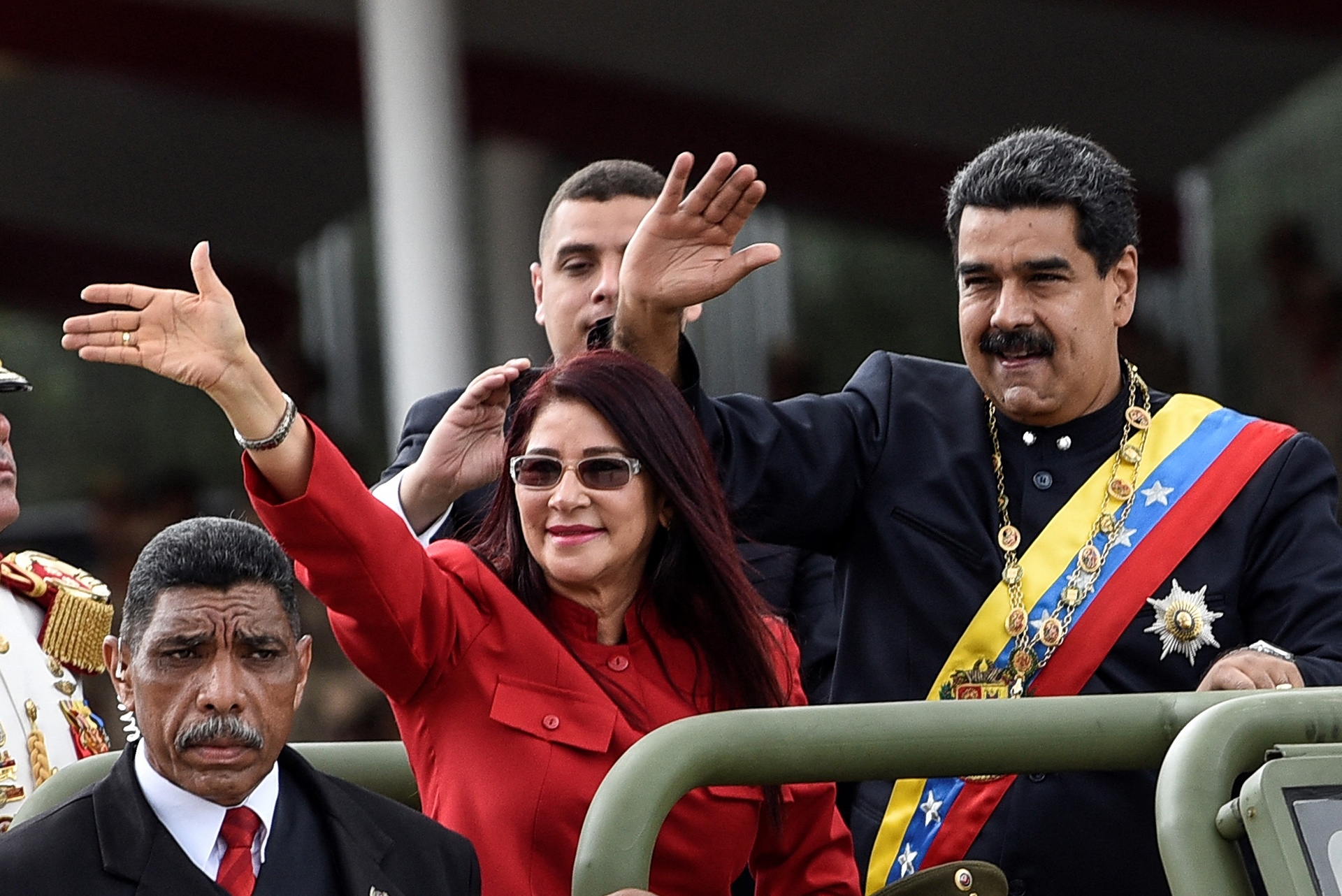
Venezuela's former president Nicolás Maduro and First Lady Cilia Flores greet people as they arrive to a military parade in Caracas in July 2017.
After Maduro and his wife were whisked away by the U.S.’s controversial raid at the start of this month, the future of Venezuela, and its oil, is as uncertain as ever.
The fate of the money that was embezzled from PDVSA and traveled the world also hangs in limbo.
In total, U.S. authorities have ordered the seizure of some $139 million in assets — in the form of real estate, bank accounts, and cash — as part of the Money Flight investigation, according to the Venezuela Asset Recovery Initiative (INRAV), an organization that has been seeking to direct these funds to the benefit of the Venezuelan people.
Previously, the U.S. government did not recognize Maduro’s regime, complicating efforts to see the funds returned. It’s still unclear whether the current thaw between the two governments means that money can now be returned to Venezuela promptly.
But it’s obvious that the need is high. “This is money that could have been used for hospitals, for schools, for the fight against AIDS, just to mention basic things that the Venezuelans are lacking,” said INRAV’s director, María Alejandra Márquez.
“People die every day from illnesses that it would be unthinkable in other countries for people to die of, just because they don’t have access to basic medicines,” she added. “It’s just a matter of basic justice.”
Writing and Editing: Nathan Jaccard, Sally Mairs, Julia Wallace, Miranda Patrucic
Design and Graphics: James O’Brien
Cover Design: Isabella Soto Vallejo