Reported by
Ukraine’s National Anti-Corruption Bureau (NABU) is examining who paid tens of millions of hryvnias in bail for five suspects in “Operation Midas” - a sweeping corruption probe in the country’s energy sector.
Investigators want to know whether any of the money came from the same “back office” that allegedly laundered kickbacks and other illicit proceeds skimmed from state-owned nuclear operator Energoatom’s contracts.
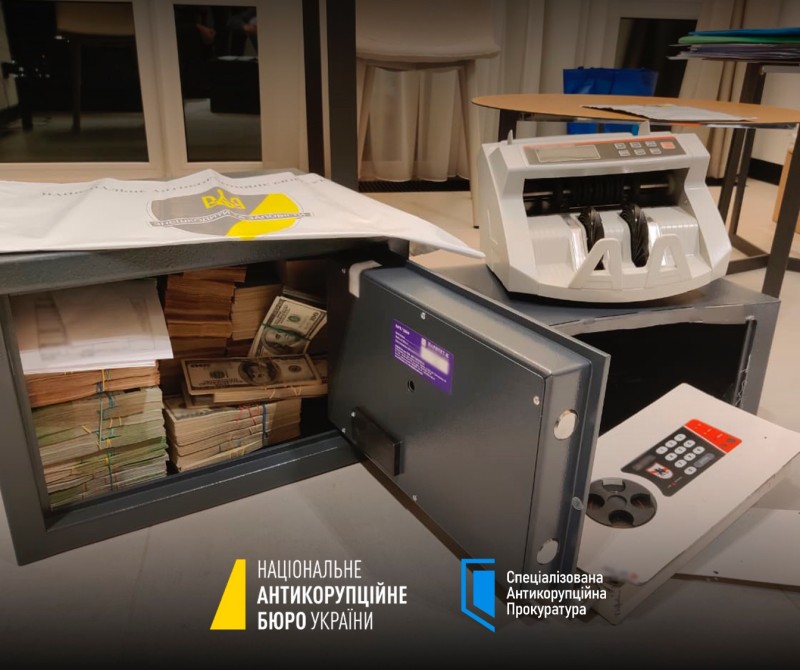
Operation Midas is a 15-month-long probe into an alleged kickback network at state-owned Energoatom, where “shadow managers” and officials are accused of forcing suppliers to pay 10–15 percent bribes and laundering roughly $100 million through shell companies and cash “laundromats.”
In November, Ukraine’s High Anti-Corruption Court jailed former Deputy Prime Minister Oleksiy Chernyshov with bail set at 51 million hryvnias (about $1.21 million), while Energoatom executive Dmytro Basov, ex–energy adviser Ihor Myroniuk, back-office accountant Ihor Fursenko, and alleged fixers Lesia Ustymenko and Lyudmyla Zorina also received multi-million-hryvnia bail.
Speaking on December 10 to a parliamentary commission, NABU Director Semen Kryvonos said the public had been “concerned” about the origins of the bail. From November 13 to 28, NABU sent a series of requests to the State Financial Monitoring Service, asking it to trace the source of the funds.
“We had grounds for this request and it’s very important now to track whether these funds were obtained, including as a result of the criminal activities of this back office or related persons,” Kryvonos told lawmakers.
He said financial monitors have replied to some queries, particularly those on companies that posted bail, but have yet to fully analyze the legality of funds contributed by individuals or to explain how that money moved onto corporate accounts.
Filyp Pronin, head of the State Financial Monitoring Service, said his agency answered NABU’s requests and continues to work on the case, but cannot block transactions on its own and is still receiving information from the banks that processed the payments, a process he described as taking time rather than “two minutes.”
One of the most striking examples is LLC Vangar, a Kyiv furniture company with a statutory capital of 1,000 hryvnias (about $24) created in May 2025. Despite its tiny balance sheet and lack of real estate or vehicles, Vangar paid 25 million hryvnias (about $591,000) in bail for back-office accountant Lesia Ustymenko and another 12 million (about $284,000) for businesswoman Lyudmyla Zorina, both accused of helping launder Energoatom-related kickbacks. Journalists have not found evidence that the firm conducts real economic activity, raising questions about whose money it actually moved.
Midas has already toppled senior officials. In a separate story, OCCRP reported that anti-corruption raids prompted the resignation of presidential chief of staff Andriy Yermak, whom one lawmaker claims appears as “Ali Baba” on NABU recordings that describe efforts to undermine anti-corruption bodies. President Volodymyr Zelenskyy has promised full transparency as investigators track the Energoatom kickback network’s political reach.