Reported by
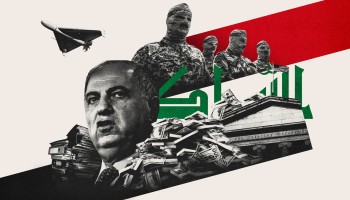
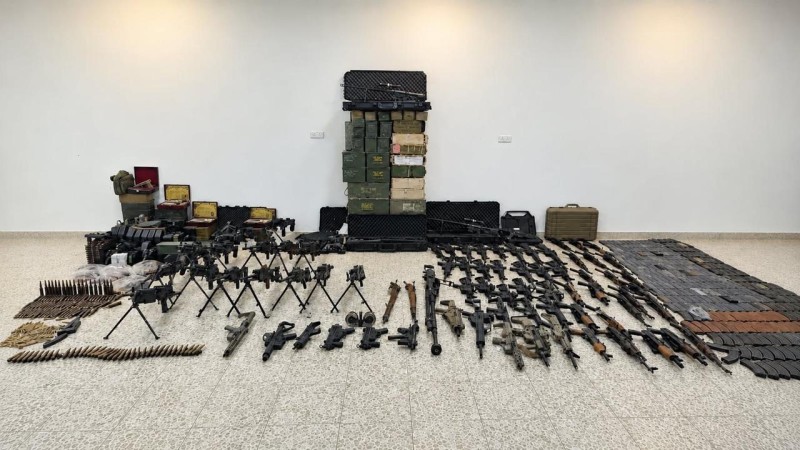
When Iraqi anti-corruption authorities moved to arrest one of the country’s top oil officials and his associates last week, they uncovered more than just a paper trail of graft. Stashed alongside gold jewelry, three billion Iraqi dinars, and roughly $10 million in American currency was a massive cache of assault rifles and ammunition.
The sweeping raid in the Salaheddin province, north of Baghdad, led to the detention of Adnan Mohamed Mahmoud, Iraq’s deputy minister of oil and refining affairs. His arrest on Saturday—and the staggering hoard of wealth and weaponry seized by the authorities—marks the most high-profile takedown yet in an anti-corruption drive launched by the country’s newly appointed prime minister, Ali Al Zaidi.
“This case reflects a significant shift from merely identifying violations to focusing on dismantling corruption networks in vital sovereign sectors, particularly the energy and oil sector, which forms the backbone of the Iraqi economy,” Mohamed Hadi Kadem Aboud Al-Shammari, a lawmaker on the Parliamentary Integrity Committee, told OCCRP on Wednesday.
He called the arrest a "serious and practical" step in pursuing government officials implicated in systemic graft.
The Supreme Judicial Council of Iraq formally announced the seizure on Tuesday. While the council did not explain why a senior energy executive was stockpiling light and medium weaponry, it published photographs of the haul on social media, displaying rows of firearms flanked by towering stacks of U.S. dollars and Iraqi dinar bills. The investigating judge of the Central Anti-Corruption Criminal Court noted that authorities also seized 40 properties spread across three provinces linked to Mahmoud.
The fallout within the state's energy apparatus was immediate. On the day of the arrest, Iraq’s oil minister stripped Mahmoud of his parallel role as the director general of the state-owned North Refineries Company. An interim executive was appointed to the helm, who proceeded that same day to fire the company’s director of finance after he, too, was swept up and arrested by Iraqi authorities. No official explanation was offered in the removal documents.
The dramatic arrests represent a highly visible flex of state power by Al Zaidi, who took office promising to eradicate the endemic graft that has long plagued the nation's public sector. Iraq currently ranks 136th out of 182 countries on Transparency International’s Corruption Perceptions Index.
Mazhar Muhammad Salih, a financial advisor to the prime minister, told the Iraqi News Agency that the government is overhauling its strategy to combat the deeply entrenched networks siphoning state wealth. The goal, he said, is "confronting large and organized corruption by creating an effective legal lever and strengthening the power of law enforcement" to ensure swift cooperation between regulatory and judicial institutions.
Yet, for Iraqi lawmakers, high-profile arrests are only the first phase of a much broader battle. The true measure of the new administration's success will be its ability to reclaim the billions lost to decades of systemic embezzlement.
"The greatest challenge and the true test of our efforts today lies in recovering the looted funds," Mr. Al-Shammari said, "and tracing assets both inside and outside the country to return them to the public treasury."