Georgian authorities are investigating a BBC report alleging that police used a World War I-era chemical agent against anti-government protestors last year, though the probe will also focus on the British broadcaster’s sources and suspected foreign collusion, the State Security Service said.
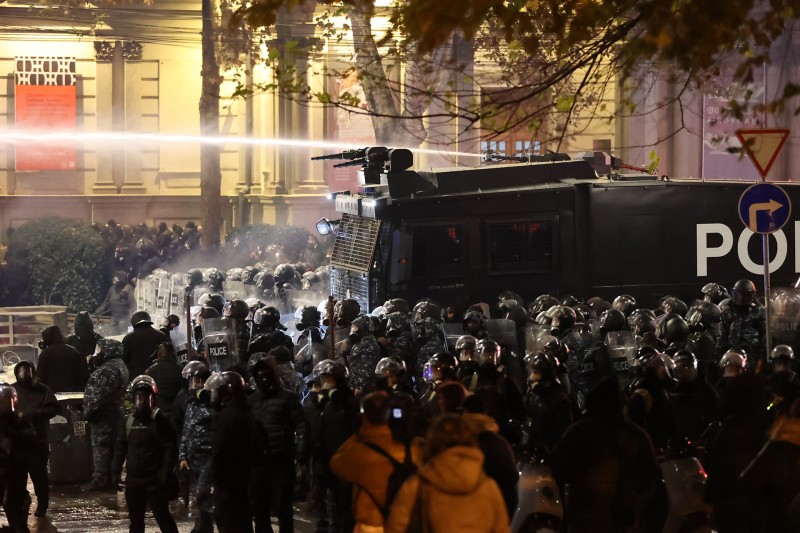
BBC Eye published an investigation Monday claiming that Georgian police used an obsolete tear gas known as Camite during the mass protests in November 2024.
Officials in Tbilisi told BBC Eye that the allegations were “absurd,” insisting that police had lawfully responded to the “illegal actions of brutal criminals.”
However, Georgia’s State Security Service (SSS) announced it had launched an investigation in response to the report, citing suspected abuse of official authority and aiding a foreign organization in activities hostile to the Georgian state.
In a statement, the SSS said the investigation would “work in all directions,” arguing that the BBC report alleged both an offence against “the life and health of citizens” and, “on the contrary, contains signs of a crime that grossly harms Georgia’s national interests, its international image [and] reputation.”
The agency stressed that the probe would scrutinize the BBC’s sourcing, including testimony given by interviewees and “how relevant this information may be.”
BBC Eye’s investigation drew on testimony from doctors, chemical weapons specialists, and “high-level” Georgian whistleblowers, including former riot police officers.
Among them was pediatrician Dr Konstantine Chakhunashvili, who reportedly found that nearly half of the protestors he surveyed experienced lasting symptoms—including shortness of breath and vomiting—after being hit by water cannons. He told BBC Eye that he had suffered similar effects himself while taking part in the protests.
In comments to OCCRP, Chakhuanshvili expressed doubt about the aims of the official probe, claiming it may be intended to “frighten people, and in parallel, throw someone under the bus, which means they will attempt to whitewash themselves and avoid sanctions.”
International rights groups have accused the Georgian authorities of violently suppressing the anti-government protests that erupted last November after the ruling Georgian Dream party announced that it would suspend the country’s EU accession talks until 2028.