Reported by
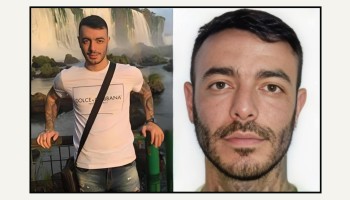
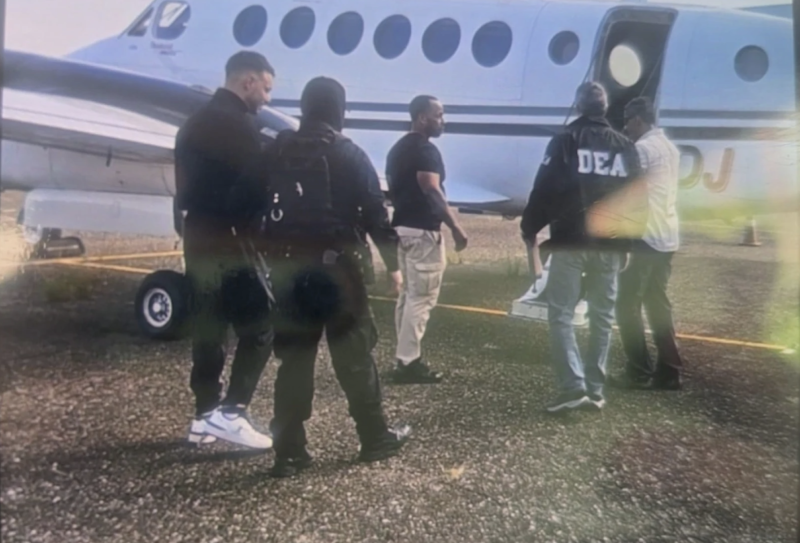
Heavily armed Bolivian special forces descended early Friday morning on a residential neighborhood in Santa Cruz, capturing Sebastián Marset, a notorious Uruguayan drug lord who had evaded international law enforcement for years. Within hours, he was extradited to the United States.
Marset, considered one of the most powerful drug barons in the southern cone of South America, had a $2 million U.S. bounty on his head and is wanted by American authorities for laundering millions of dollars in illicit drug proceeds through U.S. banks.
At midday, Bolivian President Rodrigo Paz made the official announcement of the arrest and swift extradition.
“The capture of Marset marks a turning point in the fight against organized crime,” the president said, adding that the operation “reaffirms the position of the government in the fight against mafias.”
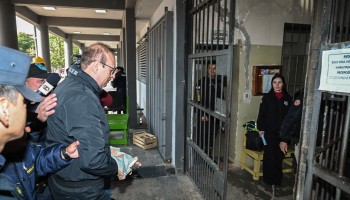
The operation began in the early hours of Friday in Las Palmas, a neighborhood situated near the Abasto market in Santa Cruz. Residents awoke to streets cordoned off by a heavy contingent of the Special Force Against Drug Trafficking (FELN) and the Prosecutor’s Office for Controlled Substances.
According to Government Minister Marco A. Oviedo, authorities simultaneously raided two properties: Marset's primary residence and a separate "safe house." Three other individuals were arrested alongside him. The minister confirmed that the high-stakes sweep was executed without a single casualty among law enforcement, suspects, or civilians.
The arrest highlights a rapid shift in regional geopolitical cooperation. It comes just two months after the U.S. Drug Enforcement Administration (DEA) resumed operations in Bolivia following a 17-year absence.
It also follows President Paz’s recent participation in an anti-narcotics summit of regional leaders convened by President Donald Trump on March 7, signaling a renewed, aggressive alignment between La Paz and Washington on combating transnational cartels.
The DEA had been officially tracking Marset since May 2025, elevating him to its top five most-wanted list, while the State Department issued the $2 million reward for information leading to his capture.
For years, Marset moved fluidly across Bolivia, Colombia, Uruguay, and Brazil. He frequently utilized a fraudulent Bolivian passport under the name Gabriel de Souza Beumer, a fake identity he used to weave a massive international network of drug trafficking and money laundering.
His criminal dossier is extensive and violent. Colombian President Gustavo Petro has repeatedly linked Marset to the May 2022 assassination of Marcelo Pecci, a prominent Paraguayan anti-mafia prosecutor who was murdered while on his honeymoon in the Colombian Caribbean.
Marset was also the primary target of Paraguay’s 2022 "A Ultranza PY" operation—the largest anti-narcotics sweep in the country’s history. That investigation dismantled a sprawling criminal enterprise, leading to the arrests of national politicians, prominent businessmen, and figures tied to local soccer clubs. Marset fled before he could be apprehended, and Paraguayan authorities have viewed his capture as the final missing piece of the operation.
His ties to Paraguayan organized crime run deep. In 2013, he was arrested in Uruguay while transporting marijuana on a light aircraft originating from Paraguay. Detained alongside him was Juan "Papacho" Viveros Cartes, the uncle of former Paraguayan President Horacio Cartes. Following his release in 2018, Marset relocated to Paraguay, aligning himself with the Insfrán crime syndicate—led by the brothers Miguel Ángel Insfrán, alias "Tio Rico," and José Alberto Insfrán, alias "The Pastor," both of whom are currently imprisoned in Asunción facing drug trafficking charges.
With his extradition to the United States complete, Marset now faces a sprawling federal indictment that threatens to unravel one of the continent's most sophisticated financial laundering networks.