Reported by
Corruption is surging worldwide, threatening public trust, enabling organized crime, and weakening democratic institutions, Transparency International warned Tuesday in its 2025 Corruption Perceptions Index (CPI).
Experts say shrinking civic space and faltering accountability are fueling the problem, putting governance—and citizens—at risk.
Since its inception, Transparency International’s CPI has become the leading global indicator of the perception of public sector corruption. The index scores 182 countries and territories, using data from 13 external sources, including the World Bank, World Economic Forum, private risk and consulting companies, think tanks, and others. Scores range from zero to 100, with zero indicating very corrupt governance and 100 very clean.
Countries perceived as the least corrupt in 2025 include Denmark (89), Finland (88), Singapore (84), New Zealand (81), Norway (81), and Australia (76), setting the global benchmark for clean governance.
Eastern Europe and Central Asia are struggling with a decade of stalled reforms. The region scores just 34, with six countries significantly worsening and only seven improving. Weak institutions, concentration of power, and undue influence on the judiciary are eroding public oversight.
Across the Western Balkans, opaque investment decisions and secret deals have exposed public funds to corruption. In Serbia, the Prosecution for Organized Crime faces government pressure and smear campaigns, while in Bosnia and Herzegovina, political influence over judicial appointments continues to block reform.
Lidija Prokić, Regional Advisor for Eastern and South East Europe, pointed out that corruption thrives where democracy is weakened and accountability fails. Ukraine (36) and Moldova (42) stand out as rare examples of progress, where strong civil society and independent institutions have driven meaningful reforms.
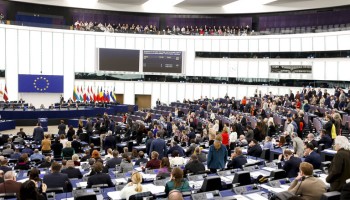
Western Europe and the European Union have seen anti-corruption progress stall, with the regional average CPI dropping from 66 to 64 over the past decade. Key EU states, including the UK (70), France (66), and Spain (55), have experienced backsliding, while Hungary (40) and Slovakia (48) weaken safeguards against political influence and corruption investigations.
Transparency International warns that weakened oversight and attacks on civil society are making abuses harder to detect.
Flora Cresswell, Regional Advisor for Western Europe, highlighted that Europe should raise its anti-corruption ambitions rather than lower them amid current geopolitical challenges.
The Americas continue to struggle, with a regional average of 42. Corruption has allowed organized crime to infiltrate politics in Colombia (37), Mexico (27), and Brazil (35), undermining security and human rights. Fragile states like Haiti (16) and Nicaragua (14) remain plagued by entrenched corruption. Even stronger democracies, including Costa Rica (56) and Uruguay (73), face growing threats from criminal networks.
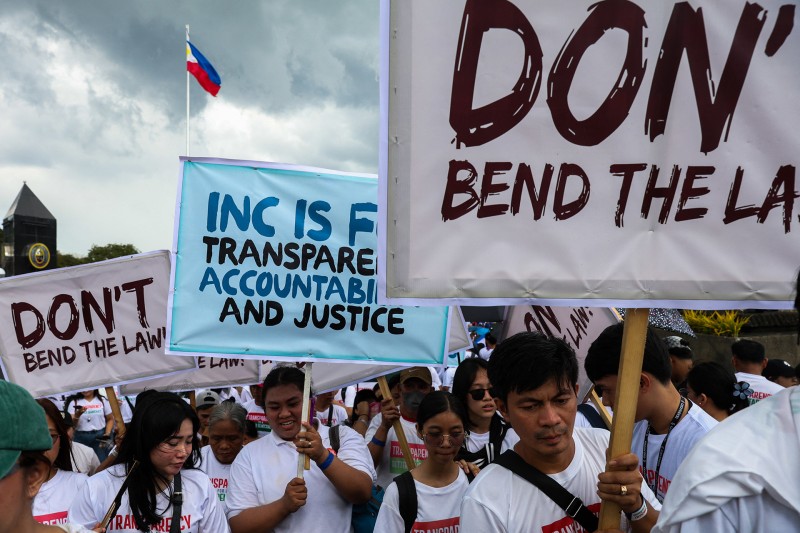
Asia-Pacific averages 45, with widespread governance failures and limited accountability fueling public frustration. The Philippines (32) lost funds to a fake flood relief project, Indonesia (34) saw deadly anti-government protests, and Nepal (34) toppled its government amid social unrest linked to corruption.
TI’s CPI claims that fragile states such as Afghanistan (16), Myanmar (16), and North Korea (15) remain at the bottom, where restricted civic space and opaque political systems leave corruption unchecked.
Such a situation, according to Ilham Mohamed, Asia Pacific Adviser, is fueling corruption across the region, with weak law enforcement, opaque political funding, and unaccountable leadership. She added that leaders must respond to growing public demand for stronger governance and democracy.
The Middle East and North Africa also remain vulnerable. Even the region’s highest scorers—United Arab Emirates (69), Qatar (58), and Saudi Arabia (57)—are dependent on leaders’ political will to implement reforms. Syria (15), Libya (13), and Yemen (13) remain entrenched in corruption amid conflict and institutional weakness, according to the report.
Sub-Saharan Africa scores lowest globally, averaging 32. Governments fail to protect public funds or deliver services effectively. Somalia (9) and South Sudan (9) are at the bottom, while Madagascar (25) recently saw a youth-led uprising against entrenched corruption. Angola has improved slightly but remains at the lower end of the index. Paul Banoba, TI’s regional advisor, noted that public sector corruption always hits the most vulnerable people the hardest.