Speaking privately with their bankers in February 2023, two associates of India’s Adani family confirmed that they held billions of dollars worth of stock in their conglomerate, Adani Group, through several hedge funds.
Their admission, found in banking documents obtained by OCCRP, had a direct bearing on a scandal that was roiling the country. Just weeks earlier, American short seller Hindenburg Research had published an explosive report claiming that the Adani Group’s decade-long stock rally had been improperly driven by insiders through “brazen” manipulation.
The affair made headlines across the world, in part because of the Adani Group’s widely perceived closeness to Prime Minister Narendra Modi. But after plummeting for a time, Adani’s stock recovered. The company issued a lengthy response denying all wrongdoing and decrying the report as an “attack on India.” And after a lengthy investigation, the country’s market regulator, SEBI, released two orders that found no violations in two aspects of the case, essentially ruling in favor of the Adani Group. No findings from its many other strands of investigation have ever been publicly aired.

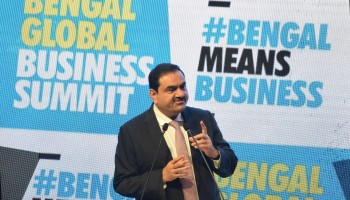
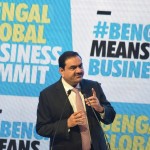
Gautam Adani, chairman and founder of the Adani Group.
In the meantime, OCCRP and its reporting partners, the Financial Times and the Guardian, had revealed the names of two men who had spent years secretly trading Adani stock: Nasser Ali Shaban Ahli, a citizen of the United Arab Emirates, and Chang Chung-Ling, a Taiwanese citizen. Both men’s ties to the Adani family have been widely reported over the years, and both held positions in affiliated companies. The Adani Group again denied all allegations of impropriety, pursuing journalists in court and accusing them of representing “Soros-funded interests.”
But now, internal documents from REYL Intesa Sanpaolo, a Swiss banking group headquartered in Geneva, reveal that Ahli and Chang’s investments in the Adani Group were much larger and more recent than was publicly known. While previous reporting revealed investments in the hundreds of millions between 2013 and 2018, the documents show they held about $3 billion in Adani stock through several hedge funds as recently as 2023 through accounts with Reyl Finance (MEA) Ltd., a Dubai-based subsidiary of REYL Intesa Sanpaolo.
According to an internal report, Ahli and Chang confirmed this to their bank in writing, explaining that they had made these investments because they had personal and professional relationships with members of the Adani family and trusted their business acumen. In their statement to the bank, Ahli and Chang denied the allegations made by Hindenburg Research.
Chang, Ahli, and the Adanis
The internal report also refers to inquiries about Ahli and Chang that the bank received from Swiss authorities. According to an August 2024 court ruling, prosecutors in the country were conducting a criminal investigation into Chang, suspecting him of acting as a “front man” for Adani Group investments, and froze over $310 million in assets. No charges have been brought. Asked about the status of the case, the Federal Prosecutor's Office did not comment on Chang’s identity, but confirmed that a criminal investigation into money laundering and forgery of documents was underway. The bank did not respond to requests for further detail. The Adani Group has denied any involvement.
The Swiss case, which closely tracks OCCRP’s previous reporting on the affair, is just one of the legal challenges the Adani Group has faced in recent years. In November 2024, U.S. federal prosecutors indicted the group’s founder Gautam Adani and his nephew for allegedly promising to pay hundreds of millions of dollars in bribes to Indian officials. A spokesman for the Eastern District of New York declined a request to comment on the status of the case. The Securities and Exchange Commission filed a parallel civil complaint, which is ongoing. The group has called the accusations “baseless” and said it would pursue “all possible legal recourse.”
Indian Investigations into Adani
In response to requests for comment, an Adani Group spokesperson wrote that any alleged “front men” for the Adani family are in fact “public shareholders.”
“Under Indian law, a listed company neither controls nor directs who purchases publicly traded shares, nor does it have visibility into or responsibility for the source of funds of public shareholders beyond disclosures mandated by regulators,” the spokesperson wrote. “Any suggestion that promoter shareholding has been misstated or concealed is incorrect and contrary to disclosures made in accordance with applicable law.”
The allegations found in the Hindenburg Report “have been adequately addressed by us and already examined at the highest levels of India’s regulatory and judicial framework, including the Supreme Court of India,” the spokesperson wrote. “The Adani portfolio of companies remain fully compliant with all laws and disclosure requirements across jurisdictions and continues to have complete faith in due process and the rule of law.”
Ahli and Chang did not respond to requests for comment. In a short statement, a representative of Intesa Sanpaolo wrote that the bank “is not in a position to comment, as any disclosure is not permitted by law in Italy, the United Arab Emirates and Switzerland.”

The sprawling Indian conglomerate has interests in everything from airports to energy to sports to metal commodities.
Billions invested through the British Virgin Islands
The new revelations about Ahli and Chang appear in documents that detail their bank’s response to the Hindenburg Research report and ensuing scandal.
According to these documents, after becoming aware of the allegations, the Italy-based Fideuram Intesa Sanpaolo Private Banking carried out an internal investigation into whether anyone connected to the Adani Group held any accounts with its private banking units.
That investigation identified three relevant accounts, holding just over $3 billion in assets, at Reyl MEA, a Dubai subsidiary of the Swiss REYL Intesa Sanpaolo:
Nasser Ali Shaban Ahli held $2.02 billion through his BVI-based company, Gulf Asia Trade & Investment Ltd. Almost the entire amount was invested in hedge funds which had seen “significant increases in value over the last 3 years” and were “likely” invested in Adani Group companies.
Chang Chung-Ling held $1.02 billion through his BVI-based company, Lingo Investment Ltd. Almost the entire amount was invested in the same hedge funds, again with the note that they were “probably being invested in Adani Group companies.”
Vinod Adani, the elder brother of the Adani family, held $6.5 million through his UAE-registered company, Kommerce Trade & Services. Most of this was invested in a pharmaceutical company, though investigators noted some loan-related transactions “of a not particularly significant amount” between his company and Chang’s. Adani did not respond to requests for comment.
Afterwards, Intesa Sanpaolo’s Chief Audit Officer and anti-financial-crime team requested that Ahli and Chang be called in for a meeting to explain their investments and their stance on the Hindenburg Research allegations.
At that meeting, held in February 2023 with the CEO and a board member of Reyl MEA, both men signed a written statement confirming that the accounts were theirs and stating that they had made their investments in Adani stock because they had personal and business relationships with the family and trusted their business acumen. They denied any wrongdoing and promised to diversify their holdings “in the short term.”
The bank also took additional measures, blocking any transactions on their accounts without specific authorization from an anti-money laundering officer.
It did not respond to reporters’ questions about its client relationship with Chang and Ahli.
The Hedge Funds
Swiss Investigations
The documents obtained by reporters also add new details to what is known about Swiss law enforcement attention to Ahli and Chang.
According to the internal report from Fideuram Intesa Sanpaolo Private Banking, half-a-year before the Hindenburg report was published, Swiss “judicial authorities” sent “specific information requests” to REYL Intesa Sanpaolo about accounts held by Ahli and Chang. Subsequently, the bank submitted suspicious transaction reports to the Swiss Financial Intelligence Unit relating to both men, as well as Vinod Adani. The relevant accounts were closed at the end of December 2022 due to a lack of activity, and they are not the same accounts later found to hold the $3 billion.

Fideuram Intesa Sanpaolo Private Banking headquarters in Ancona, Italy.
The Swiss information requests came as the authorities were looking into Chang for “suspicion of money laundering and forgery of documents” in an investigation that has been ongoing since 2021, according to an August 2024 decision by the Swiss Federal Criminal Court. (As reported at the time by Gotham City and the Financial Times, though Chang’s name does not appear in the decision, he can be identified by the information provided.)
In that investigation, which was begun by prosecutors in Geneva but later taken over by the Federal Prosecutor's Office, Chang is suspected of being a “front man” for the Adani group as part of a scheme to enable insiders to own a larger share of its stock than is permitted by law — exactly as he was described in previous reporting by OCCRP and the Financial Times. In connection with the case, Swiss prosecutors have frozen $311 million held by Chang in five bank accounts.
In the August 2024 decision, the Swiss Federal Criminal Court rejected an appeal by Chang’s company — the very same Lingo Investment Ltd that held his $1 billion — to unfreeze the money.
“The prosecuting authority must have time to conduct its investigation,” the court ruled. “It should be noted that the appellant is clearly unable to provide [prosecutors] with the explanations — in the form of supporting documents — which it should be able to provide in order to dispel the doubts legitimately raised.”
Asked about the status of the case, the Federal Prosecutor's Office did not comment on Chang’s identity, but confirmed that a criminal investigation into money laundering and forgery of documents was underway.
.jpg/d9292de12978009a64a9c800764c00e2/gramps-final-(1).jpg)
.jpg/0dd2cd6b459b48265605461518a8ae61/gramps-final-(1).jpg)