The most effective way to steal from a nation isn't to break its laws, but to rewrite them. On the rise across dozens of countries, both democracies and dictatorships, state capture involves private interests seizing control of public institutions to serve their own ends. Because the methods of capture are often informal and legal, anti-corruption actors are struggling to take action before it’s too late.
Journalists are among those wrestling with state capture, working to raise the alarm and reveal how it works. "Chronicling Capture: How Investigative Journalism Covers State Capture" is a first-of-its-kind study on how investigative journalism covers state capture. Authored by members of OCCRP’s Impact team, the paper was published by the University of Sussex’s Centre for the Study of Corruption.
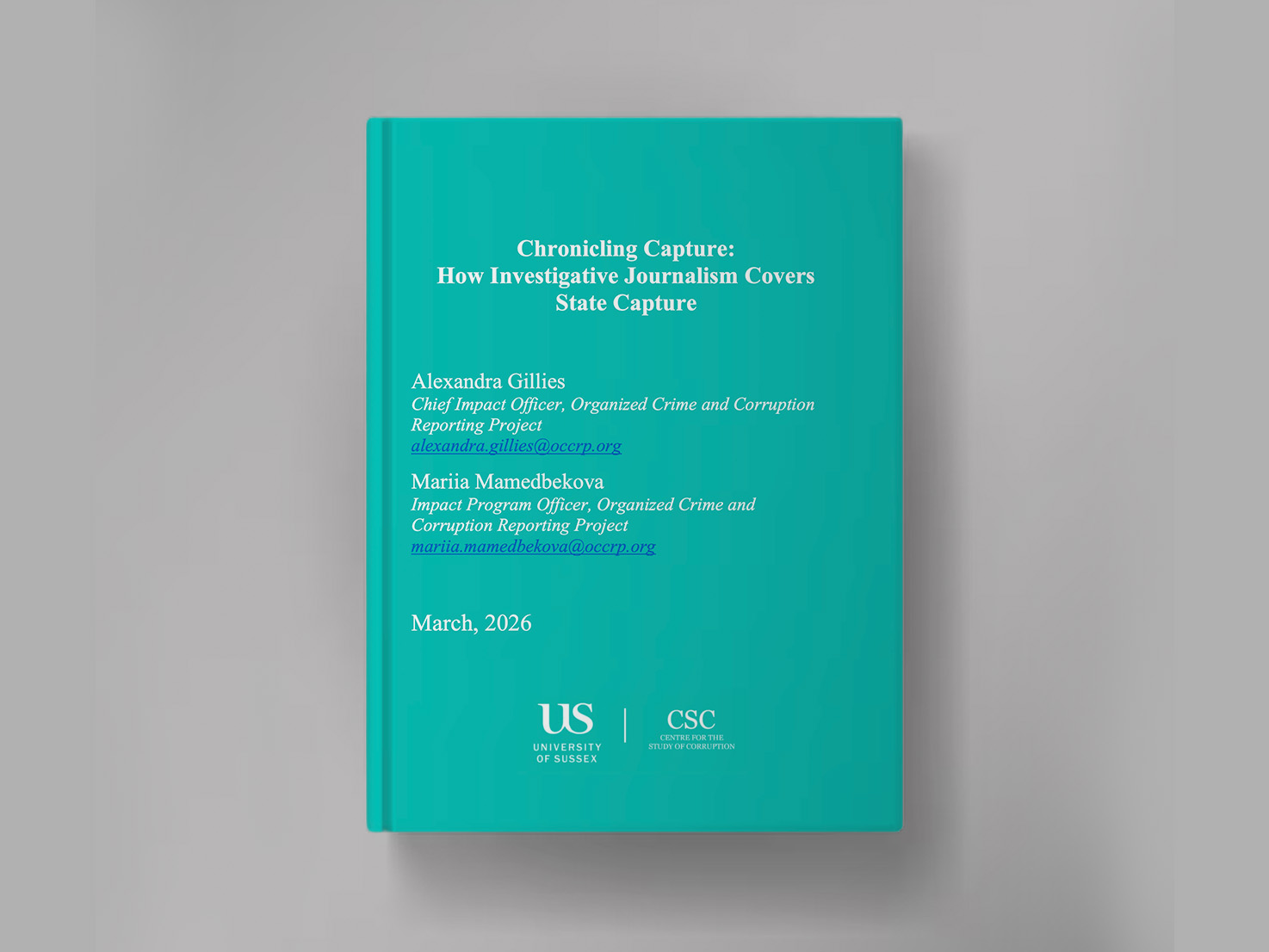
Analyzing 51 OCCRP investigations spanning 23 countries, the paper maps who captures states and how — from business conglomerates lobbying to weaken environmental protections, to crime groups buying off judges, to foreign governments funding vote-buying operations. The report also confronts an uncomfortable truth: the very features that make state capture so dangerous also make it extraordinarily difficult to document and prove.
The report’s findings underscore that the media itself is a primary target of capture. To protect their influence, captors actively dismantle the mechanisms of accountability. This includes lawsuits to bury investigative outlets in debt and distraction; propaganda hubs that look like legitimate newsrooms to drown out factual reporting; and surveillance technology like spyware to monitor and intimidate journalists.

Watch a short clip from the OCCRP Briefing about the "Chronicling Capture: How Investigative Journalism Covers State Capture" report.
Reporting on state capture requires a fundamental shift in how we think about investigations. Because capture is more systemic than transactional, journalists must track the multi-year erosion of the institutions meant to protect the public interest. Recommendations for newsrooms include more cross-border collaboration to untangle the global capture networks and investments in local political expertise.
State capture’s deep-rooted nature makes it exceptionally harmful and difficult to reverse. However, the reporting analyzed here offers hope: investigative journalists have succeeded in producing powerful evidence of efforts at state capture. And, by documenting these behaviors, they have empowered others to take action. Expanding this dynamic with more reporting and stronger responses represents a vital strategy for confronting state capture in the future.

.jpg/dc0350ded40ba882af921cb6ffbc0b06/banner-understanding-data-(edit2).jpg)


.jpg/ae35364cf514dd68388e40baaf4063b5/banner-understanding-data-(edit2).jpg)