After ending Viktor Orbán’s 16-year rule in a landslide election victory, Hungary’s incoming leader, Péter Magyar, has promised a sweeping crusade to dismantle the country's systemic graft.
Fulfilling that pledge will require untangling a sprawling network of political and business alliances.
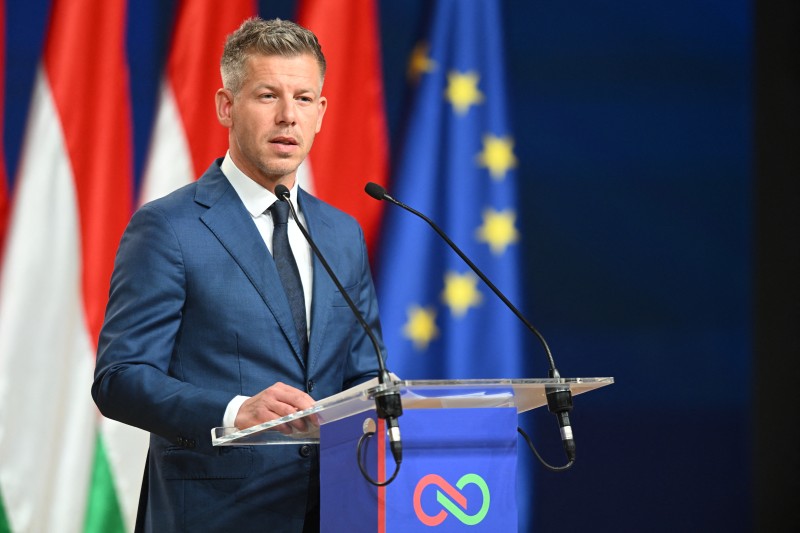
Outlining his administration’s agenda on Monday, Magyar declared “zero tolerance” for the misuse of public money. He framed the status quo of the Orbán era not merely as a political failing, but as outright theft from the Hungarian public.
To tackle this labyrinth of graft, Magyar announced during a press conference the creation of two new watchdog agencies. A new Anti-Corruption Office will be launched with a mandate focused on prevention, education, and shielding law enforcement from partisan interference, he said. Corrupt leaders will be removed and the political and operational leadership of the police force will be separated.
Working alongside the Anti-Corruption Office will be the National Asset Recovery and Protection Office, a new institution that will coordinate deep-dive financial investigations without competing with existing police or tax authorities.
The new asset recovery bureau's early targets will include reviewing questionable real estate transactions, examining lucrative concession deals, and retroactively auditing all public procurements exceeding $32 million, Magyar explained.
He pledged to have the apparatus fully operational by June. To fund the initiative, he plans to redirect the budget resources currently allocated to the Orbán government's controversial Office for the Protection of Sovereignty. The stakes are existential for Hungary’s economy. Under Orbán, Brussels froze billions in funds over severe rule-of-law and procurement failures. The European Union is currently conditioning the release of up to €35 billion ($41.1 billion)—including more than €6.4 billion ($7.5 billion) in pandemic recovery funding—on 27 strict requirements, effectively demanding a total break from the democratic backsliding of the past 16 years.
As a critical first step to restoring democratic institutions, the incoming government will officially launch the process of joining the European Public Prosecutor’s Office (EPPO), the EU body that investigates fraud involving European funds. Magyar acknowledged that the formal accession process could take at least six months.
Magyar’s victory has drawn immediate sighs of relief across the continent, with European leaders welcoming the election as a rare chance to reset Budapest’s ties with the bloc. Polish Prime Minister Donald Tusk called the election a blow to authoritarian rule, proving Eastern Europe's capacity to resist corrupt systems. European Commission President Ursula von der Leyen heralded the moment as “a victory for fundamental freedoms,” comparing it to Hungary’s defining democratic turning points in 1956 and 1989.
For Magyar, the mandate appears to be clear: bring Hungary closer to Brussels and dismantle one of Orban’s main legacies.
"We are ready to eliminate industrial-scale corruption," Magyar said.