Reported by
A prominent European human rights body sharply criticized Swiss authorities on Wednesday for their handling of millions of dollars linked to a notorious Russian tax fraud scheme, passing a resolution aimed at tracking down the illicit funds before they disappear entirely.
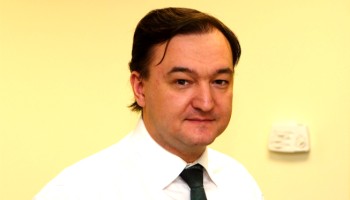
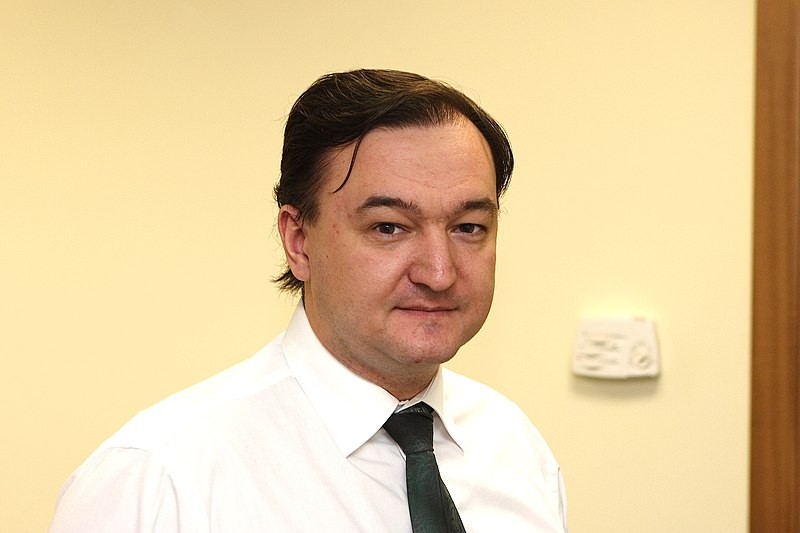
The 43-to-7 vote by the Parliamentary Assembly of the Council of Europe marks the latest chapter in the decades-long fallout from the “Magnitsky Affair,” the $230 million embezzlement plot exposed by the Russian tax lawyer Sergei Magnitsky before he died in a Moscow prison in 2009.
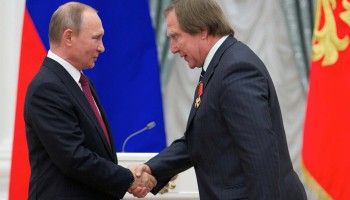
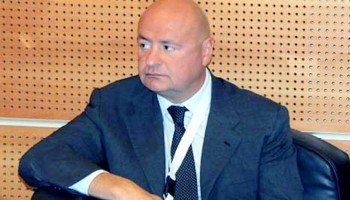
The resolution specifically targets the failure of Swiss prosecutors to prevent the flight of previously frozen assets belonging to three individuals identified as beneficiaries of the fraud: Dmitry Klyuev, Vladlen Stepanov, and Denis Katsyv. All three were implicated by the U.S. Justice Department in a 2013 civil forfeiture action against Katsyv’s Cyprus-based company that purchased high-end New York real estate with the stolen funds.
The mounting pressure on Switzerland traces back to a 2021 decision by the Swiss Office of the Attorney General to close its money-laundering investigation into the matter. Despite having frozen 18 million Swiss francs (about $19.6 million at the time) in 2011 following a criminal complaint, Swiss prosecutors ultimately concluded there was insufficient evidence, dropped the probe, and released the majority of the funds.
The Assembly’s resolution called on Switzerland to refreeze the assets and recalculate the confiscation amounts. The demand follows a ruling by the Swiss Federal Supreme Court last December that declared the prosecutors' previous “proportional confiscation” method unlawful. Furthermore, the Assembly urged Switzerland to use all “available legal avenues” to trace and recover funds that have already been moved abroad.
An investigative report by SWI swissinfo.ch, cited in the Assembly’s resolution, revealed that Katsyv transferred approximately six million Swiss francs ($7.65 million) from his Swiss UBS accounts to banks in Armenia and Israel this past February.
The resolution “lays bare the major failings of the Swiss approach to money laundering,” said William Browder, the founder of Hermitage Capital, the investment fund originally targeted in the 2007 Russian tax fraud scheme.
“After the Swiss Supreme Court declared the confiscation method unlawful in December 2025, prosecutors did nothing,” Browder said. “They didn't recalculate and didn't refreeze. They let the funds walk out of Switzerland. There is no rational explanation for this other than an unwillingness to combat Russian money laundering, even if it means directly ignoring an order of their own Supreme Court.”
Klyuev, the alleged architect of the original scheme, is currently on trial in absentia in France on money-laundering charges. French prosecutors assert that the stolen money financed a lavish lifestyle across Western Europe, with an indictment stating that accounts controlled by Klyuev funneled more than 2.1 million euros into the French luxury sector between 2008 and 2012.
The Magnitsky case has long been a flashpoint in relations between the West and Moscow. After uncovering the fraud perpetrated by Russian government officials, Magnitsky was arrested on trumped-up charges. His subsequent death, following alleged physical abuse and medical negligence, prompted the United States to pass the Magnitsky Act — a landmark law that imposes visa bans and asset freezes on human rights abusers and corrupt officials globally. Similar legislation has since been adopted by a coalition of other nations.
Browder warned that the “real test” now lies with Swiss authorities and their willingness to respond to a call for action backed by their own highest court. Should the Attorney General’s Office fail to act, he noted, the Financial Action Task Force, the global money-laundering and terrorist-financing watchdog, may be forced to intervene.
“The F.A.T.F. will need to reconsider whether Switzerland still deserves its place among countries that comply with international anti-money laundering standards,” Browder said.
He added that implementing the resolution is in Switzerland’s best interest. Doing so, he argued, would restore the country’s financial reputation, bring illicit money into the Swiss budget, and honor Magnitsky's legacy.
“It would send a signal to ordinary Russians that the corrupt officials who stole their money will be held to account,” Browder said. “It would also ensure these funds no longer fuel Russia's aggression against Ukraine.”