Reported by
The E.U. on Monday removed seven Syrian entities from its blacklist, including the country's defense and interior ministries, as part of a broader easing of measures, a move it said is designed to “support the strengthening of the EU’s engagement with Syria.”
The delisted entities represent pillars of the Syrian state apparatus that are now under the control of the new transitional government and include the defense and interior ministries as well as three intelligence agencies and an institute for science and technology.
The easing of these institutional restrictions is the latest in a series of diplomatic thaws following the December 2025 overthrow of Bashar al-Assad and the installation of a transitional government led by President Ahmed al-Sharaa. Just last week, the bloc restored formal trade ties with Damascus, terminating the partial suspension of a long-frozen cooperation agreement. The Council noted that the restoration of trade sends a “clear political signal of the EU’s commitment to re-engage with Syria and support its economic recovery.”
While the institutional slate is being wiped clean to aid the transitional government, the European Council warned that the shadow of the Assad era still looms over the country's fragile recovery.
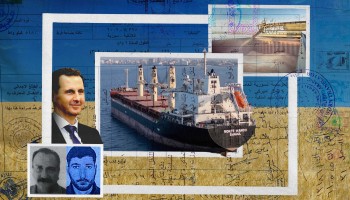
The Council extended sanctions against 11 individuals deeply linked to the former government until June 1, 2027. These figures include Assad-era oligarchs Mohammad Hamcho and Samer Foz, who are accused of exploiting the country’s brutal, decade-long civil war for personal enrichment.
Hamcho, who has also been sanctioned by the U.S. since 2011 and is blacklisted by the U.K., is accused of trading rubble from bombed civilian neighborhoods. He allegedly served as a prominent financial front for Maher al-Assad, the former president’s brother and the ex-commander of the elite Fourth Armored Division, which has been heavily linked to Syria’s notorious multi-billion-dollar Captagon drug trade.
In justifying the extension, the Council struck a balance between optimism for Syria's future and pragmatism regarding its present vulnerabilities.
“While the Council acknowledges the progress made by the Syrian Transitional Authorities, state institutions are still on a path of consolidation,” the Council's statement read. “The risk of undermining that process posed by leading businesspersons linked to the former al-Assad regime has yet to be fully addressed.”
European officials warned that these oligarchs have amassed substantial wealth and power, maintaining networks that pose a direct threat to the country's democratic stabilization. Because of these enduring ties, the Council noted, “those individuals carry an inherent risk of violent repression of the civil society and the peaceful transition in Syria.”
“In light of the ongoing process of transitional justice, the Council should maintain its cautious approach,” the statement concluded, “ensuring continuous support for an inclusive transition that meets the legitimate aspirations of the Syrian people.”
The EU previously lifted its broader economic sanctions on Syria in May 2025, while maintaining targeted security measures and restrictions against members of the former Assad administration.