Reported by
Companies in Belarus exported components to Russian defense manufacturers involved in producing glide bombs used in attacks on Ukraine, according to a new investigation by the independent outlet Buro Media.
The findings add detail about Belarus’s role as a crucial rear base for Russia’s war effort, providing industrial capacity, specialized components and geographic proximity.
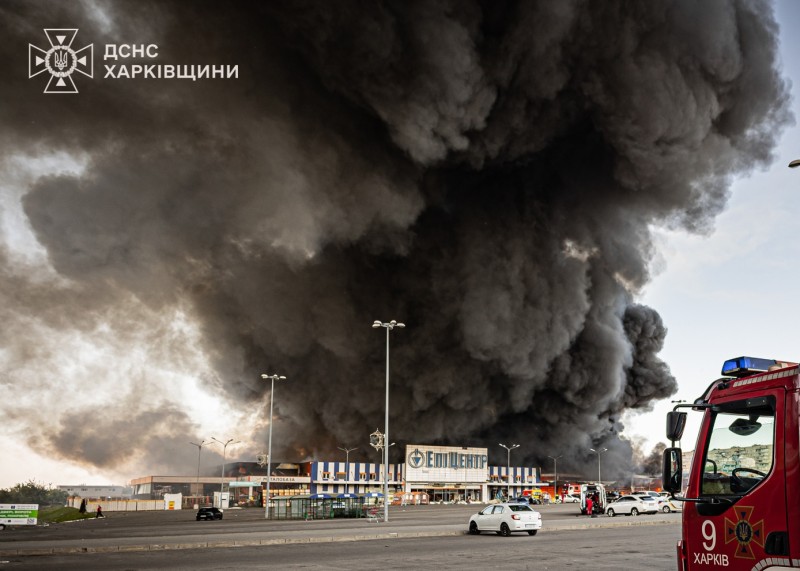
The report centers on a May 25, 2024 strike in Kharkiv, where aircraft dropped guided bombs on an Epicentr hardware hypermarket, killing 19 people and wounding dozens.
Ukrainian officials and open-source analysts linked the attack to the UMPB D-30SN, a glide bomb designed to be launched from a distance, allowing aircraft to remain beyond some air-defense systems.
Drawing on customs records, the investigation found more than $150 million in exports from Belarusian military-industrial firms to Russia since Moscow’s full-scale invasion began.
Two manufacturers based in Minsk — Peleng, which produces optical and electronic systems, and OKB TSP, a private contractor — accounted for a large share of the shipments, the report said.
Buro Media traced deliveries from OKB TSP, including electric drives and servo controllers, to the Typhoon plant in Kaluga. Ukraine’s military intelligence has said the facility manufactures warhead casings used in the production chain of the glide bombs.
The investigation also identified shipments from Peleng to Vedaproekt, a firm listed by the War & Sanctions portal as supplying a terminal guidance system for the bomb family — a component that steers the weapon in the final stage of flight.
Executives at OKB TSP acknowledged working with Russian defense contractors but said they did not know how their products were ultimately used. Peleng’s leadership declined to comment, the outlet reported.