Reported by
Two months ahead of the World Cup, Mexico’s financial intelligence agency asked banks, brokerage firms, and other financial entities in the country to increase surveillance of transactions that could be linked to terrorism financing and the profiliation of weapons of mass destruction.
The non-public directives were sent to financial institutions in April. OCCRP obtained a copy of the document that outlines risk indicators designed to flag illicit money flows.
Experts consulted by OCCRP pointed out the timing of the instruction and the fact that the World Cup context is propitious for the increase of risk levels in financial operations.
The massive arrival of visitors, the increase in cross-border operations, the growth of activities related to lodging, transportation, entertainment, and sports betting, as well as the intensive use of physical and digital payment methods, generate an exceptionally dynamic financial environment, indicated Paola Medellín Cervantes and Mónica Villarreal Medel from the Advanced Compliance Laboratory, a think tank focused on the subject.
"There is going to be a lot of cash flow and that cash flow is going to enter through different sources," Villarreal warned. Experts believe that events of this magnitude do not necessarily imply a concrete terrorist threat, but they do increase the volume of operations susceptible to being used to hide or disperse illicit resources among thousands of legitimate transactions.
Among the activities that could require reinforced surveillance are betting, temporary lodging services, digital payment platforms, virtual assets, and some schemes linked to human trafficking. "Illegal betting is daily bread in these scenarios," affirmed Medellín.
Mexico, according to the specialists, has built a financial system that pays special attention to money laundering, but terrorism financing obliges observing other elements. According to Villarreal and Medellín, the first seeks to hide the illicit origin of the resources but the second focuses on the destination of those resources. "In laundering, you have to watch out for the entry; in financing, it is the exit, where the money goes," commented Medellín, who is the coordinator of the Laboratory.
While experts agree that Mexico possesses the foundational regulatory framework to combat these threats, they emphasize that existing safeguards must be significantly tightened, particularly regarding "know-your-customer" protocols and beneficial ownership transparency.
"I believe that we are ready, but we need to have tighter controls and strengthen the system," said Mónica Villarreal, a financial compliance specialist.
The directive acknowledges that Mexico has no current record of terrorism financing or the proliferation of weapons of mass destruction but that its institutions still need to keep a heightened state of alert, particularly when it comes to high-risk geographic regions, like tax havens, and suspicious transactional patterns that need to be monitored.
Particular scrutiny is directed at jurisdictions under the influence or control of terrorist groups as well as countries facing international sanctions.
Under the new rules, higher-risk accounts require deeper background checks into primary business activities and more rigorous monitoring of transactions.
"The application of the know-your-customer policy must be based on the degree of transactional risk that a client represents," the document states.
Critical red flags also include transactions involving non-profit organizations that cannot adequately account for the destination of their funds, frequent transfers to conflict zones, and name matches with international terrorism registries.
Financial institutions are required to freeze assets if a suspicious transaction is detected and report it to authorities.
Financial institutions were given until June 7 to submit the new compliance frameworks to their internal communication and control committees. Following internal approval, institutions have 15 days to notify the National Banking and Securities Commission (CNBV) and an additional 60 days to fully implement the mandatory controls.
As a result, Mexican banks, fintech startups, and other financial participants have spent the months leading up to the 2026 World Cup scrambling to overhaul their internal policies and risk matrices.
In 2025, the Financial Action Task Force (FATF) warned that terrorist organizations seek to adapt their financing mechanisms through the combined use of traditional and digital tools, cross-border transfers, and increasingly sophisticated financial structures.
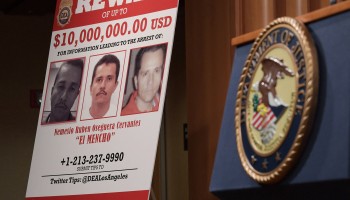
In January 2025, the United States government initiated the process to designate various Mexican cartels as Foreign Terrorist Organizations (FTO), an event that shook the financial ecosystem and its compliance areas.
Experts highlighted that this decision implied for the entities to analyze if certain financial services could facilitate the administration, preservation, investment, or mobility of resources linked to organizations designated as FTOs.
"Today because of that designation it seems to me that the risk is real and puts financial entities at a greater risk, with the need for them to establish greater controls," indicated Mónica Villarreal.
The regulatory push follows a rapidly shifting threat landscape. In 2025, the Financial Action Task Force (FATF) warned that terrorist organizations were increasingly blending traditional banking with digital assets and sophisticated cross-border networks to move illicit funds.
For Mexico, the issue assumed a new urgency in January 2025, when the United States government initiated the process to designate several Mexican drug cartels as Foreign Terrorist Organizations—a move that sent shockwaves through the region's compliance sectors.
Analysts noted that the U.S. designation forced Mexican financial institutions to aggressively re-evaluate whether everyday banking services were inadvertently facilitating the preservation, investment, or mobility of cartel wealth.
"Because of that designation, the risk is real," Villarreal said. "It places financial entities in a far more vulnerable position, making stronger internal controls absolutely essential."