Reported by
You’re a Russian businessman looking to buy European-made drones, but sanctions stand in the way. No need to despair — an industry of sanctions-busting enablers is here to help.
“There will be no trace of the Russian company, and the payment will be successful,” a representative of one such service provider wrote when approached by an undercover reporter on Telegram.
Posing as a Russian businessman, the journalist had asked for help making a payment to a German drone supplier. It was important, they said, that the German bank did not realize the funds had originated in Russia.
Under EU sanctions, the export of drones to Russia would be illegal apart from rare exceptions, as would assisting in the circumvention of those sanctions. But the representative, who only gave his name as Dima, did not express any concern about facilitating the payment for such a deal.
“We are ready to select companies and start paying,” he wrote.
Since its February 2022 invasion of Ukraine, Russia has been hit by waves of sanctions from the EU, U.S., and U.K. covering goods ranging from laptops and luxury watches to oil, liquified natural gas, and arms. Western nations have also severed over 70 major Russian banks from SWIFT, the encrypted messaging system that shares payment instructions for international financial transfers.
These restrictions have given rise to a shadowy industry of payment providers — some of whom openly advertise their assistance in dealing with sanctions or obscuring Russian involvement in transactions, reporters found.
“When sanctions shuffle the cards, we offer real solutions,” reads the Russian-language ad posted on the Telegram channel of one such payment agent, the now-defunct Fin Platform. Another offered advice on its website on “how to get paid for goods if the client doesn't want to deal with Russia.”

Moneyroo’s website displaying an article titled “how to get paid for goods if the client doesn't want to deal with Russia.”
To discover more about this market and the “solutions” these middlemen offer, OCCRP’s partners SourceMaterial and Delfi went undercover and exchanged messages with eight other apparent payment providers on Telegram, Russia’s most popular social media and messaging platform, where users can communicate anonymously.
Most of the entities operated websites under trading names that OCCRP could not find listed in Russian or other corporate databases. Others appeared only to exist on Telegram.
While reporters did not go through with the payments, in five cases agents agreed to assist them in transactions that would deliver the money to European companies while obscuring the cash’s Russian origins.
In these conversations, reporters explicitly noted that sanctions were an obstacle — either because the goods the company was supposedly buying from Europe had been blacklisted, or because the Russian company itself was sanctioned.
In response, the agents offered to route the Russian money to Europe through companies in jurisdictions such as Hong Kong, Dubai, and Indonesia.
One solution, offered by Dima, also involved the use of two companies whose key personnel have been listed as senior figures in firms that served TGR, a business group accused by the U.K. and U.S. of running a money-laundering network that helped Russian elites bypass sanctions. (When reached for comment, the director of one of the intermediary companies suggested by Dima denied any connection to TGR).

The listed London address of TGR at 55 Riding House Street, Fitzrovia, London
The outfit that Dima represented, CW Group, advertises a slate of vague financial services on Telegram, but does not appear to have a website, and reporters could not obtain corporate filings showing it was a registered business.
When later confronted about findings of the investigation, Dima declined to address the specifics of his offers, saying only that “some of the wording and conclusions in your message are your subjective interpretation,” and that “our activities are focused exclusively on supporting international settlements and selecting relevant payment solutions for specific client needs.”
According to Elise Thomas, of the U.K.-based research group the Centre for Information Resilience, a “cottage industry of shady international payment service providers” has flourished in part due to the rise of sanctions on Russia.
These operators often create “several layers of intermediaries” between legitimate financial institutions and their true clients, she said. And by using financial structures that are spread across borders, they make it “difficult for law enforcement in either country to tackle the operation as a whole.”
Ilia Shumanov, a managing partner at TriTrace Investigations, which works for corporate clients to map ownership structures and expose sanctions breaches, said Russia’s sanctions evasion system is mutating faster than Western authorities’ efforts to contain it.
“From a law enforcement perspective, payment systems are currently one or two years ahead of regulators when it comes to developing mechanisms for sanctions circumvention,” he said. “This is a constantly evolving ecosystem backed by millions of dollars in investment, with clear support from the Russian state.”
New Day, New Structure
In response to undercover reporters’ requests, the Russian-speaking agents operating over Telegram offered an array of “structures” whose particulars shifted depending on the details of the transaction.
Dima himself noted the fluid nature of the work: “One structure might be in place today, and another tomorrow,” he wrote.
“This is because banks and jurisdictions regularly change requirements, and it's important to work with current, ‘clean’ companies that process transactions without delays.”
The goal, he later added, was to find “up-to-date solutions that work seamlessly and allow you to complete the transaction without any unnecessary questions from banks.”
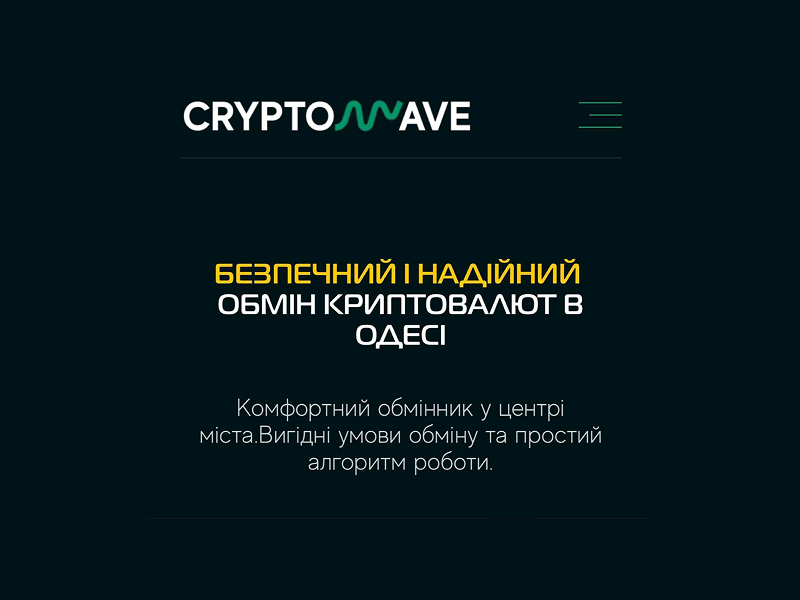

Instead of transferring money directly to Europe, he and another agent suggested diverting the payments through companies in other jurisdictions that would issue invoices to disguise Russian involvement or any trade in sanctioned items.
In some cases, the agents sent reporters the banking details of such intermediary firms, including for companies based in Dubai, Indonesia, Canada, and Germany. OCCRP received a reply from three of the proposed intermediary companies that were approached for comment, all of which denied involvement in any sanctions-evasion scheme.
Several of the payment brokers also touted their use of cryptocurrencies, a technology that Russia has become increasingly reliant upon for its international transactions, according to the latest EU and U.K. sanctions targeting the Kremlin’s use of “shadow financial systems.”
Russia's Cryptocurrency of Choice: A7A5
‘No Visible Connection to Russia’
In a separate transaction request an undercover reporter discussed with Dima, the agent suggested the use of several intermediary companies to help ensure there was “no visible connection to Russia.”
In this back-and-forth, the journalist posed as a Russian businessman seeking help receiving money from a Chinese buyer. The reporter explained that the Chinese buyer believed they were purchasing equipment from a firm with bank accounts in Europe, and could not know they were in fact buying from a Russian company.
Although China has not leveled sanctions against Russia, major Chinese banks are increasingly limiting transactions with Russia out of fear of triggering secondary sanctions from the West.
Dima outlined a few options in response to the request. One option was to use companies in Hong Kong to issue an invoice to the Chinese company making the payment, he said..
“To avoid too much attention, you should pay no more than $200,000 per day,” Dima advised.
Later in the conversation, Dima proposed a different route, and provided banking details for a test payment directing the funds to an account that a Canadian company called Grata Payments Ltd held at a Lithuanian electronic money institution named TeslaPay.

By searching corporate records in Lithuania and Canada, as well as archived websites, reporters found that key figures in both entities were also listed as executives in companies ultimately owned by the TGR network’s alleged leaders: Ukrainian George Rossi and Russian national Elena Chirkinyan.
The pair was sanctioned by U.S. authorities in December 2024 for allegedly using TGR companies to provide a “range of services to place, layer, and integrate illicit financial schemes into the global financial system.” (Chirkinyan did not respond to requests to comment, while OCCRP's emails to Rossi bounced back.)

From left to right, Elena Chirkinyan and George Rossi
According to the sanctions notice, TGR’s “extensive sanctions evasion and money laundering network” maintained “touchpoints around the world” that worked to “obfuscate the illicit activities of its clients.”
Records show that the director of the Canadian company that Dima suggested would receive the payment, Estonian lawyer Aleksei Ratnikov, was also listed as director of One Remit, a U.K. company that handled international money transfers for a now-sanctioned TGR Partners, , according to an archived version of the latter’s website.
One Remit was dissolved in 2024, before TGR Partners and other TGR-affiliated companies were sanctioned.
At the time that Ratnikov was appointed One Remit’s director, the TGR group’s alleged second-in-command, Chirkinyan, was the owner of the firm’s holding company registered in Cyprus.
When reached for comment, Ratnikov said he and Grata Payments had no knowledge of CW Group, “are not aware of any activities taking place on Telegram,” and had no connections with the TGR group. He also said the bank details that Dima provided for the test payment were not associated with Grata.
He added that he had been the victim of a fraud by being named as a One Remit director without his consent, though he acknowledged he had been in discussions about taking a director role in the company.
Despite his claim of non-consent, official U.K. company records show he was listed as a director for three years from June 2021 until the firm was dissolved in May 2024.
The digital banking institution where Grata purportedly held an account that would receive the payment, per Dima’s instructions, also has links to the TGR network, records show.
Known as TeslaPay, the Lithuanian firm was established in 2017, with Russian businessman Philipp Larin listed on a corporate document as the chairman of its supervisory board for four months the following year. Larin is also described in an online profile as TeslaPay’s co-founder.
That’s not all: Larin is a shareholder, head of the board, and one of the beneficial owners of another money transfer agency, the Latvian-registered Eastern European Payment System SIA, that listed TGR’s alleged chiefs, Rossi and Chirkinyan, as its beneficial owners between 2020 and 2023.
According to an old website for TGR Partners, Eastern European Payment System was part of the network’s financial plumbing, operating a payments card system for the group.
Larin and TeslaPay did not respond to reporters’ request for comment.
According to Thomas, the expert from the Centre for Information Resilience, networks like TGR represent an evolution in illicit finance.
She said they have been blending new and sophisticated methods of money laundering — such as the use of cryptocurrency — with “age old methods” like trust-based hawala-style networks, a reference to informal transfer systems that remain popular in many parts of the world.
“These kinds of highly diversified operations present a major challenge for law enforcement and investigators,” she said.