Reported by
Standing in the arid, scorchingly hot desert of central Yemen’s Marib province, Abdullah Ahmed Ali Shawdaq appears in his element.
The tribal warlord, who is sporting a crisp white shirt and a camouflage-patterned scarf wrapped around his head, is surrounded by a coterie of young men in military gear, carrying rifles and walkie talkies.
These are members of his militia who also serve as his protection detail, escorting their leader in pick-up trucks across the region’s rocky, flood-prone roads.
But the middle-aged sheikh is not only a military commander whose forces have helped fend off Houthi rebels. He is also a businessman.
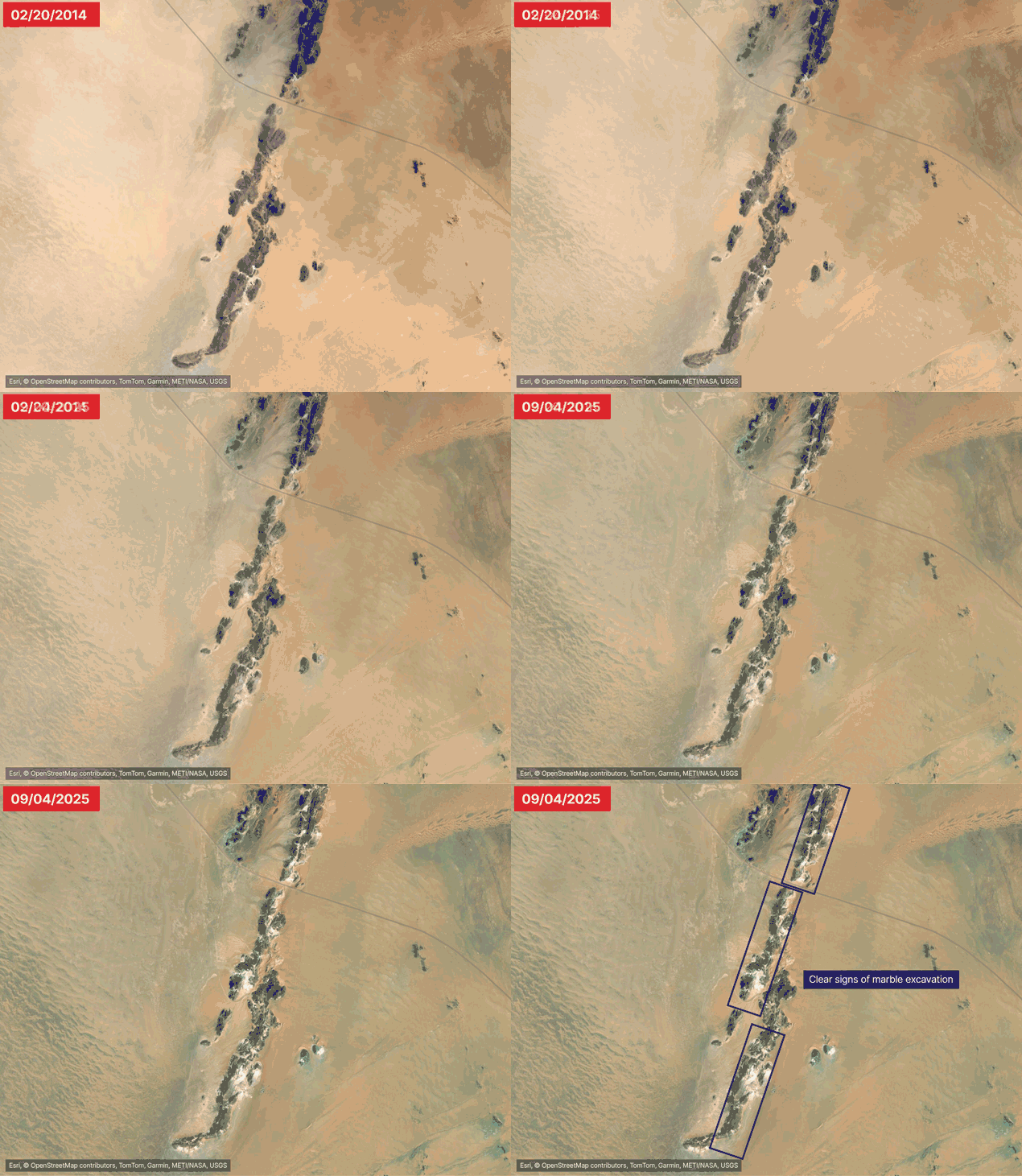 Satellite views of the Thaniyah mountain range in Marib province, Yemen, between 2014 and 2025, show the expansion of quarries.
Since the outbreak of Yemen’s civil war, Shawdaq has cemented his grip over marble quarries in Marib’s Thaniyah mountain range, where he told reporters he employs thousands of workers who use heavy machinery to extract, cut, and transport huge chunks of the valuable stone.
“Everyone has a destiny written for him,” he said of how his father first discovered marble in the desert’s hillsides.
Today, anyone with the resources to do so is free to mine the mountains “without any intervention” from the state, he added.

Legally, this is not the case. Extracting marble in Yemen requires a government license and payment of royalties, with the natural resource considered property of the state. However, Yemen’s more than decade-long civil war has fractured and paralyzed the country’s bureaucracy, disrupting the official licensing process and robbing the industry of government oversight.
As a result, the lucrative marble sector in Marib province is operating largely as a free-for-all, illustrating the immense challenges of governance in the impoverished but resource-rich state riven by war.
“Tribal sheikhs consider themselves above the authority,” said Anwar Qasim Saeed, the director of minerals for the licensing authority run by Yemen’s internationally-recognized government (IRG). He confirmed that no official licenses have been issued for marble excavation in Marib province since the conflict began in 2014.
“The areas aren't easy for the state to claim as its own because, in [the tribes’] view, ‘this is ours,’” explained Ismail Nasser Al Ganad, a geologist who previously chaired Yemen’s mineral licensing body. “We tell them yes, the mountains are indeed yours, but the resources beneath them also belong to the state.”
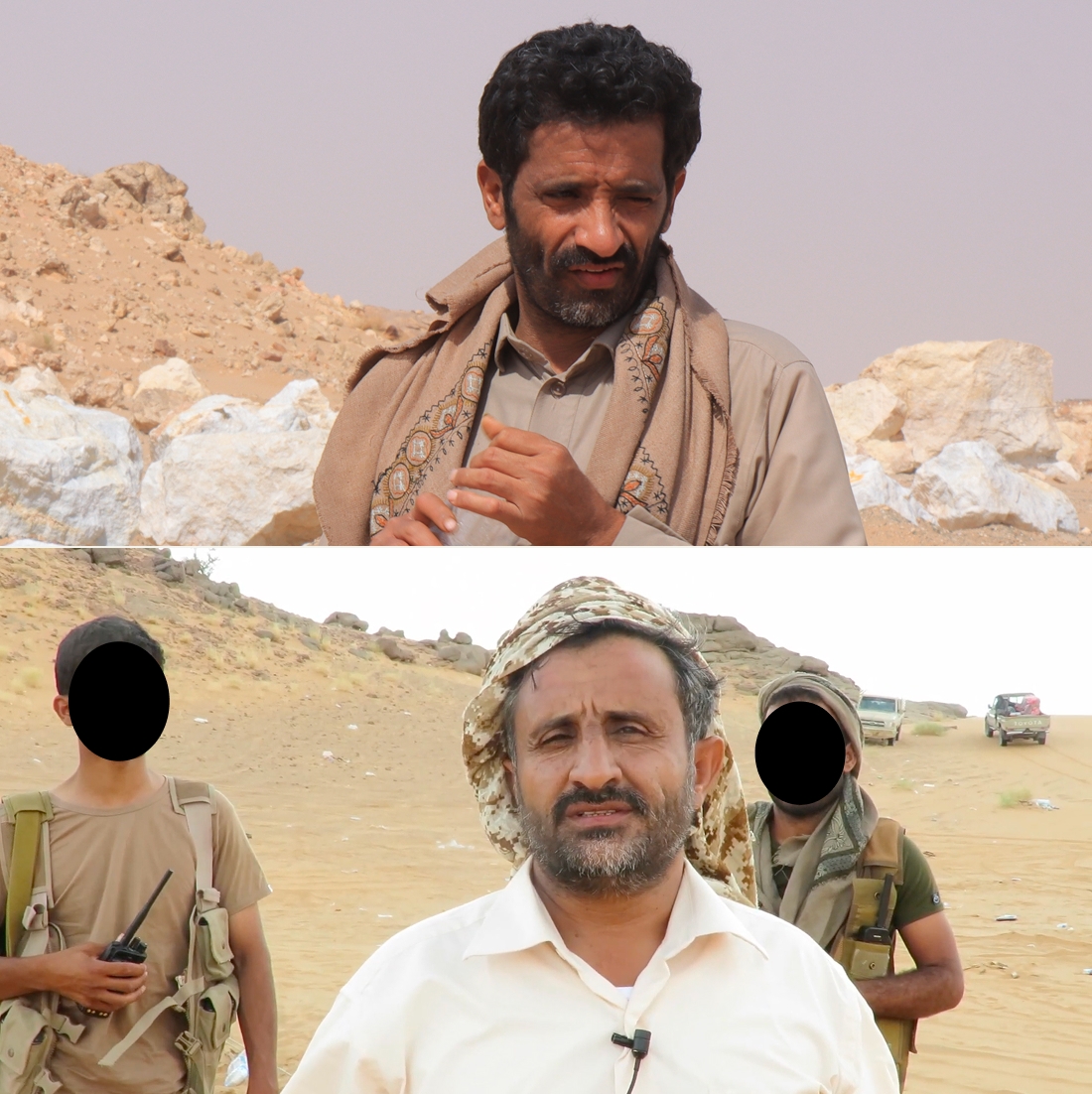
From top to bottom, Ali Abdallah Saleh Ruqaisian and Abdullah Ahmed Ali Shawdaq, tribal quarry owners who say they “own the mountains” in Marib province, Yemen.
Though tribal leaders have long served as key powerbrokers in Yemen, they have become an even more influential force in Marib since the civil war erupted. This is particularly true for tribes that have helped government forces repel Houthi incursions in the province, says Mohammed Ali Thamer, a Yemeni researcher in international economics and relations.
With government oversight falling by the wayside and tribal leaders rising to fill the void, the entire mining industry has been left vulnerable to “waves of random prospecting, scavenging, looting, and the destruction of mines,” he added.
Shawdaq, a leader in the powerful Abida tribe, initially told reporters that he operated his quarries without a license and that he had stopped paying the state dues since the war.
“We are prepared to pay anything to the state, but it must provide us with fuel, electricity, and essential services,” he told reporters, adding that the state has been “negligent.”
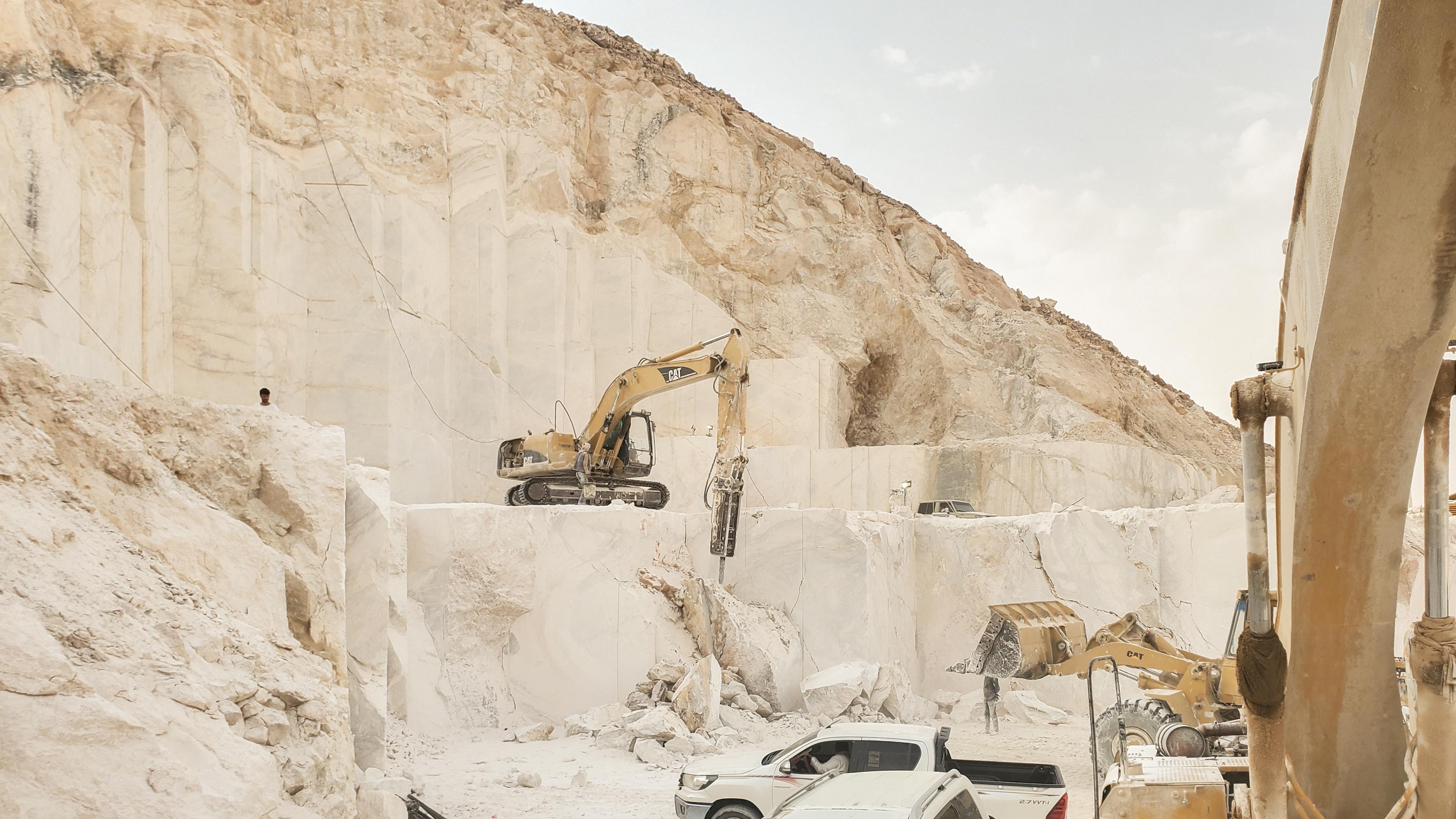
Heavy machinery extracting raw marble from the Thaniyah Mountain Range in Marib province, Yemen.
Yet the sheikh pivoted during a follow-up conversation by phone, claiming he paid the government annual fees and held a license covering all his activities. His demeanor then changed and he accused OCCRP of provoking him and interfering in his affairs.
He later sent reporters several documents showing he had paid tax on his marble company's profits to authorities in Marib, though he did not provide any evidence of holding a valid license or having paid annual fees or royalties. He did not respond to questions about how many quarries he owns.
The IRG’s Ministry of Oil and Minerals, and the affiliated licensing authority, did not respond to requests to comment about Shawdaq’s case.
Lost Potential
A centuries-old staple of Yemeni construction, marble is the main source of income in the desert northeast of Marib city, where quarries create jagged white scars etched into the brown slopes of the surrounding mountains.
There are no farms or livestock as far as the eye can see on the flat plains below the mines, but only small makeshift houses hosting the miners in basic conditions.

Quarry worker Jamal Abdo Abdullah al-Qushaibi says his monthly wage of 180,000 Yemeni rials (around $750) is “not enough” to provide for his wife and six children.
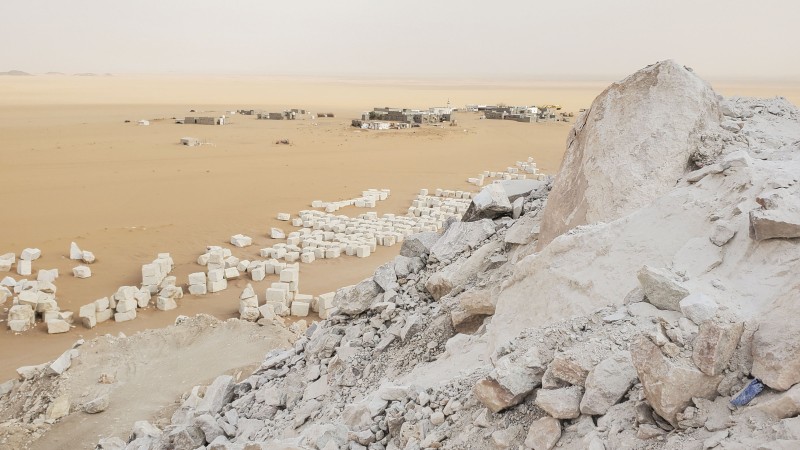
The surrounding sands are littered with massive marble boulders which are transported by truck for sale in the domestic market or to neighbouring countries like Saudi Arabia and Oman.
Wearing a patterned scarf, and an ornate jambiya — traditional Yemeni dagger — another quarry owner delved into how tribal views of ownership clash with the perspective of the state.
Ali Abdallah Saleh Ruqaisian, who also belongs to Marib’s Abida tribe, said the sheikhs “own” the mountains by ancestral right. “We have ancestral traditions and customs,” he explained, noting that a senior sheikh had long ago “ruled on this matter.”
“This mountain is mine,” he said, gesturing toward a rock formation. He said he realized the site’s value over a decade ago, opened a quarry, and later handed it to an investor for a fee of 100,000 Saudi riyals (approximately $26,000).
“I don't pay the state anything,” he told reporters. “We don't pay and we won't pay… The state wants the citizen to remain under its boot. … After the oil, now they want to take our hard work? No.”
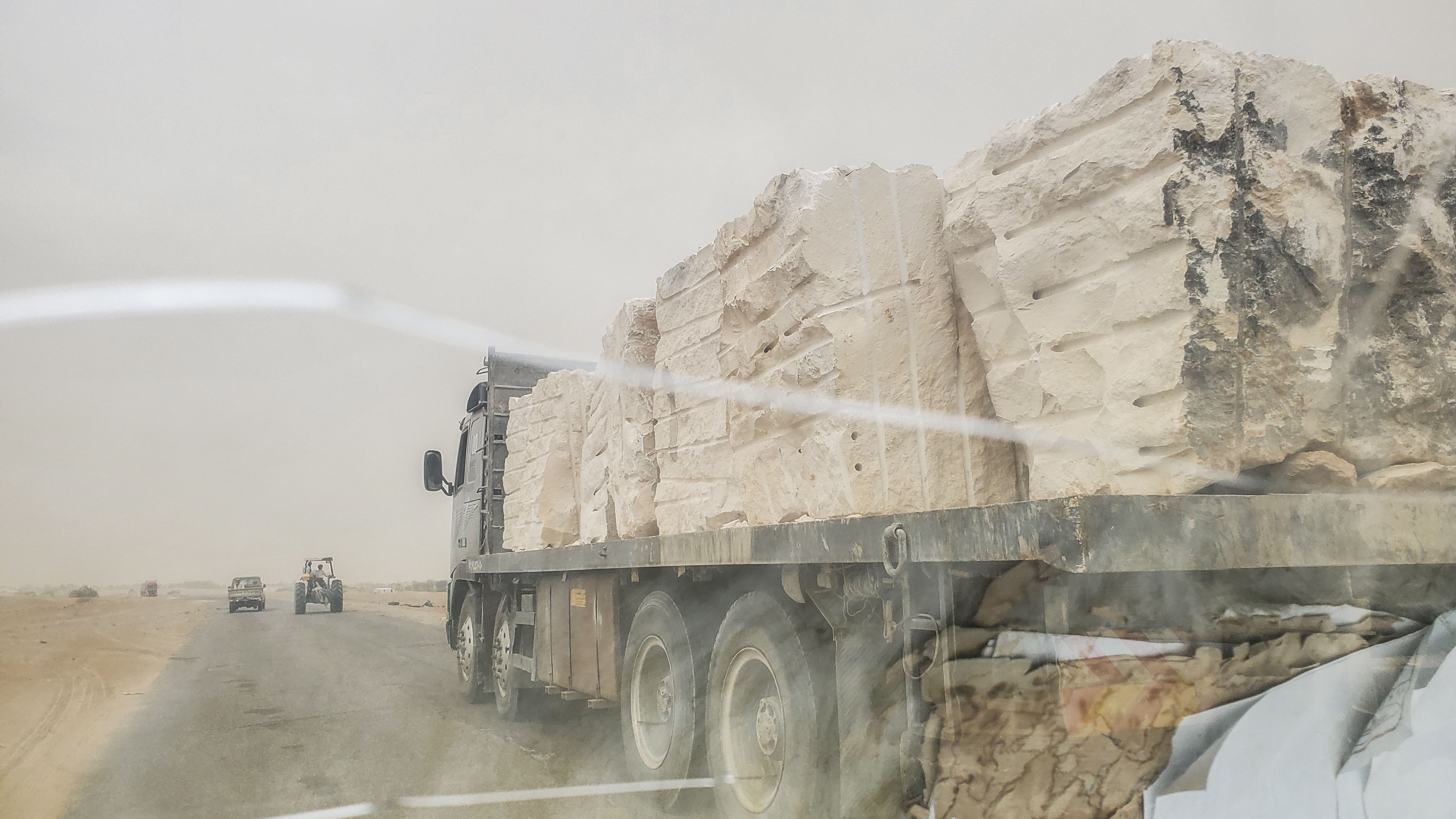
Marble is transported by truck in August 2025, destined for sale in the domestic market or in neighboring countries such as Saudi Arabia and Oman.
Before the war, a World Bank report estimated that investment in new large quarries in Yemen’s marble and granite sector could generate $20 to $30 million in annual sales. One obstacle, local media reported at the time, was a lack of transportation and export infrastructure.
The war has deepened the logistical challenges, splitting the country in two with the Saudi-backed IRG sitting in Aden on one side, and the Iran-backed Houthi rebels controlling the country's previous capital Sanaa.
“In Sanaa they work independently from the one in Aden … There are no joint projects, nor are there any funded projects,” said Al Ganad, the former chair of Yemen’s mineral licensing body.
The war has also seen old roads cut off, and new routes opened through the desert that are “susceptible to looting, robbery, and sometimes killing by some tribes if ‘desert transit fees’ are not paid,” said Thamer, the researcher.
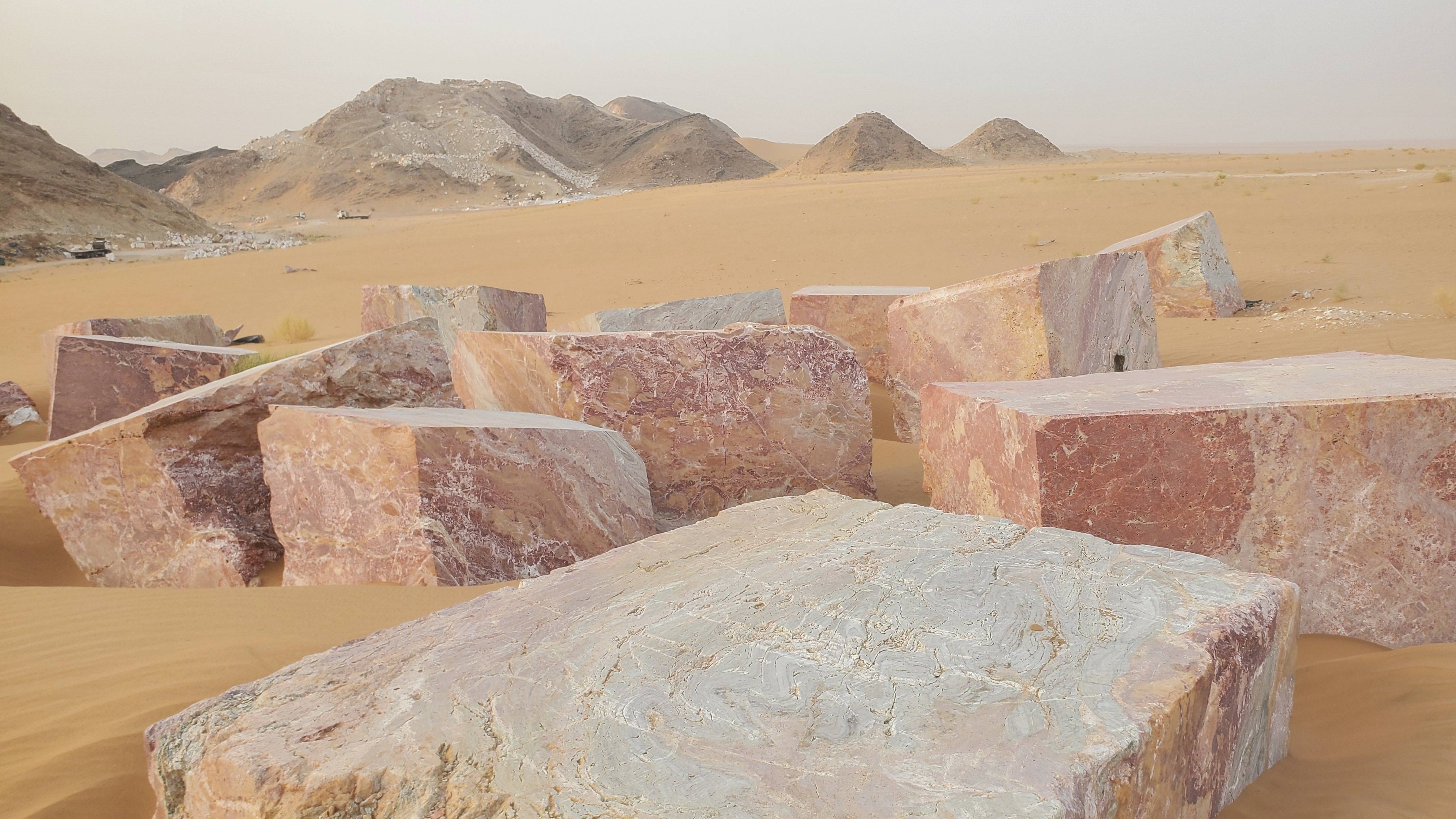
Blocks of extracted marble in the Thaniyah Mountain Range, Marib province, Yemen.
And tracing who owns what — or where the profits are going — is nearly impossible.
Like the rest of the state, corporate registries are split between Yemen’s two administrations, and their maintenance appears to be minimal.
The tribal leader Shawdaq, for instance, is the director general manager of Abdullah Ahmed Bin Shawdaq for Marble & Granite Establishment, which has advertised custom-cut white marble on Facebook.
While Shawdaq showed reporters an IRG-issued commercial registration card from 2022, his company is absent from the IRG’s official online registry.
Records obtained by reporters show the company sold a little over 81 tonnes of marble to a Saudi firm for over $2,300 in February 2025. When asked about this sale, Shawdaq said this was a sample exported with “official export permits” for technical evaluation.

A worker uses heavy machinery to extract valuable stone from the Thaniyah mountain range in Marib province, Yemen, in October 2025.
Clashes at the Quarries
Yemen’s tribes have long exercised varying levels of autonomy and influence in the country, particularly in times of conflict and crisis.
They are “one of the most important factors that affect the Yemeni state’s policy” and “the largest pressure group in the country throughout history,” reads a 2020 report from the Abaad Studies and Research Center, a Yemeni non-profit.
The power of tribes in Marib is connected to the region’s military dynamics, especially since 2020 when the tribes fought significant battles against the Houthis, making them an important ally of the IRG.
However, the alliance is fragile.
Tribal interests do not always align with those of the government, said Luca Nevola, a Yemen analyst at Armed Conflict Location & Event Data, a U.S.-based research center. He noted how Marib’s marble quarries have become a flashpoint for violence.
In May 2025, for instance, Abida tribesmen ambushed IRG forces and captured 25 soldiers.
“The reason behind the clash was the IRG forces' intervention in a tribal dispute over a stone quarry,” Nevola said.
The ongoing war has also cost Yemen untold amounts of desperately-needed revenue from mining marble and other minerals in Marib. Amid the conflict, most miners are able to escape paying fees to the government, said Ali Mohamed Ali Ghaithan, who runs the only licensed iron mine in Marib.
“When entrepreneurs working in this sector manipulate the system, operating outside the government's purview, the state suffers substantial losses,” he said.