Reported by
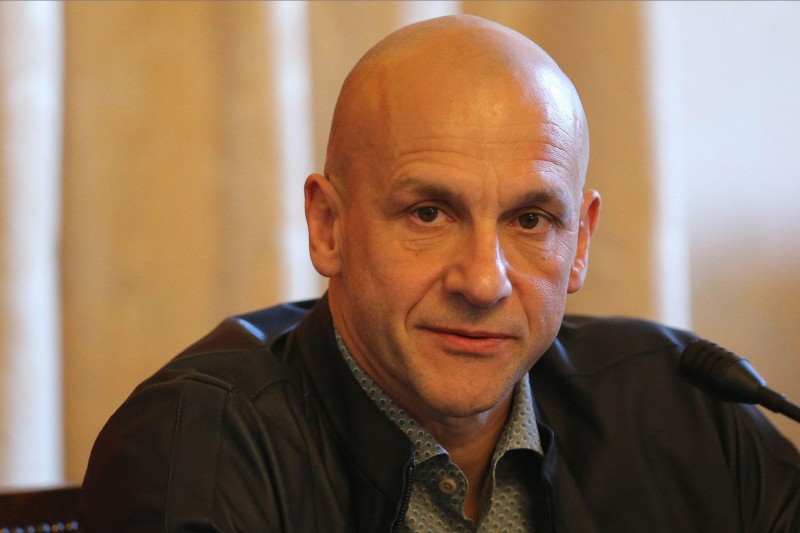
Ukrainian authorities have filed a motion asking the court to approve pre-trial detention of Kostiantyn Hryhoryshyn, a businessman suspected of embezzling funds from an energy company of “strategic importance.”
Even if the court approves the request, the ruling would only be procedural since Hryhoryshyn is not in the country. But prosecutors told Schemes — the Ukrainian investigative project of RFE/RL — it would be the first step in preparing an international arrest warrant.
Hryhoryshyn has been wanted in Ukraine since April under a notice of suspicion, but has not been formally charged.
Through his lawyers, Hryhoryshyn said he denied the Ukrainian allegations and views them as politically motivated.
While Hryhoryshyn’s exact whereabouts remain unknown, reporters have tracked his footprint to luxury homes in both France and Switzerland.
Luxembourg company registry data shows that Hryhoryshyn is the beneficial owner of Cressida, a company established in 2008. Cressida owns three plots of land in the ski resort of Courchevel, in the French Alps, according to the company registry. Two chalets now sit on the property.
The data was gathered from Luxembourg’s registry by Le Monde in 2021, and shared with OCCRP and other media partners.
The registry data reveals that Hryhoryshyn updated his personal address in November to an estate on Lake Geneva in Switzerland. While he is not the registered owner of the Swiss property, the Geneva Canton gazette shows he recently submitted a local planning application to renovate the estate, requesting to install “blinds and raised flooring in a covered area.”
There’s no evidence to suggest that funds from the alleged embezzlement scheme were used to acquire or maintain these properties.
Ukraine’s Bureau of Economic Security (BEB) said in a March statement that about 68 million Ukrainian hryvnia ($1.3 million) from an energy provider was allegedly lost between 2020 and 2024 due to “fraudulent activities.”
The BEB said the energy company was “of strategic importance,” and one-quarter owned by the state. Law enforcement agencies initially identified four unnamed suspects, “including a sanctioned businessman who is the ultimate beneficial owner of the company.”
Hryhoryshyn was sanctioned by Ukraine in 2025
Officials have confirmed to Schemes, OCCRP’s Ukrainian media partner, that Hryhoryshyn is the sanctioned businessman who is a suspect in the alleged embezzlement scheme.
While Hryhoryshyn’s lawyers stressed their client’s rejection of allegations by Ukrainian authorities, they did not respond to specific questions in time for publication.
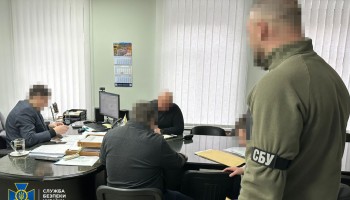
The Security Service of Ukraine (SBU) said in a statement that the sanctioned businessman “involved the top management" of the company in an operation he allegedly organized “while abroad.”
“They created a fictitious position for the defendant as an advisor to the chairman of the board of an enterprise that supplies electricity from main networks to end consumers,” the SBU alleged.
The position required him to work only four hours a week for a monthly salary of 1.5 million hryvnia ($29,204).
“This exceeded the maximum wage limit in energy companies six times,” according to the SBU.
According to Forbes Ukraine, Hryhoryshyn was once co-owner of 160 energy companies, although his business empire has diminished amidst Russia's war against Ukraine.
Hryhoryshyn lost control over assets in the Luhansk region, which is mostly occupied by Russian troops, Forbes Ukraine reported. The government of Ukraine nationalized the Zaporizhzhia Transformer Plant, which was part of his Energy Standard group of companies, with President Volodymyr Zelensky calling the move a "military necessity.”
Hryhoryshyn lost a case in Moscow in 2020 and was convicted in absentia for tax evasion. He reportedly said at the time he did not actually control the company that failed to pay taxes.
Hryhoryshyn’s most valuable remaining asset could be the art pieces he acquired, which were valued at $300 million, although Forbes Ukraine questioned “what he has left of the collection.”
Fact-checking was provided by the OCCRP Fact-Checking Desk.