Reported by
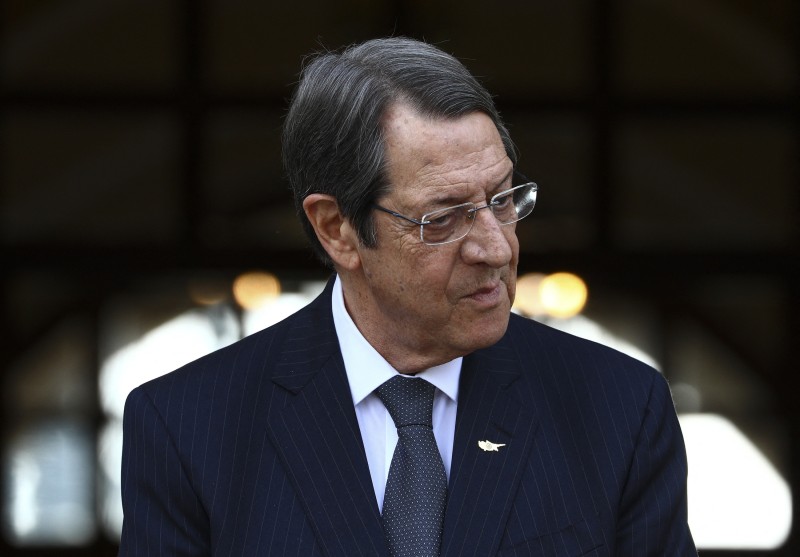
An investigation by Cyprus’ anti-corruption authority has found that former President Nicos Anastasiades, his former law firm and a number of his associates have been involved in influence trading and abuse of power to fast-track residence-by-investment proceedings for two Russian oligarchs.
The Nicos Chr. Anastasiades & Partners law firm - which Anastasiades left when he became president - and its two managing partners also stand accused of money laundering, the authority said on Tuesday.
The investigation followed the publishing of a book called ‘Kratos Mafia’ (‘Mafia State’), written by journalist Makarios Drousiotis about former President Nicos Anastasiades and associates. In the book, Drousiotis alleges systemic corruption within the state.
In a written statement issued after reviewing the Anti-Corruption Authority’s findings, Anastasiades claimed that "most of the accusations identified by the investigators had never been put to him during the inquiry, depriving him of the opportunity to provide documented responses". He also argued that "allegations of corruption made by Makarios Drousiotis had “collapsed as unfounded.”
The country’s Independent Authority Against Corruption identified seven cases of suspected criminal offenses connected to Anastasiades, including at least one felony. The allegations against the former president include three counts of trading influence, three counts of abuse of power or an attempt to do so, and one felony count of abuse of power.
The probe also implicated Anastasiades’ former law firm and its managing partners, Stathis Lemis and Theophanis Phillipou, who face charges of trading in influence. According to the report, Philippou also committed perjury by falsely testifying under oath that Russian oligarch Leonid Lebedev had no assets in Cyprus, despite personally managing a 17 million euros ($18.2 million) trust for him.
Other figures linked to recommended misdemeanor charges include Russian oligarch Dmitry Rybolovlev, a senior police officer, a former judge, a journalist, ex-Laiki Bank CEO Efthymios Boulotas, and former Assistant Attorney General Rikkos Erotokritou, who previously served prison time for separate 2017 corruption charges.
Former lawmaker George Varnava, who was also named, strongly denied the allegations. “I consider the conclusions to be incorrect,” Varnava said, adding that “when and if this evidence becomes the subject of scrutiny, they will realize their mistake.”
Some of the findings stem from a 2019 OCCRP investigation ‘Troika Laundromat’. The authority linked potential offenses by Anastasiades, his former law firms’ partners, and the former head of Cyprus’ anti-money laundering unit, MOKAS, to this group.
In a separate finding, the report concluded that while serving as a lawmaker and leader of the conservative DISY party, Anastasiades leveraged his influence to bypass standard procedures, fast-tracking ‘Golden Passport’ citizenships for Russian oligarchs Alexander Abramov and Leonid Lebedev.
The felony case against Anastasiades involves the 2013 collapse of Laiki Bank, once Cyprus’ second-largest lender, and its ties to Focus Maritime Corp. Drousiotis claimed in his book that Focus Maritime operated as a slush fund, funneling approximately 2 million euros to bankroll Cyprus’ two main rival political parties—Anastasiades’ DISY and the left-wing AKEL party. The donations allegedly bought political immunity for Greek banker Andreas Vgenopoulos as he took control of Laiki Bank, driving it into insolvency through reckless lending and high-risk bond purchases.
Drousiotis, a former presidential aide who resigned in 2014, published his claims as part of a trilogy on state corruption between 2021 and 2022. The allegations became a central issue during the 2023 presidential election when the candidate Andreas Mavroyiannis requested an inquiry. The resulting two-year probe, led by authority Chairman Harris Pogiatzis, cost over 1 million euros.
To ensure impartiality, the agency appointed independent legal experts, including prominent Australian anti-corruption specialist Gabrielle McIntyre. The panel held over 200 hearings, called 150 witnesses, and reviewed hundreds of exhibits. Drousiotis also claimed that when he began his research, the Cypriot government targeted him with advanced surveillance spyware.
Anastasiades himself announced the creation of this independent anti-corruption agency following a damning 2020 Al Jazeera undercover investigation that exposed systemic corruption within the passport scheme and forced the program’s suspension.
He has vehemently denied all allegations, calling them false, defamatory, and politically motivated. He filed defamation lawsuits against Drousiotis in 2024 and authored his own book,“O Sykofantis” (The Slanderer), to rebut the claims.
While the independent authority can recommend charges, it lacks the power to launch criminal prosecutions. Its findings were forwarded to the state Legal Service, where the decision to indict normally falls to the attorney general.
However, Attorney General George Savvides and Deputy Attorney General Savvas Angelides announced Wednesday they are recusing themselves from the case.
The recusal follows intense public pressure and calls for independent prosecutors, as both men were appointed by Anastasiades and served as ministers in his administration. Speaking on behalf of Drousiotis prior to the recusal, attorney Lito Cariolou had demanded both men step down, arguing "it is impossible to have the necessary public confidence that they can assess the next steps ... with the necessary independence and objectivity."
Under Cypriot law, the anti-corruption authority has also reported its findings to the tax commissioner to launch potential tax investigations into the implicated public officials, according to media.
Other individuals named in the report did not respond to CIReN’s requests for comment in time for publication.