Reported by
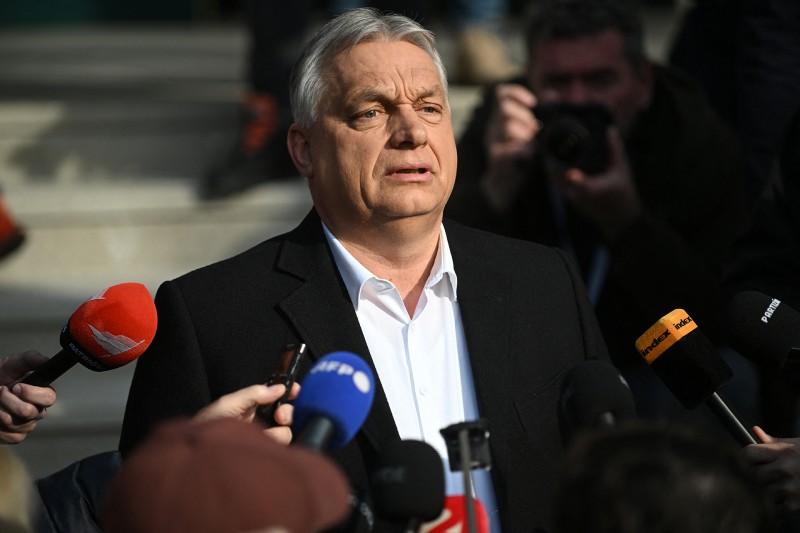
Hungary’s top anti-corruption watchdog has called for a sweeping investigation into the government of former Prime Minister Viktor Orbán, alleging a vast procurement scheme that may have bilked European taxpayers out of billions of euros, according to Politico. But in a striking twist, Hungarian prosecutors told OCCRP they are pressing criminal charges against the very official demanding the inquiry.
Politico cited on Monday Ferenc Pál Biró, the head of Hungary’s Integrity Authority, as saying that “high-level politicians can and may well be prosecuted” over alleged manipulation of state contracts. The watchdog had claimed that three unnamed companies received roughly 10 billion euros ($11.6 billion) in government contracts over the past four years, carrying suspected overpricing risks of around 3.5 billion euros ($4.1 billion).
Dr. Géza Fazekas, a spokesperson for Hungary’s prosecution service, acknowledged to OCCRP that Hungary’s Integrity Authority had turned to the Office of the Prosecutor General “in various cases on several occasions.”
Prosecutors act “in all cases brought to their attention that raise suspicion of a criminal offence” and take all necessary measures, he said.
However, Dr. Fazekas also revealed that the Central Chief Prosecution Office of Investigation has brought charges against Ferenc Pál Biró for the alleged misappropriation of funds and other crimes.
According to the prosecution service, the charges against Biró relate to contracts worth more than 100 million forints (about $295,000) awarded to a Brussels-based consulting firm, as well as the alleged personal use of an Authority bank card to spend 1.5 million forints (about $4,400).
Requests for comment sent to Orbán, his Fidesz party, and the Hungarian Integrity Authority remained unanswered as of midday Tuesday.
Maciej Berestecki, a Commission spokesperson for cohesion, reforms, research, and fisheries, told OCCRP that while member states are primarily responsible for addressing fraud, Brussels is ready to intervene.
“Member States are first in line to prevent, detect, and deal effectively with any irregularities, including fraud, relating to EU funding which they implement, such as cohesion funds,” Berestecki said. “The Commission applies zero tolerance for fraud against the EU budget.”
If European anti-fraud agencies such as OLAF or the European Public Prosecutor’s Office (EPPO) detect serious irregularities, Berestecki added, the Commission will follow up with member states “to ensure that any misappropriated EU funding is recovered from beneficiaries.”
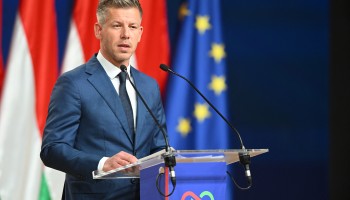
The unfolding scandal lands at a highly sensitive moment for Hungary’s new government, led by Prime Minister Péter Magyar, who unseated Orbán in April. Magyar campaigned heavily on a promise to dismantle what he characterized as “industrial-scale” systemic corruption and create new watchdog bodies to recover stolen public wealth.
Last week, Reuters reported that Magyar’s government plans to introduce robust anti-corruption legislation to strengthen the Integrity Authority and tighten asset declaration rules for public officials. These reforms are viewed as essential to securing European Union funds that were suspended over rule-of-law concerns during the Orbán administration.
In a major diplomatic shift, the European Commission agreed last month to unlock 16.4 billion euros ($19.1 billion) in frozen funding after Magyar committed to these reforms. As part of that agreement, Hungary will join the EPPO, a move Orbán had long refused to make.
The Orbán government’s handling of EU-funded procurement has faced intense international scrutiny for years. In 2017, OCCRP reported that companies owned by Orbán’s family profited as subcontractors on EU-financed projects in Hungary. A year later, OLAF found serious irregularities and conflicts of interest in public lighting contracts tied to Elios Zrt., a company formerly co-owned by Orbán’s son-in-law, István Tiborcz.
The new allegations from the Integrity Authority—coupled with the simultaneous criminal charges against its president—will severely test whether Magyar's promises of reform can effectively untangle the deep-rooted political and financial networks of the past decade and a half.