Reported by
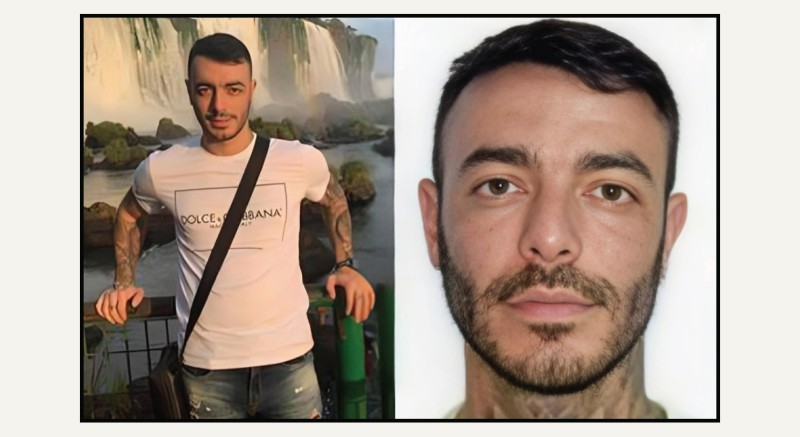
A federal judge will decide by Nov. 6 whether to dismiss criminal charges against Sebastián Marset, the self-proclaimed South American drug lord whose defense attorney conceded in court on Wednesday that while his client is a drug trafficker, his illicit empire fell entirely outside United States jurisdiction.
During a detailed two-hour evidentiary hearing in federal district court in Alexandria, Judge Rossie D. Alston Jr. weighed a number of defense motions seeking to dismantle the federal indictment against Marset, ranging from jurisdictional challenges to allegations of improper interrogations and vindictive prosecution.
The allegation of vindication prosecution didn’t sit well with Alston, who called it a “very serious” allegation and noted he personally had presided over cases involving the prosecutors, for whom he had high regard.
Defense attorney Robert Feitel quickly interjected that he wasn’t referencing individuals but the process by which Marset was captured in Bolivia, sent to the United States and interrogated without lawyers present. He sought to discredit Michael Greisen, one of the lead agents for the Drug Enforcement Administration in its efforts to capture Marset.
Prosecutors maintain that Marset, a Uruguayan national who operated in the southern cone of South America, laundered tens of millions of dollars through European banks and their U.S. subsidiaries with the help of financial operatives like Federico Santoro, a Uruguayan broker sentenced to 15 years in prison in 2025.
Marset was initially charged with money laundering counts but was later indicted on drug trafficking and narco terror charges.
In court Wednesday, Feitel indicated his client doesn’t dispute being a drug trafficker but noted he “studiously avoided” drug activities that involved the United States and accused the government of trying to “shoehorn this case into narco terrorism charges” by retroactively connecting Marset to regional syndicates - Colombia’s Clan del Golfo and Brazil’s Primeiro Comando da Capital - whose official U.S. terrorist designations took effect after the events under investigation.
“Those designations are based on the groups’ historic conduct,” said Anthony T. Aminoff, the lead prosecutor, while also pushing back against defense claims that key evidence was seized in Colombian territorial waters rather than international seas.
Marset’s lawyers argued that the initial charge of money laundering is invalid because it involved a single wire transfer that did not involve the servers of a U.S. bank. They called as a witness former Treasury official Kristofer Doucette, a specialist in financial intelligence.
Lawyers, with the help of Doucette, tried to argue that the wire transfer was between two non-U.S. banks and not routed on a U.S. computer server. As part of international rules, it was routed to a server in Virginia and vetted by Bank of America’s compliance officials, who did not halt the transaction. The movement never touched U.S. banks thus was not a U.S. violation, they maintained.
Prosecutors countered they would show at trial that Bank of America servers were involved and key to the movement.
One of the most contentious issues is the claim by Marset’s defense that confessions were improperly obtained, a legal doctrine called “fruit from a poisonous tree.” They allege while Marset was read his rights to remain silent, prosecutors lagged in allowing him to contact his lawyer until they tried to entice him into pleading guilty.
On the stand, the DEA agent, Greisen, acknowledged recording interviews with Marset while on flights from arrest in Bolivia in March 2025 to Lima, Peru, and then on to Virginia. But Greisen admitted that he used discretion in not recording Marset when detained in Virginia in hopes that he could convince the drug lord to become a cooperating witness.
That could prove important. Greisen suggested he did so for the benefit of Marset, since recording those conversations would have produced an evidentiary record that could endanger him if he became a witness.
Judge Alston ordered both sides to submit brief summary filings by Oct. 12 before he issues a ruling. Marset's trial is currently scheduled for early 2027.


